
Eating healthy for weight loss
Can you lose weight just by eating healthy?
Yes, if healthy eating also leaves you with a calorie deficit. Food quality alone won't do it. What the research says about diet and exercise, why healthy foods can stall you and how to keep the weight off.
- Free Shipping on Every Meal PlanFree Shipping
- Up to 20% Off 30-Meal PlansUp to 20% Off
- Chef Cooked, Dietitian BuiltDietitian Built
- Heat & Eat in MinutesHeat & Eat

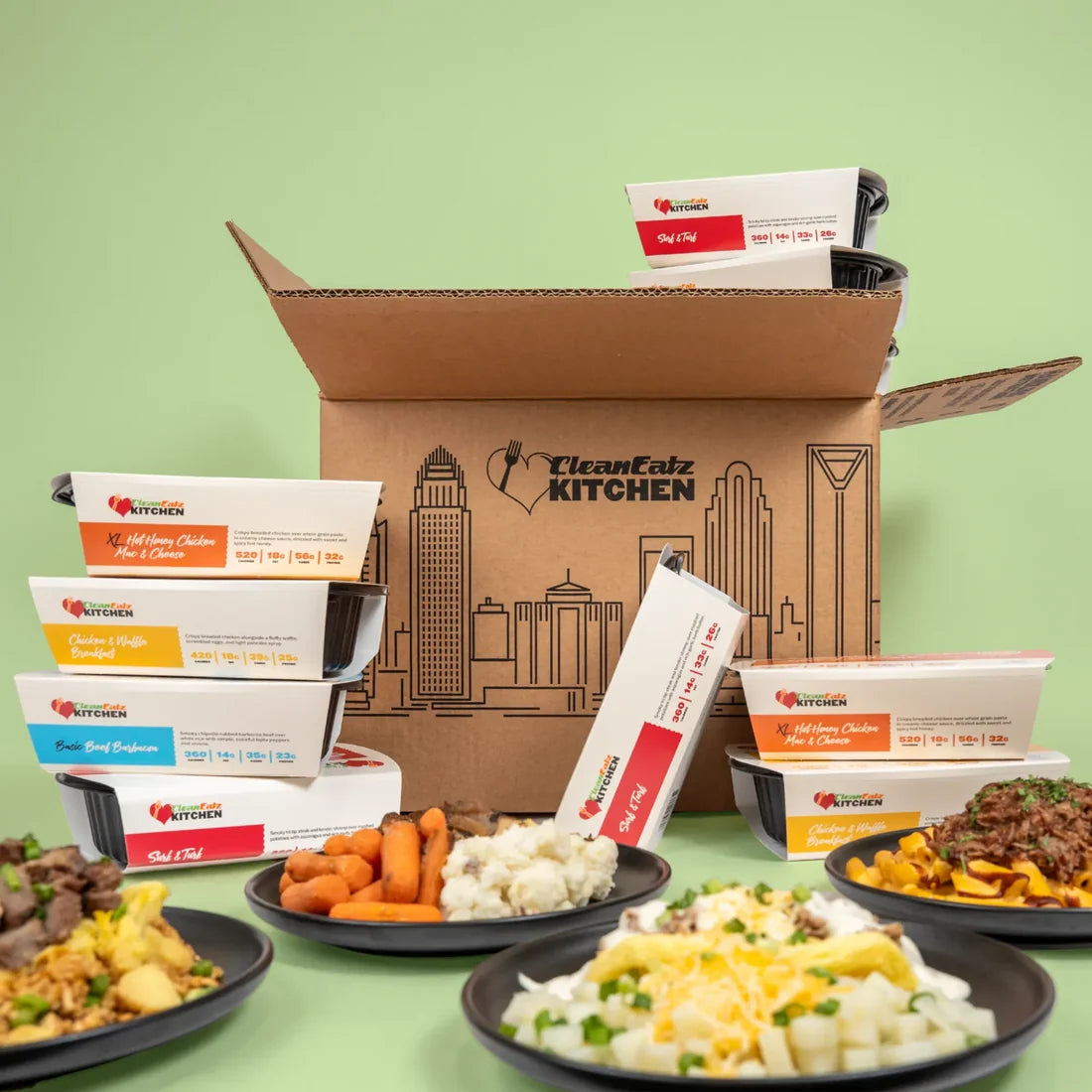
Losing weight by eating healthy
Can you lose weight just by eating healthy?
Quick answer
Yes, as long as you eat fewer calories than you burn. Switching to whole foods often gets you there, but it isn't guaranteed. In a 6-month trial, people lost about the same 8 kg whether the deficit came from diet alone or from diet plus exercise.
Weight loss comes down to a calorie deficit, which means taking in less energy than your body uses each day. Healthy eating is often the easiest way to get there, because whole foods tend to fill you up on fewer calories than the packaged kind. It isn't automatic, though. You can eat all the kale, quinoa and grilled chicken you want and still not lose weight if the total runs over what your body needs.
The clearest test of the deficit idea is a 6-month trial in 35 adults with overweight. One group cut calories by 25%. Another cut calories by 12.5% and burned 12.5% more through exercise, so both had the same planned deficit. A third group kept their weight steady. The two deficit groups finished almost even: 8.3 kg and 8.1 kg lost, with about 24% of fat mass gone in each.
So the size of the deficit did the work. The authors noted that exercise played an equal role in energy balance, and that it also improved aerobic fitness. Food alone can create that deficit, which is why this post's answer is yes. The rest of this guide covers the part that decides whether it happens: what you eat, how much of it and whether you can keep going.
Diet vs. exercise for weight loss
Does diet matter more than exercise for weight loss?
Quick answer
For most people, yes. Trials of diet alone and diet plus exercise show no difference at 3 to 6 months, and about 1.7 kg favoring the combination at 12 months. Exercise-only programs lose far less than combined ones, by 5 to 6 kg.
There's a common belief that you need hours at the gym to lose weight. Exercise has real health benefits, but the research on the scale points the other way.
A 2025 study in the Proceedings of the National Academy of Sciences measured energy expenditure in 4,213 adults from 34 populations, from hunter-gatherers to industrialized countries. People in wealthier economies carried more body fat, but they weren't burning dramatically less. After adjusting for body size, lower energy expenditure accounted for roughly one-tenth of the extra body fat and BMI tied to economic development. Energy intake was higher in those populations, and the share of ultraprocessed food tracked with body fat. The authors concluded that diet plays a far greater role than reduced energy expenditure in that development-related obesity.
That's a strong finding, and it has limits. It compares populations, not people on a weight loss plan, and it doesn't say that food is 90% of your own results. Treat it as evidence that burning less isn't the main reason modern populations gained weight.
The direct comparisons come from a meta-analysis of behavioral weight loss programs. Diet-only and combined diet-plus-exercise programs showed no significant difference at 3 to 6 months. At 12 months, combined programs were ahead by 1.72 kg, or just under 4 pounds. Exercise-only programs were well behind the combined ones, by 5.33 kg at 3 to 6 months and 6.29 kg at 12 to 18 months.
Clinical dietitian Jessica Tilton at MD Anderson Cancer Center puts it this way: "Generally, people cannot exercise their way into weight loss." Exercise isn't useless. It simply isn't the main lever for the scale, and it does its best work alongside a diet that already has you in a deficit.
Healthy foods for weight loss
What does eating healthy really mean for weight loss?
Quick answer
It means foods that fill you up on fewer calories: lean protein, vegetables, fruit, whole grains and measured fats. Portions still count, since a whole avocado has about 320 calories and an ounce of almonds about 164.
This is where things get tricky. Some of the healthiest foods are also the most calorie-dense. According to USDA FoodData Central, an ounce of almonds, a small handful, has about 164 calories, and a whole avocado has about 320. They're nutritious and they belong in a healthy diet. They can also stall your progress if nobody's counting the portions.
A weight loss diet leans on foods that keep you full on fewer calories:
- Lean proteins. Chicken, fish, eggs and legumes help you feel satisfied and help preserve muscle while you lose weight.
- Fiber-rich vegetables and fruits. They add volume to a meal without many calories, and fiber slows digestion, so you stay full longer.
- Whole grains. They bring more fiber and nutrients than refined carbohydrates, and they give you steadier energy.
- Healthy fats in measured portions. A tablespoon of olive oil or a quarter of an avocado adds satisfaction without running up the total.
Protein has the most interesting research behind it. In a small study of 19 people, raising protein from 15% to 30% of calories cut spontaneous intake by 441 calories a day, and over 12 weeks of eating as they wished, people lost 4.9 kg, including 3.7 kg of fat. There was no separate control group, so read it as a promising signal. It also doesn't mean protein beats a deficit. The 2013 AHA/ACC/TOS obesity guideline found that when calories are restricted in both diets, 25% protein produces about the same weight loss as a typical 15% protein diet. Protein's main advantage is that it makes the deficit easier to live with.
For a complete breakdown, our 100 best foods for weight loss guide covers why certain foods help you feel fuller on fewer calories.
 Make it easy withWeight Loss Meal PlanFrom $89.95View plan
Portion control for weight loss
Why does portion control matter as much as food choice?
Quick answer
Because nutritious food still has calories. Common deficit targets run 300 to 750 calories a day, and a few generous servings can erase that. Measuring oils and dressings and filling half your plate with vegetables are the simplest fixes.
One of the biggest misconceptions about healthy eating is that if a food is nutritious, you can eat as much as you like. Your body still counts the calories.
How big should the deficit be? Sources differ a little. Tilton at MD Anderson suggests 300 to 500 calories under your estimated total daily energy expenditure. The AHA/ACC/TOS guideline describes a 500 or 750 calorie daily deficit, often set as 1,200 to 1,500 calories a day for women and 1,500 to 1,800 for men, adjusted for body weight and activity. Those are starting points used in clinical programs, and your number depends on your size, age and activity.
Portions also shape how much we eat in ways we don't notice. A Cochrane review of 72 studies found that people consistently eat more when offered larger portions, packages or tableware. Those studies measured the immediate and short term, and the authors judged their risk of bias as unclear or high overall, but the direction was consistent.
If you cook at home, a few habits help:
- Measure the calorie-dense extras. Oil, butter and dressings are where calories slip in unnoticed.
- Fill half your plate with vegetables. You get volume and nutrients without many extra calories.
- Serve less to begin with. A smaller plate or bowl can help you do that, though it's a nudge, not a plan.
If you'd rather not measure at all, pre-portioned meals take that step off your list. Our Weight Loss Meal Plan is built around portion-controlled, calorie-controlled, macro-balanced meals, so the serving is settled before you open the freezer. You still decide what else you eat that day, so it makes the deficit easier to hold, not automatic.
The role of exercise in weight loss
If diet leads the way, why bother with exercise?
Quick answer
Because it protects what diet can't. Exercise improves heart health, fitness, bones and mood, and it helps preserve muscle during a deficit. In one trial of older adults, lean mass fell 2% to 3% with resistance work and 5% with aerobic work alone.
Exercise may not be the main driver of weight loss, but it does things diet can't. Per MD Anderson, it improves brain health, strengthens bones and muscles, reduces disease risk, lifts mood and helps with weight management.
Muscle is the part that matters most during a deficit. A review on preserving muscle during weight loss reports that diet-driven weight loss reduces muscle mass, and that both endurance and resistance exercise help preserve it, with resistance work also improving strength. Adequate protein helps too, the authors note, though they advise against excessive amounts.
A trial of 160 older adults with obesity shows what that looks like. All three exercise groups followed a weight-management program. Lean mass dropped 3% with combined training and 2% with resistance training, against 5% with aerobic training alone. Physical performance scores rose most with the combination: 21%, compared with 14% for either type alone. Those results come from older adults, but they make a good case for pairing lifting with cardio if you can do both.
You'll often hear that muscle burns more calories at rest, which makes weight easier to maintain. It does burn more than fat, but the difference is modest. Strength and function are the better reasons to lift.
To add movement to your plan, our complete exercise guide for weight loss covers evidence-based strategies that pair well with a healthy diet.
Keeping weight off with healthy eating
How do you make healthy eating stick long term?
Quick answer
Pick an approach you can repeat. Long-term data show people keep only part of what they lose, about 17% to 29% after 4 to 5 years, so foods you enjoy, some flexibility and convenient options matter more than a perfect diet.
Weight regain is the hard part of this topic. A meta-analysis of 29 long-term US studies followed people after structured weight loss programs. At 4 to 5 years, those on balanced low-calorie diets had kept about 17% of what they lost, or 2.0 kg, and those on very-low-energy diets had kept about 29%, or 7.1 kg. So most of the weight came back on average, though the typical person was still more than 3 kg lighter five years out. Six of those studies also found that people who exercised more kept off more.
The way to beat those averages usually isn't a more perfect diet. Restrictive plans that leave you feeling deprived are hard to keep up. Focus on habits you can maintain:
- Choose foods you actually enjoy. If you hate kale, don't force it. There are plenty of nutritious foods that can help you lose weight.
- Allow occasional indulgences. In a survey of 223 adults, flexible dieting went along with less overeating, lower body mass and lower levels of depression and anxiety. It's a correlation, not proof, but it argues against all-or-nothing rules.
- Make healthy eating convenient. Time is one of the biggest barriers. Healthy, ready-to-eat options remove the friction that leads to poor choices when you're hungry and busy.
Most people already know what a good dinner looks like. The trouble is having one ready at 7 p.m. on a Wednesday, which makes this a workload problem more than a knowledge problem. Cooking and portioning on a Sunday solves it for some people. Others hand off the job: Clean Eatz Kitchen meals are chef-cooked, portion-controlled and flash-frozen, they heat in a few minutes and they keep in the freezer for up to 12 months. There's no subscription, and shipping is free on meal plan orders to the contiguous 48 states. The Nutrition Info page lists calories, protein, carbs and fat for each meal, so you can check a choice against your target.
To put it all together, yes, you can lose weight just by eating healthy, when it includes attention to portions and a calorie deficit. Choose nutritious foods you enjoy, control portions without obsessing and add movement when you can. Whether that means cooking at home, using portion-controlled meal delivery or some of both, the best plan is the one you can still follow in six months.
Eating healthy for weight loss FAQ
Questions about eating healthy to lose weight, answered
Can I lose weight without exercising?
Yes. A calorie deficit from diet alone is enough, and trials show diet-only and diet-plus-exercise programs lose about the same at 3 to 6 months. Exercise still adds a lot, including muscle preservation, heart health and better mood, and it may help with long-term maintenance.
Is diet more important than exercise for weight loss?
For most people, yes. A 2025 PNAS study of 34 populations found lower energy expenditure explained only about one-tenth of the excess body fat tied to economic development, and pointed to diet as the larger factor. Exercise-only programs also trail combined programs. Using both gives the best long-term results.
How long does it take to see weight loss results from eating healthy?
A 500 calorie daily deficit works out to about 1 pound a week early on by the usual rule of thumb, and loss tends to slow over time. Many people notice a difference within 4 weeks or so, though it varies. Patience pays off, because you need habits you can keep.
Can you gain weight eating healthy foods?
Yes. Nuts, avocados, olive oil and whole grains are nutritious, and several of them are calorie-dense. If you eat more calories than you burn, you can gain weight, however healthy the food is. Portions matter regardless of food quality, so measure the dense foods and enjoy them anyway.
What is a calorie deficit & why does it matter?
A calorie deficit means taking in fewer calories than your body burns, so it draws on stored energy, including fat. That's the basic mechanism of weight loss. In a 6-month trial, equal deficits from diet alone or diet plus exercise produced nearly identical weight and fat loss.
More on healthy eating & weight loss
Keep reading
 Romaine Rusnak, RD, LDN · Mar 5, 2025

 Ellie Lopez, LDN, MS · Dec 27, 2024
 Tina Sassine, RD, MPH · Oct 9, 2026
Sources
On this page