
High-protein salads for weight loss
High-protein salads for weight loss (recipes that fill you)
A salad keeps you full when it's built on protein, not lettuce. Four recipes with USDA-based macros, a formula for building your own and how to prep them so they don't go soggy.
- Free Shipping on Every Meal PlanFree Shipping
- Up to 20% Off 30-Meal PlansUp to 20% Off
- Chef Cooked, Dietitian BuiltDietitian Built
- Heat & Eat in MinutesHeat & Eat

A high-protein salad works for weight loss when protein is the base, not a topping. Aim for 25 to 40 grams per salad: about 4 to 6 ounces of chicken, salmon or shrimp, or chickpeas with feta. The four salads below run from about 390 to 655 calories, and three of them land between 38 and 49 grams of protein.
Many salads labeled healthy are light meals: mostly lettuce, a few vegetables and dressing. They're refreshing, but they often lack the protein, fiber and fat that keep you full, and you're hungry again by midafternoon.
Salads that support weight management are built differently. They start with a substantial protein, add a healthy fat, and use fiber-rich vegetables for volume without many extra calories. Put those together and a salad becomes a complete meal that holds you until dinner.
For the bigger picture on foods that support weight loss, including how protein, fiber and nutrient density work together, see our complete guide to the best foods for weight loss.
Why protein matters in a salad
Protein is what makes a salad a meal
Protein does three useful things in a salad. First, it has a higher thermic effect than carbohydrate or fat, so your body uses slightly more energy digesting it. Second, it helps with fullness. Third, when you're eating fewer calories, enough protein helps you hold on to lean muscle.
The fullness effect is real but modest. A review in the American Journal of Clinical Nutrition found that higher-protein meals reliably raised fullness and satiety hormones such as peptide YY and GLP-1, but didn't consistently cut how much people ate at the next meal. The same review linked higher-protein diets to better fat loss and lean mass retention during dieting, and pointed to at least 25 to 30 grams of protein per meal.
In practice, that's about 4 to 6 ounces of chicken, salmon or shrimp, or a mix of plant proteins like chickpeas and feta. Protein doesn't make a salad magic. It makes it a meal you can stop thinking about until dinner.
Protein doesn't make a salad magic. It makes it a meal you can stop thinking about until dinner.
Tina Sassine, RD, MPH
| Salad | Calories | Protein |
|---|---|---|
| Greek salad with grilled chicken | 524 | 48g |
| Salmon power bowl | 655 | 38g |
| Mediterranean chickpea salad | 538 | 23g |
| Creamy avocado chicken salad | 389 | 49g |
The four salads at a glance (per salad, estimated from USDA FoodData Central)
Greek salad with grilled chicken
The classic, made into dinner
The classic Greek salad is already strong nutritionally: feta brings protein and calcium, olives bring healthy fats and the vegetables bring fiber. Grilled chicken turns it from a side dish into a complete meal.
Makes 1 large salad- 4 to 5 oz grilled chicken breast, sliced
- 3 cups chopped romaine lettuce
- 1/4 cup crumbled feta cheese
- 1/4 cup kalamata olives, pitted and halved
- 1/2 cup cherry tomatoes, halved
- 1/4 cup diced cucumber
- 2 tablespoons thinly sliced red onion
- 1 tablespoon extra virgin olive oil
- 1 tablespoon fresh lemon juice
- 1/2 teaspoon dried oregano
- Salt and pepper to taste
-
1
Build the Greek salad
Arrange the romaine as your base, then top it with the chicken, feta, olives, tomatoes, cucumber and red onion.
-
2
Dress the Greek salad
Whisk the olive oil, lemon juice and oregano with a pinch of salt and pepper. Drizzle it over the salad just before eating.
524Calories48gProtein16gCarbs31gFatPer salad, with 4.5 oz of cooked chicken: about 524 calories, 48 grams of protein, 16 grams of carbs, 31 grams of fat, 5 grams of fiber and about 790 mg of sodium before added salt. Feta and olives carry most of that sodium.
Salmon power bowl
Omega-3s, greens & a little grain
Salmon offers something most other proteins don't: the omega-3 fats EPA and DHA. Cold-water fatty fish like salmon are among the best food sources, according to the NIH Office of Dietary Supplements. This bowl pairs salmon with kale and quinoa for a salad that's nutrient-dense and filling.
Makes 1 bowl- 4 to 5 oz baked or grilled salmon
- 2 cups kale, massaged with a pinch of salt
- 1/2 cup cooked quinoa
- 1/4 avocado, sliced
- 1/4 cup shredded carrots
- 2 tablespoons sliced almonds
- 1 tablespoon olive oil
- 1 tablespoon rice vinegar
- 1 teaspoon low-sodium soy sauce
- 1/2 teaspoon sesame seeds
-
3
Build the salmon bowl
Start with the massaged kale, add the quinoa and lay the salmon on top. Add the avocado, carrots and almonds.
-
4
Dress the salmon bowl
Whisk the olive oil, rice vinegar and soy sauce, pour it over the bowl and finish with sesame seeds.
655Calories38gProtein30gCarbs44gFatPer bowl, with 4.5 oz of cooked farmed Atlantic salmon: about 655 calories, 38 grams of protein, 30 grams of carbs, 44 grams of fat, 9 grams of fiber and about 345 mg of sodium. It's the heaviest of the four. Skip the almonds and use half the oil and it drops to about 530 calories.
Mediterranean chickpea salad
The plant-forward pick
For a plant-forward option, this salad pairs chickpeas with feta. A cup of cooked chickpeas has about 14.5 grams of protein and 12.5 grams of fiber, a combination that keeps you full for hours.
Makes 1 large salad- 1 cup cooked chickpeas, drained and rinsed
- 1/4 cup crumbled feta cheese
- 3 cups mixed greens
- 1/2 cup cherry tomatoes, halved
- 1/4 cup diced cucumber
- 2 tablespoons diced red onion
- 2 tablespoons chopped fresh parsley
- 1 tablespoon extra virgin olive oil
- 1 tablespoon fresh lemon juice
- 1/4 teaspoon cumin
- Salt and pepper to taste
- Optional: 1/2 cup shelled edamame for more protein
-
5
Season the chickpeas
Toss the chickpeas with the tomatoes, cucumber, red onion and parsley. Season with the cumin, salt and pepper.
-
6
Plate & dress the chickpea salad
Spoon the chickpea mixture over the mixed greens, top with the crumbled feta and dress with the olive oil and lemon juice.
538Calories23gProtein57gCarbs16gFiberPer salad: about 538 calories, 23 grams of protein, 57 grams of carbs, 26 grams of fat, 16 grams of fiber and about 480 mg of sodium before added salt. That's the most fiber of the four but the least protein. Half a cup of shelled edamame adds about 9 grams of protein and 94 calories, taking it past 30 grams.
Creamy avocado chicken salad
Creamy without the mayo
This recipe skips the heavy mayo dressing and uses mashed avocado for creaminess, along with its monounsaturated fat and fiber. It feels indulgent and is the lightest salad here.
Makes 1 large salad- 5 oz grilled chicken breast, cubed
- 1/2 ripe avocado, mashed
- 3 cups baby spinach
- 1/4 cup cherry tomatoes, halved
- 2 tablespoons diced red onion
- 1 tablespoon chopped fresh cilantro
- Juice of 1/2 lime
- Salt and pepper to taste
- Optional: pinch of red pepper flakes
-
7
Mix the avocado dressing
In a bowl, mash the avocado with the lime juice, salt, pepper and red pepper flakes if using. Fold in the cubed chicken until it's coated.
-
8
Serve over spinach
Pile the chicken over the baby spinach and top with the tomatoes, red onion and cilantro.
389Calories49gProtein14gCarbs16gFatPer salad: about 389 calories, 49 grams of protein, 14 grams of carbs, 16 grams of fat, 8 grams of fiber and about 185 mg of sodium before added salt. All four recipes are estimated from USDA FoodData Central at the listed amounts, using a medium California avocado.
Build your own high-protein salad
The formula behind all four
Once you know the structure, you can make endless versions without a recipe.
- Start with 2 to 3 cups of leafy greens. Romaine, spinach, kale or mixed greens.
- Add 4 to 6 ounces of lean protein. Chicken, salmon, shrimp, eggs, or chickpeas and edamame.
- Include one healthy fat. Avocado, nuts, olive oil or cheese. One, not all four.
- Layer in non-starchy vegetables. Tomatoes, cucumber, peppers, onions and carrots add volume for few calories.
- Finish with a light, oil-based vinaigrette. About a tablespoon of oil per salad.
If you want more carbohydrate for steady energy, especially on active days, add about half a cup of quinoa, farro or roasted sweet potato. That's roughly 100 to 120 calories, not enough to turn the salad into a different meal.
For strategies on batch-cooking proteins and prepping ingredients so these salads come together in minutes, our complete meal prep guide walks through the whole system.
Prepared meals when you don't have time
When you don't have time to build
Some weeks, even assembling a salad is too much. That's a workload problem, not a knowledge problem, and it's where a backup plan matters.
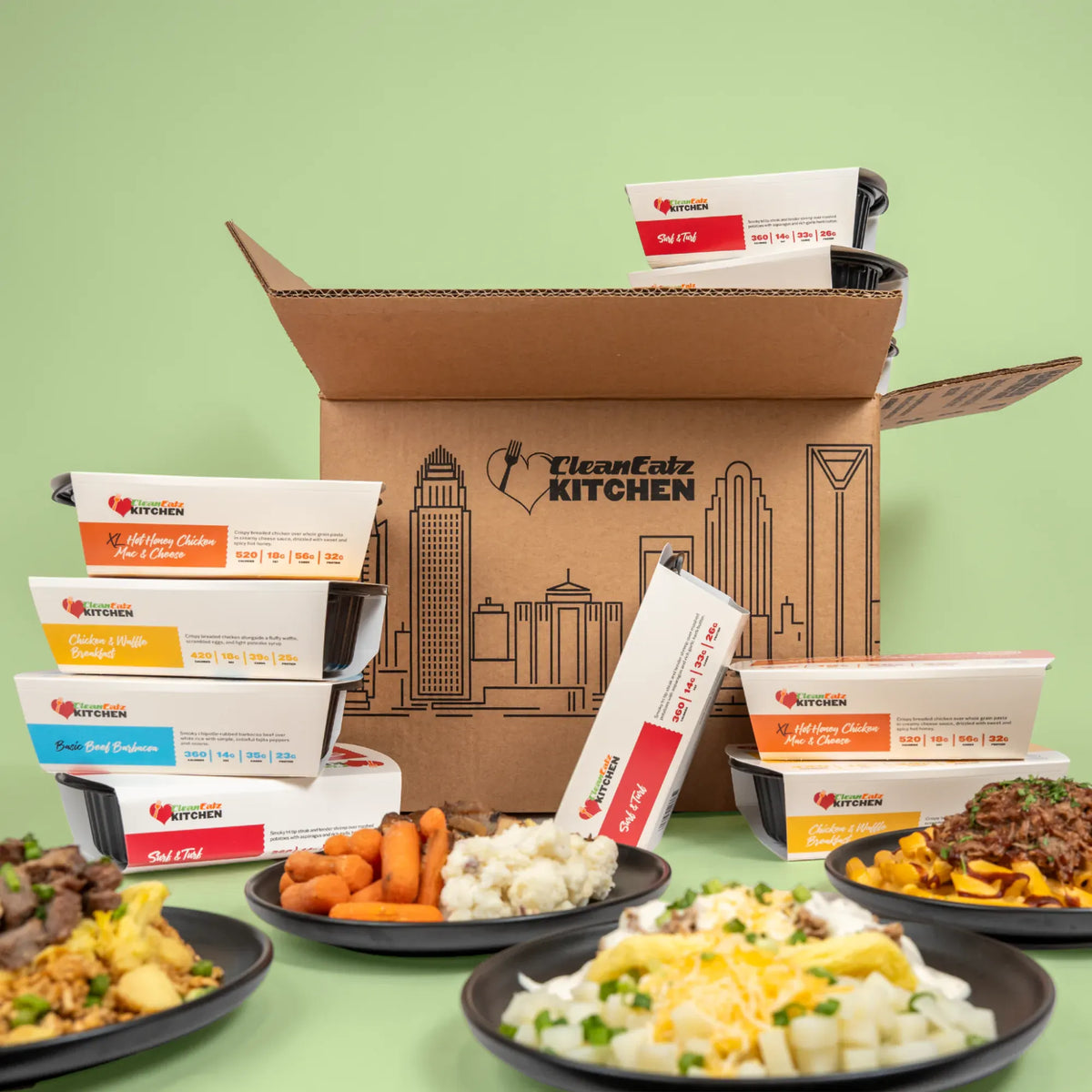
Our Weight Loss Meal Plan delivers chef-cooked, portion-controlled, macro-balanced meals, from $89.95 for 10. If your main goal is protein, the High-Protein Meal Plan adds 2 extra ounces of meat to each meal compared with our regular recipes. Every meal's calories and macros are on our Nutrition Info page.
Either way, the principle is the same: protein first, vegetables for volume and fiber, and honest portions. Whether you build it yourself or let someone else cook, that formula works.
High-protein salads bottom line
Build the salad around the protein
A salad helps with weight loss when it's a real meal: 25 grams of protein or more, a measured fat, and plenty of vegetables. The four recipes above all clear that bar or get there with one easy addition, and the formula lets you make your own from whatever is in the fridge.
Watch the extras. Heavy dressings, fried toppings and a second or third fat can push a salad past a burger. This article is for education and doesn't replace medical or personalized nutrition advice.

The dietitian's take
Start with the protein, then add the greens. If your salad has less than a palm-sized portion of chicken, fish or beans, it will leave you hungry by 3 p.m. Measure your oil once so you know what a tablespoon looks like, and keep dressing on the side when you prep ahead.
Tina Sassine, RD, MPH · Registered Dietitian
 Make it easy withWeight Loss Meal PlanFrom $89.95View plan
High-protein salads FAQ
Frequently asked questions
How much protein should a "weight loss salad" have?
Aim for 25 to 40 grams of protein per salad to support fullness and muscle retention while you lose weight. That usually means 4 to 6 ounces of chicken, salmon or shrimp, or a plant combination like chickpeas with feta and edamame. Research on higher-protein diets points to at least 25 to 30 grams per meal.
Why do regular salads leave me hungry?
Most of them are mostly vegetables and dressing, with little protein or fat. Lettuce is largely water, so a big bowl of it has very few calories and little staying power. Adding 4 to 6 ounces of protein and one healthy fat makes the salad far more filling.
Can I meal prep salads without them getting soggy?
Yes. Store the dressing separately, put hearty ingredients like chickpeas or grains at the bottom and wet ones like tomatoes away from the greens. Mason jars work well. With cooked chicken or fish, eat prepped salads within 3 to 4 days and keep them refrigerated, per USDA guidance.
What's the best protein to add to salads for weight loss?
Grilled chicken breast gives the most protein for its calories. Shrimp, salmon, tuna and hard-boiled eggs are good options too. For plant-based salads, chickpeas or edamame, paired with feta, nuts or seeds, raise the protein, though it takes more volume to reach 25 grams.
Are salads actually good for weight loss?
They can be, when they include protein, fiber-rich vegetables and a measured amount of dressing. The overall makeup matters. Heavy dressings, fried toppings and several high-calorie extras can quickly push a salad to 800 calories or more, more than many sandwiches.
More healthy recipes & weight loss guides
Keep reading
 Recipes
Best Foods for Weight Loss: 100-Food Complete Guide
 Romaine Rusnak, RD, LDN · Oct 16, 2025
 Recipes
Olive Oil vs. Butter: What’s Healthier for Weight Loss?
 Dorothy M. Shirnyl, RND · Jan 29, 2023
 Recipes
The Complete Meal Prep Guide 2026: Save Time, Money & Eat Better
 Ellie Lopez, LDN, MS · Oct 16, 2025
Sources
- Leidy HJ et al. The role of protein in weight loss and maintenance. Am J Clin Nutr 2015 (PubMed)
- USDA FoodData Central (SR Legacy values for every recipe ingredient)
- NIH Office of Dietary Supplements: Omega-3 fatty acids fact sheet for consumers
- USDA Food Safety and Inspection Service: Leftovers and food safety
On this page