
Low-sodium restaurant guide
Low-sodium restaurant guide: What to order when eating out
One restaurant entree can use up a full day's sodium. Most of it is in the food before it reaches you. How to check the numbers first, what to tell your server and what to order at Asian, Italian, Mexican and fast food spots.
- Free Shipping on Every Meal PlanFree Shipping
- Up to 20% Off 30-Meal PlansUp to 20% Off
- Chef Cooked, Dietitian BuiltDietitian Built
- Heat & Eat in MinutesHeat & Eat

Why sodium matters when eating out
How do you eat low sodium at a restaurant?
Quick answer
Decide before you arrive and ask for what you need. The American Heart Association's limit is 2,300 mg a day, and a single restaurant entree can reach it. Order it without added salt, keep sauces on the side and pick grilled over breaded.
The American Heart Association recommends no more than 2,300 mg of sodium a day for most adults, with an ideal target of 1,500 mg for people who stand to benefit most, which includes many people with high blood pressure. Americans average about 3,400 mg a day, according to the FDA. A restaurant entree can carry 1,500 mg or more, so one sitting can take up most of a day's limit.
Restaurants are difficult because the sodium is there before you see the plate. The FDA says over 70% of dietary sodium comes from packaged and prepared foods rather than from salt added while cooking or eating. You can't season your way out of a choice that was made in the kitchen.
Here's one useful definition to carry with you. The FDA classifies a food as low sodium at 140 mg or less per serving. Reduced sodium only means at least 25% less than the regular version, which on a 1,600 mg dish still leaves you at 1,200 mg. Read the number, not the adjective.
For the home side of this, our low-sodium foods guide covers what to stock, and our guide to the DASH diet covers the eating pattern with the strongest evidence behind it for blood pressure.
Low-sodium restaurant planning
What should you do before you go out?
Quick answer
Look up the menu at home. US chains with 20 or more locations must provide sodium figures on request, and many post them online. Five minutes while you aren't hungry beats deciding with a menu in your hand and bread on the table.
Most of the work happens before you sit down. Under FDA menu labeling rules, restaurant chains with 20 or more locations must have written nutrition information, sodium included, available on request, and many publish it online. So a few minutes with the menu at home lets you decide while you aren't hungry, which is a very different decision from the one you make with bread on the table.
Where numbers aren't published, the useful signal is how the food gets made. Restaurants cooking to order have more room to leave the salt out. Fast-casual chains assembling from pre-prepared components often can't, because the sodium went in upstream. Independent kitchens are often the more flexible option for this reason, which is the opposite of what many people assume.
If you're traveling or caught out, MyFitnessPal and Nutritionix both list many chain menus and can give you a number in about a minute. Treat those as estimates, since chains reformulate and some entries come from other users.
What to tell your server about sodium
What do you say to your server?
Quick answer
Say it when you order, not after the food arrives. Try this: I'm following a low-sodium diet for health reasons, could the kitchen prepare this without added salt and bring any sauces on the side? Call ahead for anything more involved.
Say it when you first order, not after the food arrives. Here's a script that works:
Servers handle dietary requests constantly, so this won't be the strangest thing they hear today. For anything more involved, like a set menu, a large group or an unfamiliar kitchen, call ahead and give them time.
Ask how things are made too, because the surprises are rarely where you expect. A baked potato is sometimes rolled in salt before it goes in the oven. Grilled chicken is often brined or rubbed with a sodium-heavy blend before it touches the grill. Neither of those reads as salty on the menu.
Low-sodium restaurant orders
What should you order at a restaurant?
Quick answer
Plain grilled chicken, baked or broiled fish, steamed vegetables, a plain baked potato or a salad with oil and vinegar. Soup is the usual trap, often around 800 to 1,200 mg a cup. Cured meats, cheese sauces and soy glazes run high too.
These are general patterns rather than rules. Every kitchen differs, but they hold more often than not.
| Course | Usually lower | Usually higher |
|---|---|---|
| Starters | Fresh fruit, raw vegetables, house salad with oil and vinegar on the side, shrimp cocktail with a little sauce | Soup (often 800 to 1,200 mg a cup), nachos, mozzarella sticks, wings, bread with salted butter |
| Mains | Plain grilled chicken, baked or broiled fish, unseasoned lean steak, grilled tofu | Cured, smoked or brined meat, cheese sauces, teriyaki and soy glazes, blackened or stuffed dishes |
| Sides | Plain baked potato, unseasoned steamed vegetables, fresh fruit, plain rice, salad with oil and vinegar | Fries, onion rings, seasoned rice, creamed vegetables, coleslaw, bread rolls |
Usually lower and usually higher sodium, by course
Menu words that signal sodium
Menu words worth reading closely
The menu's language is a reasonable guide. Some of these words describe a salt-based process rather than a flavor, which is why they're more useful than they look.
- Generally lower: grilled, baked, broiled, steamed, roasted, fresh and plain.
- Generally higher: smothered, loaded, crispy, breaded, blackened, cured, smoked, pickled, marinated, teriyaki and au jus.
Low-sodium options by cuisine
What are the low-sodium picks by cuisine?
Quick answer
At Asian restaurants, get sauce on the side, since soy sauce has about 880 mg per tablespoon. At Italian, skip cured meats. At Mexican, watch the chips and seasoned rice. At steakhouses, ask for no salt blend when you order.
Each cuisine has one or two variables that matter more than everything else on the menu.
Low-sodium Asian restaurant orders
Asian restaurants
Soy sauce is the dominant variable at about 880 mg a tablespoon, according to USDA data, so getting sauce on the side changes the arithmetic more than any other single request. Steamed rice, vegetables and dumplings beat their stir-fried equivalents. Sashimi without soy sauce is about as low as restaurant food gets. Some kitchens keep low-sodium soy sauce and will use it if you ask.
Low-sodium Italian restaurant orders
Italian restaurants
The cured meats are the problem. Prosciutto, salami and pancetta are preserved with salt, which is the entire point of them. Aged cheeses like parmesan add more. Grilled chicken or seafood dishes are the straightforward route.
Low-sodium Mexican restaurant orders
Mexican restaurants
Chips and salsa arrive before you've decided anything, which is how a few hundred milligrams disappear before the meal starts. Seasoned rice, refried beans and cheese-heavy dishes stack up quickly. Fajitas work reasonably well if you ask for the meat grilled with minimal seasoning and lean on the peppers and onions.
Low-sodium American & steakhouse orders
American restaurants & steakhouses
Steaks and burgers are usually seasoned with a salt-heavy blend before cooking rather than after, so you have to request no salt when you order, not at the table. Skipping bacon and cheese does more than most substitutions. Steamed broccoli or asparagus without butter is the reliable side.
Lowest-sodium fast food options
What are the lowest-sodium fast food options?
Quick answer
Wendy's plain baked potato is the standout at 40 mg. Chick-fil-A's 8-count grilled nuggets have 440 mg, about a third of the 1,210 mg in the fried version. Skip cheese, ask for unsalted fries and take sauces on the side.
It's harder, but not impossible. Chains do reformulate, and listings don't always agree, so check the current number if it matters to you.
| Order | Sodium | Source |
|---|---|---|
| Wendy's plain baked potato | 40 mg | Third-party listing |
| Wendy's medium fries | About 620 mg | Third-party listing |
| Chick-fil-A 8-count grilled nuggets | 440 mg | Published nutrition data |
| Chick-fil-A 8-count fried nuggets | 1,210 mg | Published nutrition data |
| McDonald's 4-piece McNuggets | About 340 mg | Third-party listing |
| Subway 6-inch Veggie Delite | About 320 mg | Third-party listing |
Sodium in some common fast food orders
Wendy's plain baked potato is the standout at 40 mg, against about 620 mg for medium fries on the same listing site. Sour cream and chives add about 15 mg.
Chick-fil-A's 8-count grilled nuggets have 440 mg and 25 grams of protein in 130 calories. The fried version has about 1,210 mg and 27 grams of protein in 250 calories, as our Chick-fil-A breakdown shows. So grilled has about a third of the sodium and slightly less protein. That's still a very good trade.
Beyond those, a 4-piece McNuggets comes in around 340 mg and a 6-inch Subway Veggie Delite around 320 mg. Plain eggs are usually one of the lower breakfast picks, though seasoning and butter vary by counter.
The general moves are the same everywhere:
- Skip the cheese, which often adds about 200 to 300 mg on its own.
- Ask for no salt on fries, which many chains will make fresh.
- Take sauces on the side and use them sparingly.
- Choose grilled over breaded, since the breading and the brine underneath both carry salt.
Flavor without salt at restaurants
How do you add flavor without the salt?
Quick answer
Ask for what the kitchen already has. Lemon or lime wedges, black pepper, red pepper flakes and vinegar work at the table. Fresh herbs, garlic and a drizzle of olive oil are easy asks. Acid does much of the work that salt was doing.
Low sodium doesn't have to mean bland, and the substitutions are things restaurants already have.
At the table, ask for lemon or lime wedges, freshly ground black pepper, red pepper flakes or vinegar, whether balsamic, red wine or cider. Acid does most of the work that salt was doing.
From the kitchen, fresh herbs, garlic, onion, citrus zest and a drizzle of olive oil are all easy asks. Most places will happily add them once you've explained why.
Balancing sodium across the week
How do you balance a meal out with the week?
Quick answer
Think in days rather than meals. If dinner out comes to 1,200 mg, you have about 1,100 mg left under a 2,300 mg limit for breakfast and lunch. Home meals you've already decided on make that much easier.
Even a careful restaurant meal usually carries more sodium than the same food cooked at home. The practical approach is to think in days rather than meals. If dinner out comes to 1,200 mg, you have about 1,100 mg left for breakfast and lunch under a 2,300 mg limit. If your clinician gave you 1,500 mg, that leaves 300 mg, so you'd want to plan the whole day around that dinner or pick a different dinner.
That's easier when the home meals are decided in advance. Our nutrition information page lists sodium for every meal alongside calories, protein, carbs, fat, fiber and cholesterol, so you can check the number before you order rather than guessing. If heart health is why you're here, Build a Meal Plan has a Heart Healthy filter that narrows the menu.
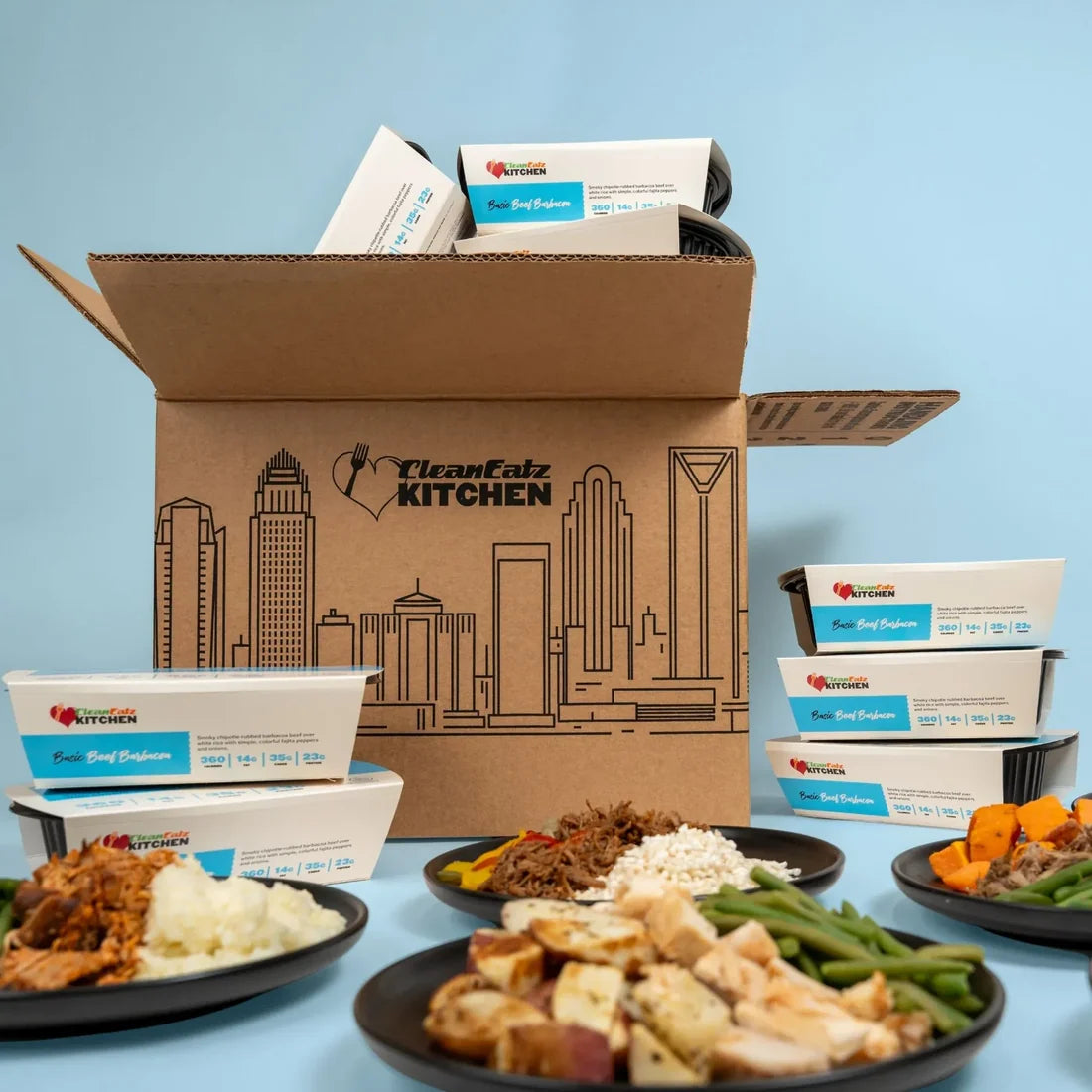
To be straight about it: prepared meals aren't automatically low in sodium, ours included. Our current menu runs from 360 to 1,550 mg a meal, with a median of 750 mg, and only two meals meet the FDA's low-sodium main dish rule: Basic Diced Chicken & Red Potatoes and Basic Chicken Strips & Rice. If you have a strict limit, the number matters more than the label, and at least here you can see it.
For the wider picture, our guide to the ten ways to promote heart health puts sodium in proportion against the other levers, and the complete meal prep guide covers building the routine at home.
If weight is also part of your plan, our Weight Loss Meal Plan is portion-controlled and calorie-controlled. It isn't a low-sodium plan, so check each meal's number first.
 Make it easy withWeight Loss Meal PlanFrom $89.95View plan
Low-sodium dining FAQ
Questions about low-sodium dining, answered
How much sodium should I eat per day?
The American Heart Association recommends no more than 2,300 mg a day for most adults, with an ideal target of 1,500 mg for people who would benefit most, including those with high blood pressure. If you have heart failure or kidney disease or take blood pressure medication, ask your clinician for your number.
What restaurant foods are highest in sodium?
Soup is often the worst offender, at about 800 to 1,200 mg a cup. After that come cured meats, soy sauce-based dishes, bread and rolls, cheese-heavy dishes and fried appetizers. The American Heart Association's salty six covers most of it: breads and rolls, pizza, sandwiches, cold cuts, soup, and burritos and tacos.
How do I order low-sodium at Asian restaurants?
Start with the soy sauce, at about 880 mg a tablespoon. Ask for dishes prepared without it, or for sauce on the side so you control the amount. Steamed rice, vegetables and dumplings usually beat stir-fried versions, and sashimi without soy sauce is very low. Some kitchens keep low-sodium soy sauce if you ask.
What should I say to my server about a low-sodium diet?
Say it when you order, not after the food arrives. Try this: I'm following a low-sodium diet for health reasons, could the kitchen prepare this without added salt and bring any sauces on the side? Servers field dietary requests constantly. For anything more involved, call ahead so the kitchen has time.
What are the lowest-sodium fast food options?
Wendy's plain baked potato is the standout at 40 mg. Chick-fil-A's 8-count grilled nuggets are 440 mg, against about 1,210 mg for the fried version. A 4-piece McNuggets is about 340 mg, and a 6-inch Subway Veggie Delite is about 320 mg. Skip the cheese and keep sauces on the side.
What counts as a low-sodium food?
The FDA defines low sodium as 140 mg or less per serving. Very low sodium is 35 mg or less, and sodium-free is under 5 mg. Reduced sodium only means at least 25% less than the regular version, which can still be a lot, so read the number on the label instead of the front of the package.
More low-sodium & heart health guides
Keep reading
 Nutrition
Low Sodium Foods: What to Eat & Why It Matters (2026 Guide)
 Tina Sassine, RD, MPH · Aug 29, 2023
 Nutrition
What Is the DASH Diet? (How It Lowers Blood Pressure)
Tina Sassine, RD, MPH · Jul 19, 2023 Nutrition
10 Ways to Improve Heart Health: What Actually Works (2026 Guide)
 Crystal Zabka-Belsky MS, RDN, CSSD, LMNT, LDN · Oct 7, 2022
Sources
On this page