
Whey vs plant protein compared
Whey vs plant protein: Which should you choose?
Whey has more leucine per gram. Plant protein is dairy-free and builds muscle at a bigger dose. Here is where each one wins, with the research behind it, and how to pick the powder that fits your goal.
- Free Shipping on Every Meal PlanFree Shipping
- Up to 20% Off 30-Meal PlansUp to 20% Off
- Chef Cooked, Dietitian BuiltDietitian Built
- Heat & Eat in MinutesHeat & Eat

Whey wins on protein quality. It is about 11% leucine, and 25 g of whey gives you 2.7 g of leucine. You would need 37 to 40 g of rice, pea or soy protein to match that. Plant protein wins for anyone who avoids dairy. In trials, matched doses of both built similar strength. Pick whey for the smallest effective scoop, plant protein for a dairy-free one.
Walk down the supplement aisle and the tubs split into two camps: whey on one side, pea, rice or soy on the other. Both promise muscle. So which one earns a spot in your shaker?
Whey vs plant protein verdict
A closer race than it looks
We judged whey vs plant protein on what changes your results: the amino acids in each scoop, how your gut handles it, how it tastes in a shaker, and how many grams of protein you actually get.
Whey takes amino acids and taste. Plant protein takes tolerance. Protein per scoop comes out even.
So, is whey protein vs plant protein a close race? Closer than the labels make it look. Whey is the more efficient protein. It carries more of the essential amino acids your muscles need, especially leucine, so a smaller scoop does the job. Plant protein can do the same job too. You just need a bigger scoop, or a blend of sources.
For most people, the powder matters less than the total. If you get enough protein across the day from food, the shake is a convenience, not a requirement. Choose the one your stomach agrees with and you will actually drink, then count it toward your daily number.
Whey & plant protein at a glance
One scoop, side by side
This table settles plant protein vs whey on the rows people ask about most. The amino acid numbers come from a 2018 lab analysis of commercial protein isolates in the journal Amino Acids.
Plant vs whey protein is not one fight, though. Pea, rice and soy each behave differently, so the plant column gives a range where they split.
| Whey protein | Plant protein | |
|---|---|---|
| Source | Milk | Pea, rice, soy, hemp or a blend |
| Essential amino acids | 43% of the protein ✓ | About 26% on average |
| Leucine | About 11% of the protein ✓ | About 7% (pea, rice, soy) |
| Protein for 2.7 g leucine | 25 g ✓ | 37 to 40 g |
| Protein per 30 g scoop | About 22 to 25 g | About 24 g (pea or rice) |
| Quality score (DIAAS) | High | Soy high, pea and rice lower alone |
| Lactose & milk allergen | Contains milk | Dairy-free ✓ |
| Taste & mixing | Mild, dissolves easily ✓ | Often earthy or bitter |
| Vegan | No | Yes ✓ |
We compared published research, not our own taste test. The scoop row multiplies a 30 g scoop by the protein share of the powders that study tested, so your tub's label may differ by a few grams. The quality scores come from a 2020 review that rated proteins on the FAO's digestibility scale.
- Essential amino acids and leucine per gram of protein
- Digestion, lactose and allergens
- Taste and how well it mixes in a shaker
- Grams of protein in a typical scoop
Whey vs plant protein side by side
Row by row
The table gives the quick answer. This breakdown explains each row of plant based protein vs whey and names a winner where there is one.
Whey takes two categories, plant protein takes one, and the grams on the label come out even.
Before you compare tubs, know your target. Our guide to Macros for whey vs plant protein walks you through setting a daily protein number, and every row below feeds into it. For a plain-English refresher on amino acids, MedlinePlus has Protein in diet basics, including how much of your calories protein should cover.
Amino acid profile
Winner: WheyYour body can't make 9 of the amino acids in protein, so they have to come from food. Whey is rich in them. In the 2018 analysis, essential amino acids made up 43% of whey protein. The plant isolates averaged 26%. Whey is also about 11% leucine, the amino acid that switches on muscle building after a meal.
That gap is why plant based protein powder vs whey comes down to dose. To match the 2.7 g of leucine in 25 g of whey, you would need about 37 g of brown rice protein, 38 g of pea or 40 g of soy. Each plant also runs short on something. Rice is low in lysine. Pea and soy are lower in methionine. Blends fix most of that. A 2020 review found a pea and rice mix could score up to 84 on the FAO's protein quality scale, against 70 for pea alone and 47 for rice alone.
Digestion & tolerance
Winner: Plant proteinWhey digests fast and mixes into water easily, which is why the International Society of Sports Nutrition calls it a rapidly digested protein. That speed is handy after a workout. The catch is the milk. Whey concentrate still carries some lactose, and NIDDK lists whey on a label as a sign of lactose. Isolate is filtered to over 90% protein, so it holds less.
Many people with lactose intolerance can handle about 12 g of lactose at a time, roughly a cup of milk, per NIDDK. A milk allergy is different. Milk is one of the 9 major food allergens the FDA requires on labels, and no whey is safe for it. Plant protein sidesteps both. Just check the source. Soy is also a major allergen, while pea and rice are not on that list.
Taste & mixability
Winner: WheyWhey has a mild, milky base that takes flavor well and dissolves in a shaker without much effort. Plant powders are harder to hide. Food scientists describe pea protein isolates as having persistent beany, bitter and astringent notes.
There is good news for plant fans. In a 2020 sensory study, tasters noticed the beany and bitter notes less as they finished a full portion. Blending with milk alternatives, frozen fruit or nut butter also helps.
Protein per scoop
Result: Even matchOn the label, the two are closer than you might think. The whey powders in the 2018 analysis were 72 to 84% protein by weight. Pea came in at 80% and brown rice at 79%. Scoop for scoop, that lands both near 22 to 25 g of protein.
Quick scoop example
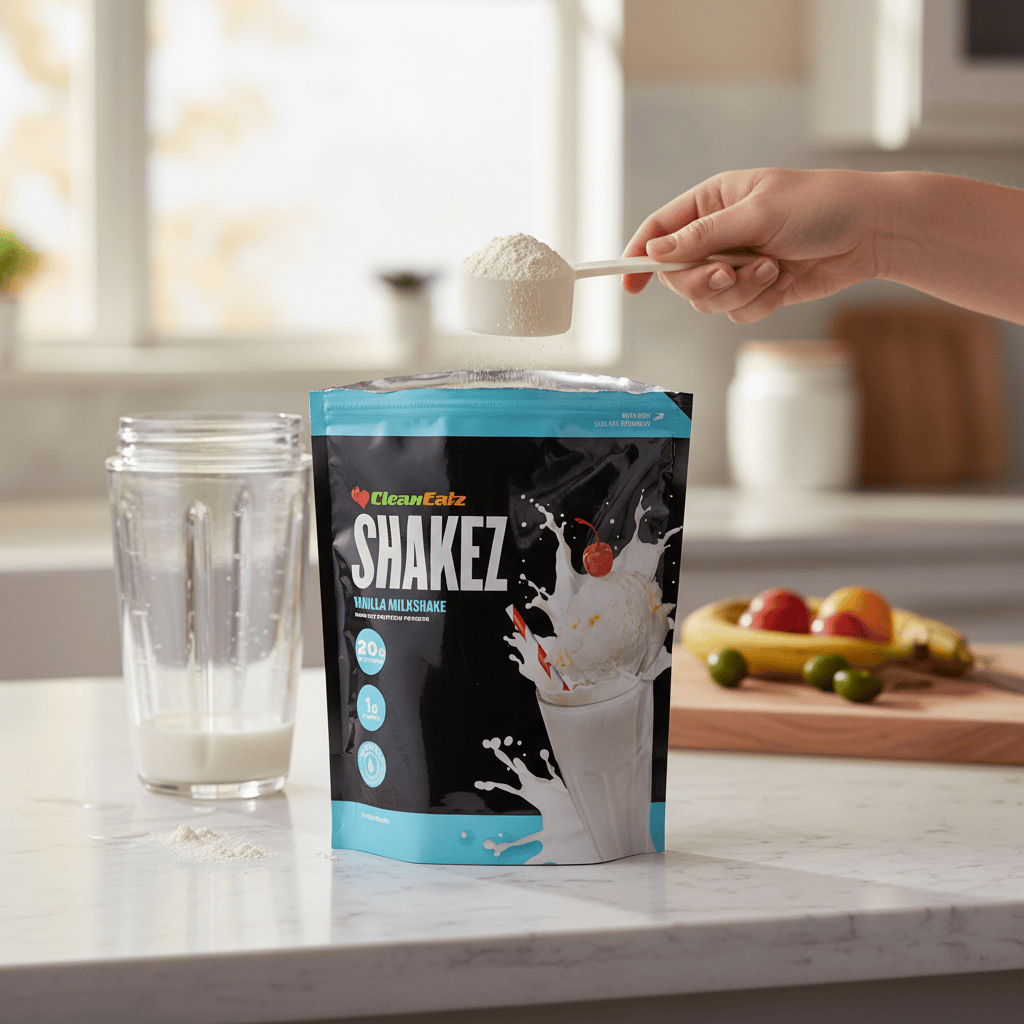
Our Shakez Protein Powder has 20 g of whey protein per scoop. Whey is about 11% leucine, so that scoop gives you roughly 2.2 g, inside the 0.7 to 3 g per serving the ISSN suggests. To get the same leucine from pea protein, you would need about 31 g of protein, which is closer to a scoop and a half.
So the grams tie, and the leucine does not. If you choose plant protein, buy a blend or take a slightly bigger serving. That small change closes most of the gap.
Who should choose whey or plant protein
Pick by your body
Key takeaways
- Whey has 43% essential amino acids and about 11% leucine. Plant isolates average 26% and about 7%.
- Matching 25 g of whey takes 37 to 40 g of rice, pea or soy protein.
- Plant protein is dairy-free, and pea and rice avoid the major allergens.
- Both powders land near 22 to 25 g of protein in a 30 g scoop.
- Trials at matched doses found similar strength gains from both.
Is whey protein better than plant protein for muscle? Slightly, per gram. A 2021 meta-analysis of 16 trials found no difference in absolute lean mass or strength between animal and plant protein. Adults under 50 gained about 0.4 kg more lean mass with animal protein. In head-to-head trials of whey protein vs plant protein for muscle building, 48 g of rice protein matched whey over 8 weeks. In a trial funded by a pea protein maker, 25 g of pea twice a day kept pace with whey over 12. Pair either one with real meals using What to eat when lifting.
There is no wrong powder here, only a better fit for your gut, your diet and your training. Go with the list that matches more of your week.
Choose whey if
- You want the most muscle-building leucine from the smallest scoop
- Dairy sits fine with you, or you do well with an isolate
- Taste and an easy mix decide whether you drink it
Choose plant protein if
- You have a milk allergy or real trouble with lactose
- You eat vegan or plant-forward
- You are fine taking a bigger scoop or a pea and rice blend
Whey vs plant protein bottom line
Hit your daily total
Is plant protein better than whey? Not per gram. Whey brings more leucine and essential amino acids in a smaller scoop, and it tastes milder. Plant protein is not a lesser choice, though. Dose it a little higher or choose a blend, and the research shows it builds muscle about as well. If dairy bothers you, it is the better pick.
Either way, the shake is a helper. The ISSN puts most active people at 1.4 to 2 g of protein per kg of body weight a day, and food can cover most of it. Our guide on how to Hit 140 grams of protein daily shows it can be done without a single shake.
If cooking that much protein is the hard part, our High protein meal plan adds about 2 extra ounces of meat to each meal for roughly 10 g more protein, with the macros printed on every label. For the shaker, our Shakez Protein Powder is a whey blend of concentrate and isolate with 20 g of protein and 1 g of sugar per scoop. It contains milk, so skip it if you need dairy-free.
Whey vs plant protein FAQ
Your questions
Short answers to the questions we hear most, from whether plant protein measures up to which one helps more with weight loss.
Is plant protein as good as whey?
Close, if you dose it right. Is plant protein as good as whey per gram? No. It has less leucine, so you need about 37 to 40 g of rice, pea or soy protein to match 25 g of whey. At matched doses, trials found similar strength and muscle gains. Blends like pea and rice close most of the gap.
Is whey or plant protein better for weight loss?
Neither one burns fat on its own. For plant protein vs whey protein for weight loss, what matters is your total calories and getting enough protein to stay full and protect muscle. Every gram of protein has 4 calories, so compare scoop labels. If you have a medical condition or take a GLP-1 medicine, talk with your doctor or a registered dietitian.
Is whey protein plant based?
No. Whey comes from milk. It is the protein left in the liquid part of milk after cheesemaking. So is whey protein plant based? Never, even when the tub looks green. If you want a plant-based powder, look for pea, rice, soy, hemp or a blend on the ingredient list, and check the allergen line for milk.
Do you need to combine plant proteins at every meal?
No. MedlinePlus says your essential amino acids don't need to be eaten at every meal. The balance over the whole day is what counts. A pea and rice blend in one scoop is still useful, since it raises the leucine and fills the gaps of each source in a single serving.
More protein guides for your goals
Keep reading
 Nutrition
Are Protein Shakes Good for Weight Loss?
 Dorothy M. Shirnyl, RND · May 8, 2026
 Nutrition
The Best Protein Sources For Building Muscle Vs. Losing Fat
 Staci Gulbin, MS, MEd, RD · Oct 7, 2026
 Nutrition
Protein Intake Calculator: How Much Protein You Need & How to Hit It
 Tina Sassine, RD, MPH · Jul 2, 2026
Sources
- ISSN position stand: protein and exercise, J Int Soc Sports Nutr 2017
- Gorissen et al., Amino acid composition of plant-based protein isolates, Amino Acids 2018
- Herreman et al., Protein quality of plant and animal proteins by DIAAS, Food Sci Nutr 2020
- Lim et al., Animal vs plant protein for lean mass and strength, Nutrients 2021
- Joy et al., 8 weeks of whey or rice protein supplementation, Nutr J 2013
- Babault et al., Pea protein vs whey during resistance training, J Int Soc Sports Nutr 2015
- Cosson et al., Sensory profiling of pea protein foods, Foods 2020
- Food allergies, FDA
- Lactose intolerance: eating & diet, NIDDK
On this page