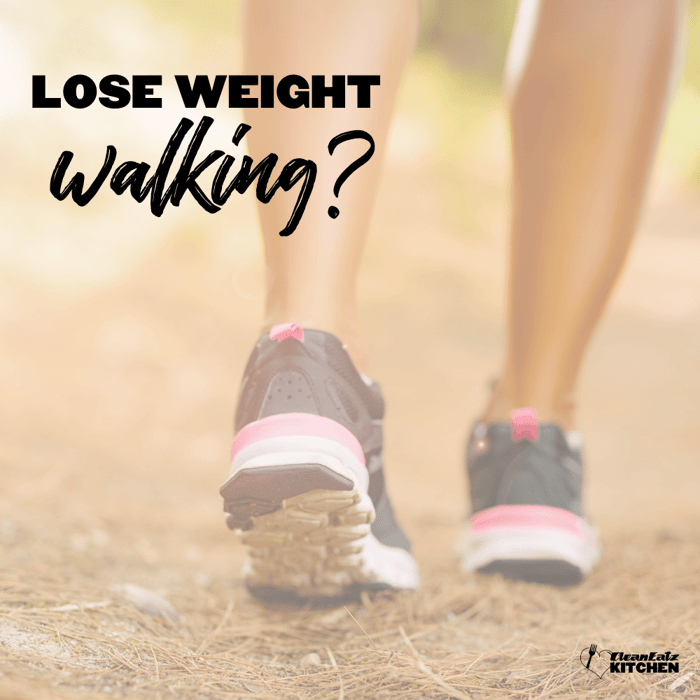

Quick Answer: Yes, walking can absolutely drive weight loss—especially when paired with a calorie deficit. Aim for 150–300 minutes per week of moderate walking, add intensity gradually with hills or intervals, and anchor your meals to meet your calorie and protein goals. For a complete exercise strategy, see our Complete Exercise Guide for Weight Loss.1,2
Why Walking Actually Works for Weight Loss
Walking doesn't get the respect it deserves. It's not flashy like HIIT, it doesn't require expensive equipment, and nobody's posting dramatic before-and-after photos crediting their daily strolls. But here's the thing: walking works, and the science backs it up.
The reason walking succeeds where more intense programs often fail comes down to one word: adherence. You can design the perfect workout routine, but if it's so demanding that you quit after two weeks, it's worthless. Walking, on the other hand, is something most people can do every single day without burnout, joint pain, or needing recovery time. That consistency compounds into real results.1
From a pure calorie-burning perspective, walking adds meaningful, repeatable energy expenditure. A brisk 45-minute walk can burn 250-400 calories depending on your weight and pace—and unlike running or jumping exercises, the low impact means you can do it again tomorrow without your knees staging a protest. Studies show that aerobic exercise like walking reduces both overall body fat and dangerous visceral fat in a dose-response manner: the more you walk (up to about 300 minutes weekly), the more fat you lose.2
Walking also scales beautifully. Start with easy 20-minute strolls, then gradually increase time, pick up the pace, add hills, or throw in some brisk intervals. Your body adapts, so the exercise evolves with you. And crucially, walking pairs perfectly with nutrition changes—research shows that adding moderate walking to an energy-restricted diet improves fat loss beyond diet alone.3 This is a key reason why many people asking whether they can lose weight by walking succeed when they focus on both movement and nutrition together.
How Much Walking Do You Actually Need?
The question everyone wants answered: how much walking will actually move the needle on weight loss?
The CDC recommends at least 150 minutes of moderate-intensity aerobic activity per week for general health benefits.1 But if fat loss is your primary goal, research suggests pushing toward 200–300 minutes weekly yields better results.2 That's roughly 40-60 minutes of walking five days a week, or shorter daily walks if you prefer.
As for steps, the 10,000-step goal you've heard about actually originated from a 1960s Japanese pedometer marketing campaign—not from science. That said, research does support higher step counts for weight management. A practical target for most people falls between 7,000 and 10,000+ steps daily, with studies showing that more steps generally correlate with better health markers.4 If you're currently averaging 3,000 steps, don't worry about hitting 10,000 immediately. Add 1,000-2,000 steps each week until you find a sustainable groove.
Pace matters too, but not as much as you might think. "Brisk" walking—defined as a pace where you can talk but not sing comfortably—typically falls around 3.5 to 4.5 mph. At this intensity, you're working at roughly 4.5-5.5 METs (metabolic equivalents), which means you're burning 4.5-5.5 times more calories than sitting still.5 Adding hills naturally pushes this higher without requiring you to consciously speed up.
Calories Burned: What to Realistically Expect
Let's talk numbers, because understanding the calorie math helps you set realistic expectations.
A simple formula: Calories per hour ≈ MET × body weight in kilograms (since 1 MET roughly equals 1 calorie per kilogram per hour).6 At a brisk pace of about 4.0 mph (around 5.5 METs), here's what different body weights burn per hour:
150 pounds (68 kg): 5.5 × 68 ≈ 375 calories/hour
175 pounds (79 kg): 5.5 × 79 ≈ 435 calories/hour
200 pounds (91 kg): 5.5 × 91 ≈ 500 calories/hour
These values vary with terrain, fitness level, and walking efficiency. The key takeaway is that diet still drives the calorie deficit. Walking supports weight loss, but it cannot fully compensate for consistently high calorie intake.
This is why the most successful weight loss approaches combine walking with intentional eating. For guidance on setting your calorie targets, check out our guide on how to set calorie goals for weight loss.
Combining Walking and Nutrition for Better Results
Here's where walking really shines: it amplifies the effects of good nutrition rather than trying to replace it.
A 12-week randomized controlled trial found that adding moderate walking to an energy-restricted diet led to significantly greater fat-mass loss compared to diet alone.3 Another 2024 meta-analysis confirmed that aerobic exercise creates dose-response improvements in body composition—meaning the more you do (up to a point), the better your results.2
The practical takeaway? Walking creates a larger calorie deficit without requiring you to eat uncomfortably small portions. If your maintenance calories are 2,200 and you want a 500-calorie daily deficit, you could eat 1,700 calories. Or you could eat 1,900 calories and walk off the other 200. Most people find the second approach more sustainable.
Walking also supports appetite regulation and stress reduction, both of which play an important role in long-term weight control. For many people, regular walks reduce emotional eating and improve overall adherence to healthy routines—another reason why the answer to whether you can lose weight by walking is yes, when the context is right.
For deeper strategies on structuring your approach, our Complete Exercise Guide for Weight Loss covers how to combine cardio, strength training, and nutrition for optimal results.
A Simple 4-Week Walking Progression
For beginners or those returning to activity, gradual progression is key:
Week 1: Walk 20–30 minutes for 5 days at an easy-to-moderate pace. Once during the week, include a 10-minute hill segment or pick up to a brisk pace for 10 minutes.
Week 2: Increase to 30–40 minutes for 5 days. Add interval work: 6 rounds of 1 minute brisk, 1 minute easy recovery.
Week 3: Walk 40–50 minutes for 5–6 days. Include one longer walk (about 60 minutes) and bump intervals to 8 rounds.
Week 4: Aim for 45–60 minutes on 5–6 days. Dedicate one day to intervals (10 rounds of 1–2 minutes brisk) and keep one long walk on the schedule.
To preserve muscle while losing fat, add 2 short strength sessions per week—even 15-20 minutes of bodyweight exercises or resistance training makes a difference. For recovery fuel ideas, see our guides on post-workout carbs and high-protein eating.
Making It Stick: The Nutrition Support System
Consistency with walking gets much easier when you're not also fighting decision fatigue around meals. If you're spending mental energy every day figuring out what to eat, how much, and whether it fits your goals—that's energy that could go toward lacing up your shoes and heading out the door.
That's where having a system helps. Clean Eatz Kitchen's calorie-controlled meal plans take the guesswork out of nutrition so you can focus on building your walking habit. The Weight Loss Meal Plan is designed specifically for creating a sustainable deficit, with portions and macros already calculated.
You can check the Nutrition Info page to see exactly what you're getting, and keep protein-forward snacks on hand for when hunger hits between meals. For more on building a complete approach, read The Best Weight Loss Program.
Frequently Asked Questions
Can you lose weight by walking alone?
Yes, walking can be enough to lose weight when paired with a calorie deficit. Research shows that adding moderate walking to an energy-restricted diet improves fat loss compared to diet alone.2,3 For best results, aim for 150-300 minutes of walking per week alongside mindful eating.
How fast should I walk to lose weight?
Aim for a "brisk" pace where you can talk but not sing—typically 3.5 to 4.5 mph. At this pace, a 150-pound person burns roughly 300-375 calories per hour. Hills or intervals can boost intensity if you prefer shorter sessions.5
How many steps should I walk per day for weight loss?
Research suggests 7,000-10,000+ steps daily supports weight management, with higher step counts linked to better health outcomes.4 However, consistency matters more than hitting a specific number. Use steps as a habit anchor rather than a rigid rule.
Will walking reduce belly fat?
Yes, though you can't spot-reduce fat from specific areas. Walking reduces overall body fat and visceral (belly) fat, especially as your weekly walking minutes increase. A 2024 meta-analysis found aerobic exercise shows dose-response reductions in waist circumference up to about 300 minutes per week.2
Is walking better than running for weight loss?
Running burns more calories per minute, but walking is easier to sustain long-term with lower injury risk. Research shows that people who walk tend to maintain their exercise habits more consistently than runners. The best exercise for weight loss is the one you'll actually do regularly.
The Bottom Line
Walking is one of the most underrated yet powerful tools for weight loss. It may not burn the most calories per minute, but it excels in sustainability, safety, and long-term adherence. When consistent walking is combined with a modest calorie deficit, adequate protein intake, and supportive habits, weight loss becomes far more achievable.
Start where you are, build gradually, and focus on consistency. The cumulative effect of daily walking is more powerful than it seems—and for most people asking can you lose weight by walking, the evidence says yes.
For a comprehensive approach that ties together exercise, nutrition, and the science of sustainable weight loss, explore our Complete Exercise Guide for Weight Loss.
References
1. CDC — Adult activity guidelines (150–300 min/wk moderate + 2x strength). Overview.
2. Jayedi A, et al. 2024 meta-analysis: aerobic exercise shows dose-response reductions in weight, waist, and body fat up to ~300 min/wk. JAMA Netw Open.
3. Kleist B, et al. 12-wk RCT: adding moderate walking to an energy-restricted diet improved fat-mass loss vs. diet alone. PubMed.
4. Xu C, et al. 2024 overview: higher daily steps link with better health outcomes (dose-response). Review.
5. Compendium of Physical Activities — Walking MET values by pace. Page.
6. Compendium overview — What a MET is (≈1 kcal/kg/hr). Home.
Educational content only; not medical advice.