
Quick Answer: Yes — protein is an effective nutrient for weight loss when included as part of a healthy, balanced diet. It helps you feel full longer, supports muscle maintenance during a calorie deficit, and requires slightly more energy to digest than carbs or fat. A simple goal is 15–35 grams of protein per meal, or about 0.8–1 gram per pound of body weight per day, depending on your goals and activity level.
Last updated: January 7th, 2026
Table of Contents
It may seem like the best way to lose weight is simply to eat less, but it isn’t that simple. Sustainable weight loss usually comes from a combination of two things: creating a calorie deficit and improving the quality of the foods you choose.
One of the most effective ways to make a calorie deficit feel easier is to prioritize nutrients that keep you full and satisfied — so you’re not constantly fighting hunger. For many people, protein can be a powerful tool because it supports fullness, helps preserve lean muscle, and makes meals more satisfying overall.
In this article, we’ll explain why protein supports weight loss, how it works in the body, and practical, realistic ways to add more protein to your day to help you lose weight — and keep it off.
Why Protein Can Help You Lose Weight
Protein, carbohydrates, and fat all play important roles in a healthy diet. That said, during weight loss, protein can be particularly useful because it may help with satiety and lean mass retention while eating in a calorie deficit. Studies suggest that higher-protein dietary patterns are often associated with improved fullness and better body composition outcomes — especially alongside resistance training. Here’s why protein may help:
- Protein keeps you full longer. Since protein digests slowly, it helps you stay satisfied for hours after meals. One of the first triggers of hunger is an empty stomach—and because protein takes longer to break down, it stays in your stomach longer. This protects you from constant cravings and the urge to snack between meals.
- Protein preserves muscle mass. When you're in a calorie deficit, your body doesn't just burn fat—it can break down muscle too. Eating adequate protein signals your body to preserve that muscle tissue. This matters because muscle burns more calories than fat, even at rest. The more muscle you maintain during weight loss, the higher your metabolism stays.
- Protein burns calories during digestion. Your body uses energy to digest food—this is called the thermic effect of food. Protein has a much higher thermic effect than carbs or fat. While your body uses about 5-10% of carbohydrate calories and 0-3% of fat calories for digestion, it uses 20-30% of protein calories. That means eating 100 calories of protein only nets you about 70-80 usable calories.
- Protein helps regulate hunger hormones. Hunger is controlled by your hypothalamus, which responds to various hormones. Protein increases levels of satiety hormones like GLP-1, peptide YY, and cholecystokinin while reducing the hunger hormone ghrelin. The result: you naturally want to eat less without feeling deprived.
For a complete breakdown of how protein fits into a weight loss diet—along with the 100 best foods to eat—see our Complete Guide to the Best Foods for Weight Loss.
Best High-Protein Foods for Weight Loss
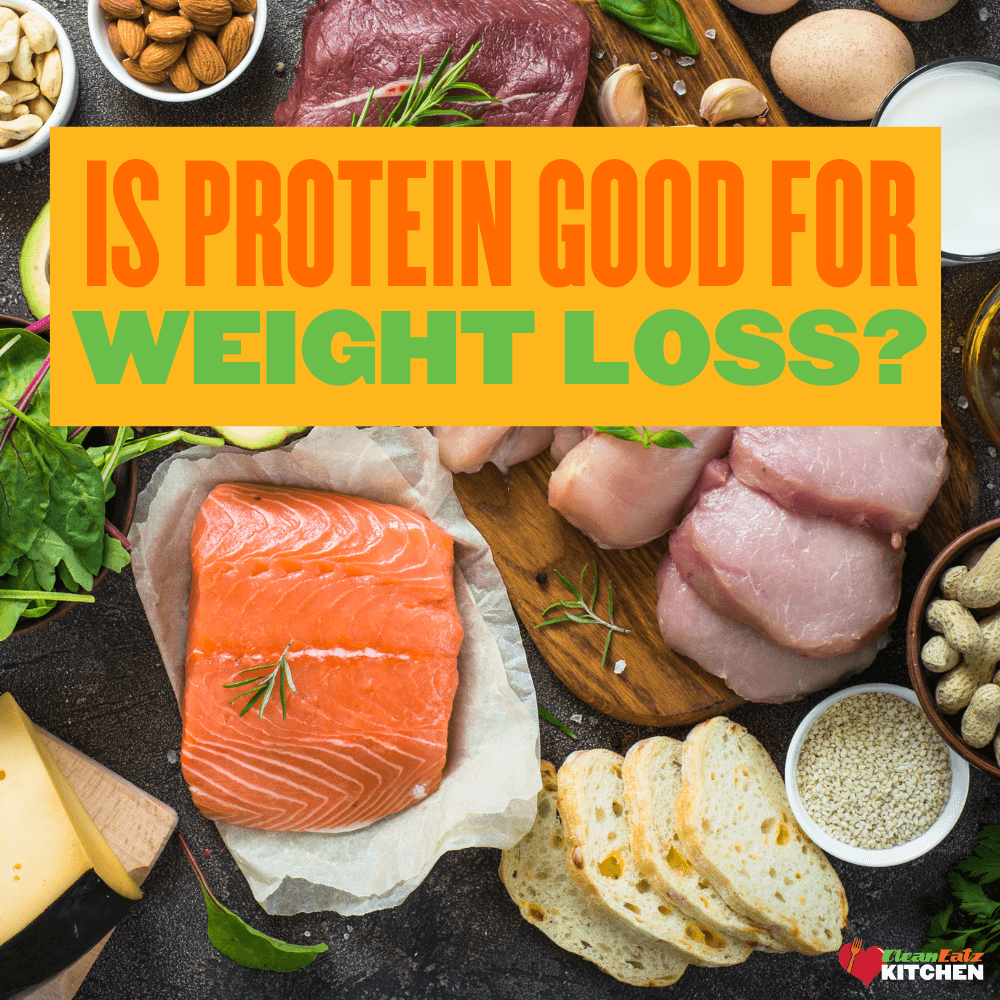
Most foods contain some protein, but the best sources for weight loss are those that deliver high protein without excessive calories. Focus on these:
Lean meats: Chicken breast, turkey, lean beef, and pork tenderloin provide 25-30+ grams of protein per serving with relatively low fat content.
Fish and seafood: Salmon, tuna, cod, and shrimp are excellent sources. Fatty fish like salmon also provide omega-3s that support overall health.
Eggs: One of the most versatile and affordable protein sources. The whole egg provides about 6 grams of protein plus essential nutrients.
Dairy: Greek yogurt and cottage cheese are particularly good choices—they're high in protein and can work for breakfast, snacks, or as recipe ingredients.
Legumes: Beans, lentils, and chickpeas offer protein plus fiber, making them especially filling. Great for plant-based eaters or anyone looking to add variety.
Nuts and seeds: Almonds, peanuts, pumpkin seeds, and chia seeds provide protein along with healthy fats. Watch portions since they're calorie-dense.
If you struggle to meet your protein needs through food alone, a quality protein supplement can help bridge the gap. Our Clean Eatz Protein Powder is designed for exactly this purpose.
How Much Protein Do You Need?
The government's Recommended Dietary Allowance (RDA) for protein—46 grams for women and 56 grams for men—represents the minimum to prevent deficiency, not the optimal amount for weight loss.
For active weight loss, research supports significantly higher intakes. A good target is 0.8-1.2 grams of protein per pound of body weight, or at least 25-35 grams per meal. For a 160-pound person, that's roughly 130-190 grams daily.
Rather than trying to hit your entire protein goal in one or two meals, spread it across the day. Include protein at breakfast (where most people fall short), lunch, dinner, and snacks. This approach keeps you satisfied throughout the day and supports steady muscle protein synthesis.
If tracking macros feels overwhelming, focus on this simple rule: make sure every meal and snack includes a solid protein source. A well-balanced diet built around protein will naturally support your weight loss goals.
Making High-Protein Eating Easy
The biggest challenge with eating enough protein isn't knowing what to eat—it's consistently preparing those foods when life gets busy. This is where planning ahead makes the difference.
Batch-cooking proteins on the weekend, keeping hard-boiled eggs in the fridge, and having Greek yogurt on hand for quick snacks can help you hit your targets without much daily effort.
If meal prep isn't realistic for your schedule, our High-Protein Meal Plan delivers chef-prepared meals with 30+ grams of protein each—ready to heat and eat in minutes. For more flexibility, the Build-a-Meal Plan lets you choose exactly which high-protein meals you want each week.
The Bottom Line
Protein is one of the most valuable tools for weight loss. It keeps you full, preserves your muscle mass, burns extra calories during digestion, and helps regulate the hormones that control hunger. By prioritizing protein at every meal—aiming for 25-35 grams each time—you can lose weight while staying satisfied and maintaining the muscle that keeps your metabolism running strong.
For a deeper dive into building a complete weight loss diet, including specific foods, meal plans, and portion guidance, check out our 100 Best Foods for Weight Loss guide.
Frequently Asked Questions
How much protein should you eat a day to lose weight?
For weight loss, aim for 0.8-1.2 grams of protein per pound of body weight, or about 25-35 grams per meal. This is higher than the minimum RDA because weight loss requires extra protein to preserve muscle mass and control hunger. For a 150-pound person, that's roughly 120-180 grams daily spread across meals and snacks.
Does protein burn belly fat?
Protein doesn't target belly fat specifically—no food does. However, higher protein intake supports overall fat loss by increasing satiety, preserving muscle mass, and boosting metabolism through its thermic effect. As you lose body fat throughout your body, belly fat will decrease too.
What protein is best for weight loss?
The best proteins for weight loss are lean, whole-food sources: chicken breast, fish, eggs, Greek yogurt, cottage cheese, legumes, and tofu. These provide high protein relative to their calorie content. Quality supplements like protein powder can help if you struggle to meet your needs through food alone.
Does protein burn fat without exercise?
Protein supports fat loss even without exercise by increasing satiety, requiring more calories to digest, and helping preserve muscle during a calorie deficit. However, combining adequate protein with resistance training produces significantly better results—both for fat loss and for maintaining the muscle that keeps your metabolism elevated.
Disclaimer: This content is provided for informational use only and is not intended as medical advice or as a substitute for the medical advice of a healthcare professional.