
Access Denied
IMPORTANT! If you’re a store owner, please make sure you have Customer accounts enabled in your Store Admin, as you have customer based locks set up with EasyLockdown app. Enable Customer Accounts
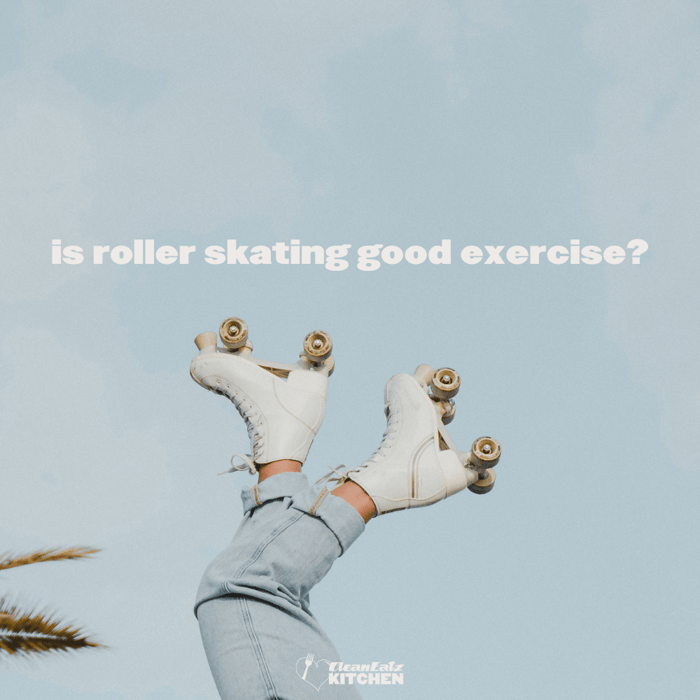
Is Roller Skating Good Exercise? Benefits & Workouts
Jason Nista
Exercises & Fitness
01/02/2026 8:20pm
8 minute read
Listen to article
Audio generated by DropInBlog's Blog Voice AI™ may have slight pronunciation nuances. Learn more
Quick Answer: Yes, roller skating is excellent exercise. It's a low-impact cardio workout that burns 250-350+ calories per 30 minutes while strengthening your glutes, quads, hamstrings, and core. The smooth gliding motion is easier on joints than running, making it ideal for anyone who wants effective cardio without the pounding.
There's something about strapping on a pair of skates that makes exercise feel less like a chore and more like play. Maybe it's the rhythm of the motion, or the breeze when you pick up speed, or the fact that you're actually going somewhere instead of running in place on a treadmill. Whatever it is, roller skating delivers a surprisingly complete workout while feeling nothing like one.
The American Heart Association recognizes roller skating as an effective aerobic exercise, placing it in the same category as jogging and cycling for cardiovascular benefit. A 2022 meta-analysis published in the Journal of Scientific & Technical Research found that roller skating improved leg strength, speed, and endurance across multiple studies. And because you're constantly balancing on wheels, your core muscles stay engaged the entire time—something you don't get from a stationary bike.
Why Skating Works as a Workout
Roller skating raises your heart rate to levels comparable to brisk cycling or an elliptical session. The difference is that skating happens outdoors (or at a rink with music and lights), which tends to make the time pass faster. Research from the Universitat Konstanz found that moderate roller skating elevates heart rate to 140-160 beats per minute, with vigorous skating pushing into the 180 bpm range.
What makes skating particularly valuable is its low-impact nature. Unlike running, where each footstrike sends shock through your joints, skating involves smooth, continuous gliding. Studies on inline skating have found that the pressure patterns on your feet are similar to walking—and significantly lower than running. This makes skating an excellent option if you have knee concerns or simply want to protect your joints long-term. For a deeper dive into exercise strategies that support sustainable fitness, our Complete Exercise Guide for Weight Loss covers the science behind choosing the right workouts for your goals.
The calorie burn is substantial too. A 150-pound person skating at moderate pace burns roughly 250 calories in 30 minutes. Pick up the intensity and that jumps to around 350 calories. Scale those numbers up for longer sessions or heavier body weights, and you're looking at a legitimate fat-burning activity. To dial in your daily calorie targets alongside your skating routine, try our Calorie Calculator.
Muscles You'll Actually Feel Working
The first thing most people notice after their initial skating session is their glutes and thighs. That's because the skating stride involves a lateral push-off that's different from walking, running, or cycling. You're extending your hip while simultaneously rotating it outward, which recruits your gluteus maximus and gluteus medius in ways those other exercises don't.
Your quadriceps and hamstrings handle the knee flexion and extension during each push and glide. Because you maintain a slightly bent-knee position throughout, there's continuous tension on these muscles—similar to holding a partial squat while moving. Your calves work overtime to control your ankle position and edge pressure on the wheels.
Perhaps most importantly, your core muscles—deep abdominals and obliques—stay constantly engaged to keep you balanced and upright. A 2023 study in the International Scientific Journal of Kinesiology found a significant correlation between core stability and balance performance in roller skaters. This means skating doesn't just work your legs; it builds the kind of functional core strength that improves your posture and stability in everyday life.
Getting Started: What Beginners Need to Know
Before you focus on speed or distance, focus on control. Learning to stop safely is more important than learning to go fast—a lesson best learned before you're barreling toward a curb. Practice the heel brake (for inline skates) by extending your braking foot forward and gradually pressing down. For quad skates, the plow stop—widening your stance with toes slightly inward—works well for controlled deceleration.
Your stance matters more than you might think. Keep your feet about hip-width apart, knees softly bent (never locked), chest tall, and eyes forward. Weight should rest over your mid-foot, not back on your heels. Short, quick pushes are more stable than long, overextended strides—especially while you're building confidence.
Safety gear isn't optional when you're learning. Wrist guards are arguably the most important piece because new skaters instinctively catch themselves with their hands when falling. Add a helmet and knee pads, and you've covered the most common injury points. Once you're comfortable on flat ground, you can start exploring smooth outdoor paths—just avoid debris, cracks, and traffic.
Sample Workouts to Try
A beginner session might look like 5 minutes of easy gliding to warm up, 10 minutes at a steady moderate pace, then 5 minutes easy with 3-4 practice stops mixed in. Total time: 20 minutes. That's enough to get your heart rate up and build skills without overwhelming yourself.
Once you're comfortable, try interval training: 5 minutes easy, then alternating 2 minutes brisk with 1 minute easy for 6 rounds, followed by a 5-minute cooldown. This 30-minute session burns more calories than steady-state skating and improves your cardiovascular capacity faster.
For endurance building, work up to 45-minute sessions with a gradual warm-up, 25 minutes at moderate intensity, and a 10-minute cooldown. Pair your skating with 2-3 strength sessions per week—squats, hip thrusts, and core work like planks—to build the muscles that support your skating. Our article on crunches and core exercises has form tips that translate well to skating stability.
How Skating Compares to Other Cardio
Compared to running, skating burns similar calories but with significantly less joint impact. Compared to cycling, skating engages more of your stabilizing muscles and core. Compared to the elliptical, skating gets you outside and works your balance in ways a machine can't replicate.
The honest trade-off is skill. Running and walking require almost no learning curve—you just go. Skating takes practice before it feels natural. But once you've got it, you have a cardio option that's genuinely fun, effective, and easy on your body. For more on low-impact cardio options, see our comparison of elliptical training for weight loss.
Fueling Your Skating Sessions
Like any cardio workout, skating benefits from proper nutrition. If you're skating for fitness and weight management, you'll want to pay attention to what you eat before and after sessions. A light meal with carbs and protein about 2 hours before skating provides energy without making you feel sluggish. Post-skate, focus on protein to support muscle recovery.
For longer outdoor sessions, hydration matters—especially in warm weather. Bring water, and consider adding electrolytes on particularly hot or sweaty days. Our guide to electrolytes and hydration covers what to look for.
If you're building skating into a regular fitness routine, meal prep makes staying on track much easier. Clean Eatz Kitchen's High-Protein Meal Plan takes the guesswork out of post-workout nutrition, delivering portion-controlled meals designed to support active lifestyles.
Frequently Asked Questions
Is roller skating good for weight loss?
It can be—especially if you skate consistently 2-5 days per week at moderate-to-brisk pace and maintain a small calorie deficit. Skating alone won't overcome poor eating habits, but combined with balanced nutrition, it's an effective calorie-burning activity.
How many calories does skating burn?
Roughly 250-350 calories in 30 minutes for a 150-pound person, depending on intensity. Heavier individuals burn more; lighter individuals burn less. Hills, wind resistance, and skating tricks all increase the burn.
Is it low impact on knees?
Yes. The gliding motion significantly reduces impact compared to running. Keep your knees slightly bent, stride short, and progress gradually. If you experience persistent knee pain, consult a healthcare provider.
Rollerblades vs. regular skates—what's better?
Both provide excellent exercise. Inline skates (rollerblades) tend to feel more stable at speed and work well on outdoor paths. Quad skates are popular for rink skating and dance-style moves. Choose whichever type you'll actually use.
How often should I skate?
Start with 2-3 sessions per week, 20-30 minutes each. As you progress, aim for 150-300 minutes of moderate activity weekly across all exercise—skating can cover a large portion of that.
The Bottom Line
Roller skating is legitimately good exercise. It strengthens your lower body, challenges your core, improves your balance, and burns meaningful calories—all while feeling more like recreation than work. The low-impact nature makes it sustainable long-term, and the skill element keeps it interesting in ways that treadmill walking never will.
Start with short sessions, wear your protective gear, and give yourself permission to be wobbly for a while. Once the mechanics click, you'll have a cardio option you actually look forward to.
Disclaimer: This article provides general fitness information and is not medical advice. If you have injuries, joint conditions, or other health concerns, consult a healthcare provider before starting a new exercise program.
Related Articles

Is Hula Hooping Good Exercise? Benefits & Calories
9 minute read
Can Exercise Help with Anemia?
6 minute read
Invalid password
Enter