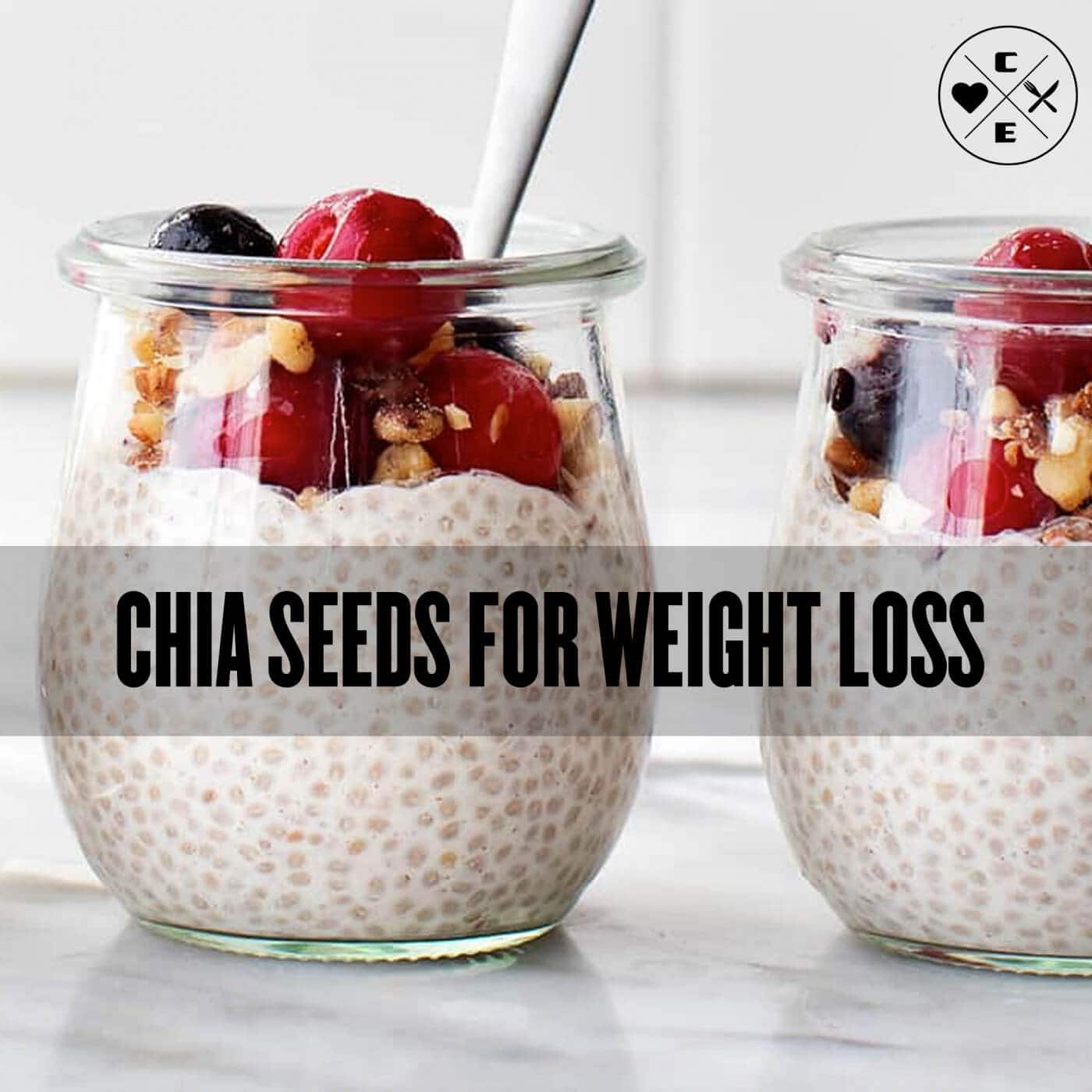

Quick Answer: Chia seeds support weight loss through fiber — close to 10 grams per two tablespoons — which increases satiety and helps you eat less overall. They do not burn fat. A GRADE-assessed meta-analysis in Nutrition Reviews found significant reductions in blood pressure but no significant effect on body weight, BMI, body fat percentage, or blood sugar markers. Use chia as a satiety tool inside a protein-forward, calorie-appropriate diet, not as a standalone fat-loss strategy.
Table of Contents
- The Honest Truth About Chia and Weight Loss
- Why Chia Can Help
- What the Research Actually Shows
- Chia Seed Nutrition, Verified
- How to Buy and Store Chia
- How to Use Chia for Weight Loss
- High-Protein Chocolate Chia Pudding
- 5 Meals That Use Chia Properly
- Flavor Variations
- Mistakes That Waste the Effort
- Safety and Medication Interactions
- Frequently Asked Questions
- The Bottom Line
The Honest Truth About Chia and Weight Loss
If someone tells you chia seeds melt belly fat, they are selling something.
Here is what chia actually does well: it makes you feel fuller on fewer calories. That is the whole benefit. And it is worth more than it sounds, because most people do not fail at weight loss from not knowing what to eat. They fail because they are hungry, they feel deprived, and eventually they cave. Anything that makes a calorie deficit more comfortable is worth having.
What chia will not do is change the arithmetic. Two tablespoons is around 136 calories, which is not nothing. Sprinkled on top of everything you already eat, chia adds calories and subtracts nothing. Used to replace something less filling, it earns its place.
This guide covers what the research actually found — including the parts that did not work — what the numbers really are, and how to use chia so it does the one job it is good at.
Why Chia Can Help
The Fiber, Which Is the Real Mechanism
Two tablespoons of chia carries roughly 9.6 grams of fiber — about a third of the 28-gram daily value, from something you can stir into yogurt in ten seconds. Gram for gram, very little else in a normal grocery basket competes.
What makes chia fiber distinctive is that much of it is soluble and forms a gel on contact with liquid. The seeds absorb many times their weight in water, and that gel slows the rate at which the stomach empties. Slower emptying means fullness that lasts past the next hour, and a gentler glucose curve, which matters if afternoon crashes are what sends you to the vending machine.
Most Americans get about 15 grams of fiber a day against a recommended 25 to 38. Chia closes a meaningful slice of that gap in one spoonful. Our ultimate guide to dietary fiber covers why the gap matters, and the 100 best foods for weight loss guide puts chia in context against everything else.
The Omega-3s, With a Caveat
Chia is one of the richest plant sources of alpha-linolenic acid. Two tablespoons provides about 5 grams of ALA, roughly three times the adequate intake for adults.
The caveat matters though: ALA converts to EPA and DHA — the forms that do most of the work — at a low single-digit rate in humans. So chia is not a substitute for fatty fish, and anyone marketing it that way is skipping a step. It is a good ALA source. That is a narrower claim, and it is the true one.
The Protein, Which Is Minor
About 4.6 grams per two tablespoons, and it is a complete protein containing all nine essential amino acids. Useful, not decisive. If you are relying on chia for protein you will fall short — pair it with Greek yogurt, cottage cheese, or protein powder and let those do the heavy lifting.
What the Research Actually Shows
This is the section most chia articles skip, and it is the reason to trust the rest of the page.
What Held Up
The GRADE-assessed dose-response meta-analysis in Nutrition Reviews, pooling eight randomized controlled trials, found significant reductions in systolic blood pressure (−7.19 mmHg) and diastolic blood pressure (−6.04 mmHg). Those are meaningful cardiovascular numbers.
Worth knowing that the effect size is unsettled. Other meta-analyses put the systolic reduction closer to 2.8 to 3.3 mmHg, and the trials are small — eight studies, a few hundred participants. The direction is consistent; the magnitude is not. Treat the seven-point figure as the optimistic end of a real range.
A 2024 systematic review of chia in overweight adults found a significant reduction in waist circumference of about 2.8 cm and a drop in C-reactive protein, an inflammation marker, while BMI did not move. Waist down and BMI flat is an interesting combination, and it hints at body-composition change that scale weight would not capture.
What Did Not
The same Nutrition Reviews meta-analysis found no significant effect on body weight, BMI, body fat percentage, or glycemic markers. Not a small effect. No significant effect.
The most-cited individual trial points the same way. A 2009 study in Nutrition Research gave overweight adults 25 grams of chia twice daily for twelve weeks and found no differences in body mass, body composition, or disease risk factors against placebo. That is 50 grams a day — double what anyone realistically eats — for three months, with nothing to show on the scale.
What That Means for You
Chia is a satiety tool, not a weight loss agent. The distinction is not pedantic — it changes how you use it. A tool that makes a deficit easier to hold is valuable precisely because adherence is what most weight loss attempts fail on. But it only works if the deficit exists in the first place.
Chia Seed Nutrition, Verified
Values below are per USDA reference data for dried chia seeds. Note the serving size: two tablespoons is approximately 28 grams, or one ounce, which is the standard reference serving. Plenty of published chia tables quietly mix a 12-gram tablespoon with a 28-gram double serving, and the arithmetic stops working.
| Nutrient | 1 Tbsp (~14g) | 2 Tbsp (~28g / 1 oz) | % Daily Value (2 Tbsp) |
|---|---|---|---|
| Calories | 68 | 136 | 7% |
| Fiber | 4.8g | 9.6g | 34% |
| Protein | 2.3g | 4.6g | 9% |
| Fat (total) | 4.3g | 8.6g | 11% |
| Omega-3 (ALA) | 2.5g | 5.0g | ~3x adequate intake |
| Carbohydrates | 5.9g | 11.8g | 4% |
| Calcium | 88mg | 177mg | 14% |
| Magnesium | 47mg | 94mg | 22% |
Full values are searchable at USDA FoodData Central under "chia seeds, dried." ALA has an adequate intake rather than a daily value, which is why that row is expressed as a multiple instead of a percentage.
Chia vs. Flax
| Factor | Chia (2 Tbsp) | Flax (2 Tbsp) |
|---|---|---|
| Fiber | 9.6g | 4g |
| Omega-3 (ALA) | 5.0g | 3.2g |
| Protein | 4.6g | 2.6g |
| Must grind? | No | Yes |
| Lignans | Low | Very high |
| Forms gel? | Yes, thick | Yes, mild |
For satiety specifically, chia wins on fiber and on not needing a grinder — whole flax passes through largely undigested, which is a failure mode nobody warns you about. Flax wins on lignans. Neither margin is big enough to agonize over. More detail in our guide to flax seeds for weight loss.
How to Buy and Store Chia
Black and white chia are nutritionally identical, so buy whichever is cheaper. Look for a resealable bag and check the date, though chia is forgiving — its antioxidants protect the omega-3 fats, so it does not go rancid the way flax does.
Store it in a cool dark cupboard in something airtight and it will hold two to four years unopened, one to two after opening. Prepared chia pudding goes in the fridge and gets eaten within five to seven days; the texture actually improves after a day as the seeds finish hydrating.
On cost, chia runs roughly $8 to $15 a pound, which works out to something like $0.20 to $0.35 per two-tablespoon serving — cheaper than most fruit and far cheaper than any supplement making bigger promises. Buy the one or two pound bag rather than the small jar in the baking aisle.
How to Use Chia for Weight Loss
Four things determine whether chia does anything for you.
Hydrate it first, always. Never eat dry chia and drink water afterward. The seeds absorb liquid fast enough to swell in the esophagus, and there are documented cases of obstruction from exactly this. Ten to twenty minutes in liquid, or blended into a smoothie, and the risk is gone. This is the one non-negotiable on the page.
Start at one tablespoon. Your gut needs a week or two to adapt to the fiber. Going straight to two or three tablespoons produces gas, bloating and cramping, and people who do that usually decide chia does not agree with them when what actually happened was too much too fast.
Drink water. Fiber without fluid is how you trade a satiety benefit for constipation. Eight ounces with a chia-containing meal, and normal hydration otherwise.
Pair it with protein. Chia alone will not hold you. The combination that works is fiber plus 25 to 35 grams of protein — Greek yogurt, cottage cheese, protein powder, eggs. Our 10 healthy breakfast ideas for weight loss covers how to build that pairing.
Beyond that, the easy entry points are stirring it into Greek yogurt or oatmeal, blending it into smoothies, or making a jar of pudding on Sunday. It also thickens salad dressings, works as an egg replacement at one tablespoon chia to three tablespoons water, and disappears into soups and chili if you want fiber without dessert.
High-Protein Chocolate Chia Pudding
The protein powder is what takes this from a light snack to something that actually holds you. Without it you have a fiber dessert, which is pleasant and not filling.
Prep: 5 minutes | Total: 4 hours, mostly hands-off | Serves: 2
Per serving: 245 calories, 18g protein, 18g carbs, 9g fat, 11g fiber.
Ingredients
- 1/4 cup chia seeds
- 1 cup unsweetened almond milk
- 1 scoop chocolate protein powder (about 25g protein)
- 1 tablespoon unsweetened cocoa powder
- 1 teaspoon vanilla extract
- 1 tablespoon maple syrup or honey (optional)
- Fresh berries for topping
Instructions
- In a medium bowl or large mason jar, whisk together the almond milk, protein powder, cocoa powder, vanilla, and sweetener until completely smooth. Do not rush this — lumpy protein powder ruins the texture and you cannot fix it later.
- Add the chia seeds and whisk vigorously for 1-2 minutes to distribute them evenly.
- Let the mixture sit for 5 minutes, then whisk again. This breaks up the clumps that form as the chia starts to gel.
- Cover and refrigerate at least 4 hours, or overnight. It should be thick and creamy when ready.
- Divide between two bowls or jars, top with berries, and serve. Keeps 5 days in the fridge.
Make four to six servings in individual jars and you have grab-and-go snacks for the week. If you would rather skip the assembly entirely, our High Protein Overnight Oats are pre-portioned at 20g protein per pouch for $3.49 — same idea, no measuring.
5 Meals That Use Chia Properly
Each of these pairs chia with enough protein to matter.
1. Power Breakfast Parfait (~380 calories, 32g protein)
Layer in a jar: 1 cup Greek yogurt, 2 Tbsp chia stirred in and rested 10 minutes, 1/2 cup mixed berries, 2 Tbsp sliced almonds. Protein from the yogurt, fiber from chia and berries, fat from the almonds. This one genuinely holds until lunch.
2. Green Protein Smoothie (~350 calories, 35g protein)
Blend 1 scoop vanilla protein powder, 1 cup spinach, 1/2 frozen banana, 1 Tbsp chia, 1 Tbsp almond butter, 1 cup unsweetened almond milk, ice. The chia thickens it without touching the flavor.
3. Chia-Crusted Salmon Bowl (~480 calories, 38g protein)
Press 1 Tbsp chia, 1 tsp sesame seeds and herbs onto a 4 oz salmon fillet before baking at 400°F for 12 minutes. Serve over 1/2 cup brown rice with a cup of roasted broccoli.
4. Chia Overnight Oats (~420 calories, 30g protein)
Mix 1/2 cup rolled oats, 2 Tbsp chia, 1 scoop protein powder, 3/4 cup milk, 1/2 cup Greek yogurt. Refrigerate overnight, top with banana and cinnamon. Meal-preps perfectly.
5. Cottage Cheese Chia Bowl (~340 calories, 30g protein)
Combine 1 cup low-fat cottage cheese, 1.5 Tbsp chia rested 10 minutes, 1/2 cup pineapple, 1 Tbsp coconut flakes, a drizzle of honey. Fast and surprisingly good.
If the assembly is the part that stops happening, our Weight Loss Meal Plan handles the portioned, protein-forward side of things and you add a tablespoon of chia to breakfast on your own. Calories, protein and carbs for every meal are on our meal nutrition page.
Flavor Variations
Chia has essentially no flavor of its own, which makes it endlessly adaptable. A few that work.
Tropical is chia with coconut milk, diced mango and lime zest. PB&J is almond milk, a tablespoon of natural peanut butter and mashed strawberries. Vanilla chai wants milk, vanilla, and a quarter teaspoon each of cinnamon, ginger and cardamom. Lemon blueberry is milk, lemon zest, blueberries and a little honey. Mocha uses cold brew instead of milk with chocolate protein powder.
And a savory one, which sounds wrong and is not: a tablespoon stirred into tomato soup or chili adds fiber and thickness without any sweetness at all.
Mistakes That Waste the Effort
1. Eating it dry
Covered above, and repeated here because it is the only entry on this list that is a safety issue rather than an efficiency one. Dry chia plus water can obstruct the esophagus. Hydrate first.
2. Adding chia instead of substituting
Two tablespoons is 136 calories. Added on top of an unchanged diet, chia makes you eat more, not less. It has to replace something — the afternoon granola bar, the second helping, the handful of crackers. Replacement is the entire mechanism.
3. Starting at three tablespoons
Adding 15 to 20 grams of fiber overnight to a gut that is used to 15 grams a day produces predictable misery. One tablespoon for a week, then two.
4. Not drinking enough water
Fiber pulls water into the digestive tract. Without enough fluid you get the constipation and bloating without the fullness, which is the worst possible trade.
5. Treating chia as the strategy
It is one input. Without adequate protein, a real calorie deficit, and some movement, chia does nothing measurable — which is exactly what the trials found. Our complete meal prep guide covers building the system it fits into.
6. Buying pre-made chia products without reading the label
Commercial chia puddings and drinks routinely carry 20 grams or more of added sugar, which converts a fiber delivery vehicle into a dessert. Make your own, or check that added sugar is under 5 grams a serving.
Safety and Medication Interactions
Safety note. Chia is safe for most people at normal food intakes of one to two tablespoons daily. A few situations warrant more care.
Anyone taking blood thinners should raise it with their doctor, since chia's omega-3 content may have a mild anticoagulant effect. The same applies to blood pressure medication — the reductions found in trials are large enough that stacking them on existing treatment is worth a conversation — and to diabetes medication, since the fiber affects glucose handling.
People with swallowing difficulties or a history of esophageal problems should be especially careful given how the gel forms, and anyone with IBD, diverticulitis or another digestive condition should introduce the fiber very gradually. Chia allergies are rare but real, and cross-reactivity with sesame or mustard seed allergy is worth knowing about.
None of this makes chia risky. It makes it food that does something, which by definition means it can interact with things.
Frequently Asked Questions
How much chia should I eat daily for weight loss?
Start with 1 tablespoon (about 14g) daily and work up to 2 tablespoons (about 28g, or one ounce) over one to two weeks. Two tablespoons delivers close to 10 grams of fiber, which is roughly a third of the daily target. There is no evidence that more is better, and jumping straight to a large dose is how people end up bloated and quitting.
Do chia seeds actually help you lose weight?
Not directly. Randomized controlled trials do not show chia reliably reducing body weight compared to control groups. What the fiber does is increase satiety, which can help you eat less overall inside a calorie deficit. Meta-analyses find more consistent benefits for blood pressure and waist circumference than for scale weight.
Should I soak chia seeds before eating them?
Yes. Soak for at least 10 to 20 minutes in liquid, or blend into a smoothie. Chia absorbs many times its weight in water and forms a gel, and eating the seeds dry then drinking water on top has caused documented cases of esophageal obstruction. This is the one rule on this page that is a safety issue rather than a preference.
Is chia or flax better for weight loss?
Chia has more fiber per serving and does not need grinding to be absorbed, which makes it marginally better as a satiety tool. Flax carries far more lignans. Neither difference is large enough to matter next to whether you actually use the one you bought, so pick on convenience.
When is the best time to eat chia seeds for weight loss?
There is no magic timing. Many people put chia in breakfast to front-load fiber and stay satisfied through the morning; others use it mid-afternoon to blunt pre-dinner hunger. Whichever slot you will actually repeat is the right one.
Can I eat chia seeds every day?
Yes, for most people. Stick to 1 to 2 tablespoons a day, drink enough water, and build up gradually if you are new to high-fiber foods. People taking blood thinners, blood pressure medication, or diabetes medication should check with their doctor first.
Do chia seeds need to be refrigerated?
Dry chia keeps in a cool, dark pantry for two to four years unopened. Its antioxidant content protects the omega-3 fats, so it does not go rancid as fast as flax. Once you have made chia pudding, refrigerate it and eat within five to seven days.
Can chia seeds interfere with medications?
Possibly, at large intakes. Chia may have mild blood-thinning effects from its omega-3 content, and the blood pressure reduction seen in trials is real enough to matter if you are already medicated for it. If you take anticoagulants, blood pressure medication, or diabetes medication, raise it with your healthcare provider before adding significant amounts.
The Bottom Line
Chia seeds will not make you lose weight. The trials are clear on that, including one that fed people double the normal dose for twelve weeks and found nothing.
What chia does is make a calorie deficit more comfortable to live in, which is a smaller claim and a more useful one. Close to 10 grams of fiber per two tablespoons, gel-forming, tasteless enough to disappear into anything, and cheap. The blood pressure and waist circumference findings are a genuine bonus that has nothing to do with the scale.
So: buy a bag, start at one tablespoon, always hydrate it before eating, work up to two over a couple of weeks, and put it somewhere it replaces a less filling food rather than joining it. Pair it with real protein. Then judge it on whether your afternoons got easier, not on what the scale did.
If you want the protein-and-portion side handled while you sort out the rest, Build-a-Meal Plan lets you pick every meal yourself and filter by Kcal or Protein to match your targets. No subscription, free shipping, and meals keep up to 12 months frozen — so a week you fall off the plan does not cost you a fridge full of food.
This content is for informational use only and is not a substitute for advice from a healthcare professional.