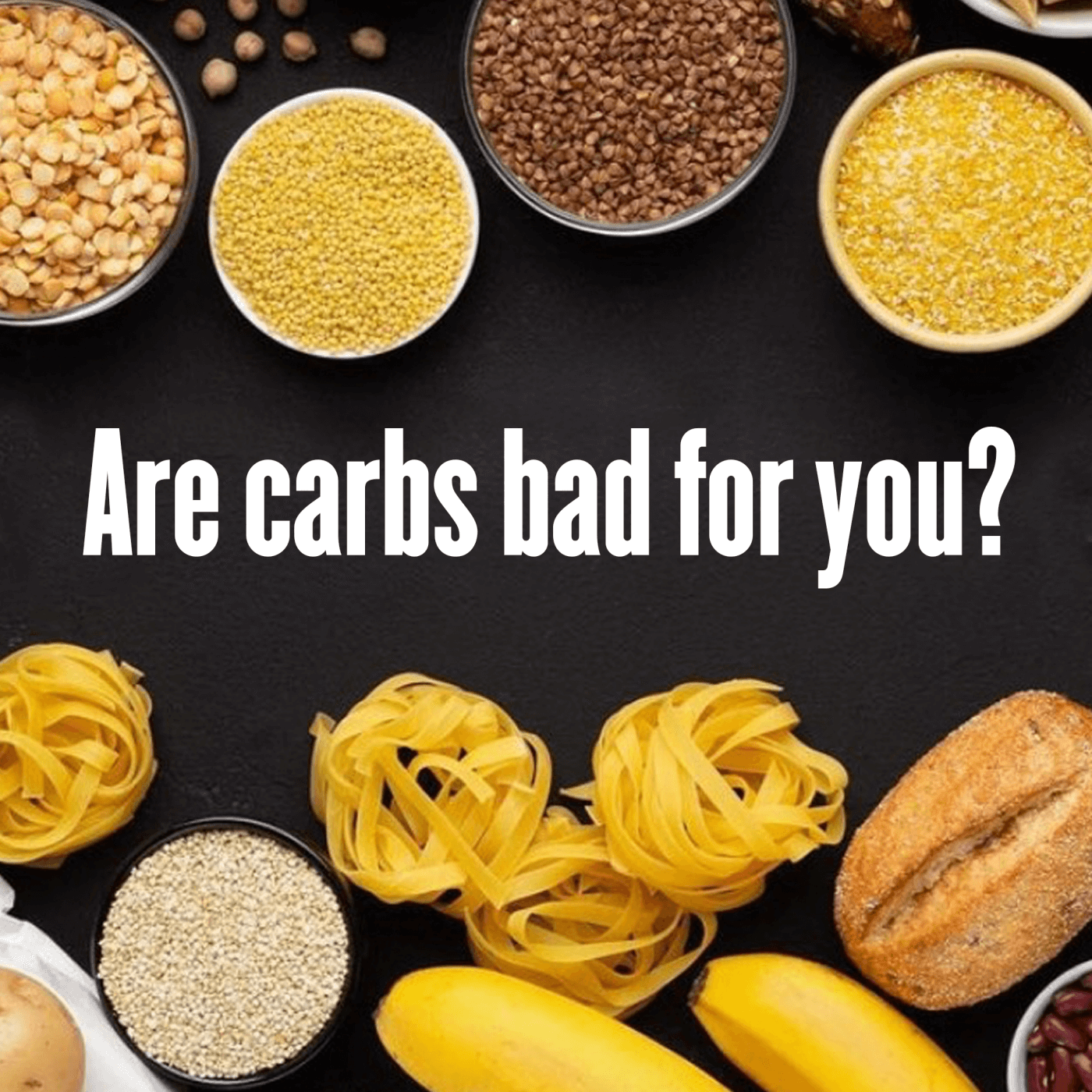

Quick Answer: No, carbs aren't bad for you. They're one of your body's main fuel sources, and carb-rich whole foods like vegetables, fruit, beans and whole grains are linked with lower rates of heart disease, type 2 diabetes and early death. The carbs worth limiting are added sugars and refined grains. For most adults, 45 to 65 percent of calories from carbs (225 to 325 grams on a 2,000-calorie diet) is a reasonable range, with the type of carb mattering more than the exact number.
Table of Contents
What carbs do in your body
When you eat carbohydrates, your body breaks most of them down into glucose. You use that glucose for energy right away or store it in your muscles and liver as glycogen for later, which is what fuels hard exercise.
Your brain is the biggest glucose user. It's the reason the recommended minimum for adults is 130 grams of carbohydrate a day.1 Your body can make some glucose from protein and switch partly to ketones when carbs are very low, which is how low-carb diets work, but under normal conditions glucose is the brain's main fuel.
Fiber is the part of carbohydrate foods you can't digest, and it does a lot of the good work people credit to "healthy carbs." It slows digestion, helps you feel full, blunts blood sugar spikes and feeds beneficial gut bacteria. Adults are advised to get about 14 grams of fiber for every 1,000 calories, roughly 25 grams a day for women and 38 for men,1 and most Americans fall well short.
Like fat and protein, carbohydrates can contribute to weight gain when you eat more calories than you use. They don't cause it on their own. For more on that question, see Do Carbs Make You Gain Weight?
Good carbs vs. bad carbs
"Good" and "bad" are shorthand, but they point at a real difference: how processed the food is and how much fiber it keeps.
Eat most often:
- Non-starchy vegetables (broccoli, leafy greens, peppers, zucchini)
- Whole fruit (not juice)
- Beans, lentils and chickpeas
- Whole grains (oats, quinoa, brown rice, whole-wheat bread and pasta)
- Starchy vegetables (sweet potatoes, potatoes, corn, squash)
- Plain dairy (milk, yogurt)
Fine in measured portions: white rice and regular pasta. They have less fiber than whole grains, but paired with protein and vegetables they fit a healthy diet.
Limit:
- Sugary drinks (soda, sweet tea, sweetened coffee drinks, large juices)
- Candy, pastries, cookies and cakes
- White bread and sugary breakfast cereals
- Most packaged sweet and salty snack foods
Foods in the "limit" group digest quickly, don't keep you full for long and are easy to overeat. Few people overdo steamed broccoli; a sleeve of cookies is a different story.
What the research says about carbs and health
Carb quality matters most. A series of reviews for The Lancet pooled 185 long-term studies and 58 clinical trials. People who ate the most fiber had a 15 to 30 percent lower risk of dying early and of developing heart disease, stroke, type 2 diabetes and colorectal cancer than those who ate the least. The biggest benefits came at 25 to 29 grams of fiber a day or more, and whole grains showed similar benefits.2
Very low and very high intakes look worse than moderate. A study that followed more than 15,000 U.S. adults for about 25 years found the lowest risk of death at 50 to 55 percent of calories from carbs, with higher risk below 40 percent and above 70 percent. Swapping carbs for animal protein and fat was linked with higher risk, while swapping them for plant proteins and fats was linked with lower risk.3
Both are observational findings, so they show links rather than proof of cause. Still, they point the same way: the source of your carbs, and what replaces them if you cut back, matters more than the carb count itself.
How many carbs should you eat per day?
The National Academies set the acceptable range for adults at 45 to 65 percent of calories from carbohydrate, with a minimum of 130 grams a day.1 Here's what that range looks like in grams:
| Daily calories | 45 to 65% from carbs |
|---|---|
| 1,600 | 180 to 260 grams |
| 2,000 | 225 to 325 grams |
| 2,500 | 280 to 405 grams |
- Very active people and endurance athletes often need the upper end or more to fuel training.
- People trying to lose weight can do well anywhere in the range; total calories, protein and fiber matter more than the exact carb number.
- People with diabetes or prediabetes often benefit from fewer carbs. The American Diabetes Association says there's no single ideal percentage, so work out a target with your doctor or dietitian.4
To see how carbs fit with protein and fat, read our beginner's guide to macros.
Do you need to go low-carb?
Low-carb diets can work, mainly because they cut out many sugary and refined foods and tend to raise protein, which is filling. Much of the fast weight loss in the first week is water, because stored carbohydrate holds water.
Over the long term, though, lower-carb and lower-fat diets perform about the same for weight loss. In the year-long DIETFITS trial, people on a healthy low-carb diet and a healthy low-fat diet lost similar amounts of weight.5
Cutting carbs very low has trade-offs worth knowing about:
- A rough first week or two. Headaches, fatigue and irritability, often called "keto flu," are common while your body adjusts.
- Less fiber. Dropping beans, whole grains and fruit makes it hard to reach 25 to 38 grams of fiber a day.
- What replaces the carbs matters. Filling the gap with bacon, cheese and fatty meats is linked with worse long-term outcomes than filling it with plant foods like nuts, seeds and olive oil.3
- Staying power. Many people find strict carb limits hard to keep up with family meals, travel and social events.
If a lower-carb approach suits you and you can stick with it, it can be a healthy choice when built around vegetables, plant fats and lean protein. For most people, upgrading carb quality is the easier first step.
Good carbs for weight loss and energy
For weight loss: Choose high-fiber, high-volume carbs that fill you up: non-starchy vegetables, fruit, beans and lentils, and measured portions of whole grains like oatmeal.
For energy and training: Put starchy carbs like rice, potatoes and oats in the meals before and after your workouts.
For general health: Eat carbs from many different plant foods to get a wider range of nutrients and fiber types.
Quick swaps to try this week:
- Swap soda or sweet tea for water, sparkling water or unsweetened tea
- Choose whole fruit instead of juice
- Trade white bread for whole-grain bread
- Add a vegetable or a scoop of beans to every lunch and dinner
- Check labels for added sugar, especially on cereals, yogurts and sauces
For more options, see our guide to the best foods for weight loss.
The bottom line
Carbs aren't the problem; refined carbs and added sugar eaten in large amounts are. Build most of your carbs around vegetables, fruit, beans and whole grains, keep white rice and pasta to measured portions, and pair carbs with protein. That covers health and weight goals for most people without cutting out a whole food group.
If you'd rather not measure portions yourself, our Build a Meal Plan lets you pick portion-controlled meals that pair carbs with protein, with the nutrition for every meal listed on our nutrition page. For a weight loss focus, the Weight Loss Meal Plan keeps every meal under 500 calories and 50 grams of carbs, with at least 20 grams of protein.
Frequently asked questions
Are carbs bad for you?
No. Carbohydrates are a main source of energy, and carb-rich whole foods like vegetables, fruit, beans and whole grains are linked with lower rates of heart disease, type 2 diabetes and early death. What's worth limiting is added sugar and refined grains, which are easy to overeat and come with little fiber.
What is the difference between good carbs and bad carbs?
"Good" carbs usually means minimally processed foods that keep their fiber, like vegetables, fruit, beans, lentils and whole grains. "Bad" carbs usually means added sugars and refined grains, like soda, candy, pastries, white bread and sugary cereals. Most foods sit in between, and portion size matters as much as the label.
How many carbs should I eat per day?
The National Academies' range for adults is 45 to 65 percent of calories, which is 225 to 325 grams on a 2,000-calorie diet. The minimum recommended intake for adults is 130 grams a day. Active people may need more, and people managing blood sugar often do better with less; there's no single right number.
What are good carbs for weight loss?
High-fiber, filling ones: non-starchy vegetables, fruit, beans and lentils, oats and other whole grains, and potatoes or rice in measured portions. Pair them with protein so meals keep you full.
Should I cut out carbs completely?
Most people don't need to. Very low-carb diets can work for some people, but they cut out fiber-rich foods that are linked with better long-term health, and many people find them hard to stick with. Swapping refined carbs for whole-food carbs is the better first step.
Do carbs make you gain weight?
Not on their own. Weight gain comes from eating more calories than you burn. Refined carbs are easy to overeat, while fiber-rich carbs help control appetite.
References
- Institute of Medicine. Dietary Reference Intakes for Energy, Carbohydrate, Fiber, Fat, Fatty Acids, Cholesterol, Protein, and Amino Acids. Washington, DC: National Academies Press; 2005.
- Reynolds A, Mann J, Cummings J, et al. Carbohydrate quality and human health: a series of systematic reviews and meta-analyses. Lancet. 2019;393(10170):434–445.
- Seidelmann SB, Claggett B, Cheng S, et al. Dietary carbohydrate intake and mortality: a prospective cohort study and meta-analysis. Lancet Public Health. 2018;3(9):e419–e428.
- American Diabetes Association Professional Practice Committee. Facilitating positive health behaviors and well-being to improve health outcomes: Standards of Care in Diabetes. Diabetes Care. Section 5, updated annually.
- Gardner CD, Trepanowski JF, Del Gobbo LC, et al. Effect of low-fat vs low-carbohydrate diet on 12-month weight loss in overweight adults and the association with genotype pattern or insulin secretion: the DIETFITS randomized clinical trial. JAMA. 2018;319(7):667–679.
Disclaimer: This content is for general information only and isn't medical advice. If you have diabetes or another condition that affects how you handle carbohydrates, talk with your doctor or a registered dietitian about your targets.