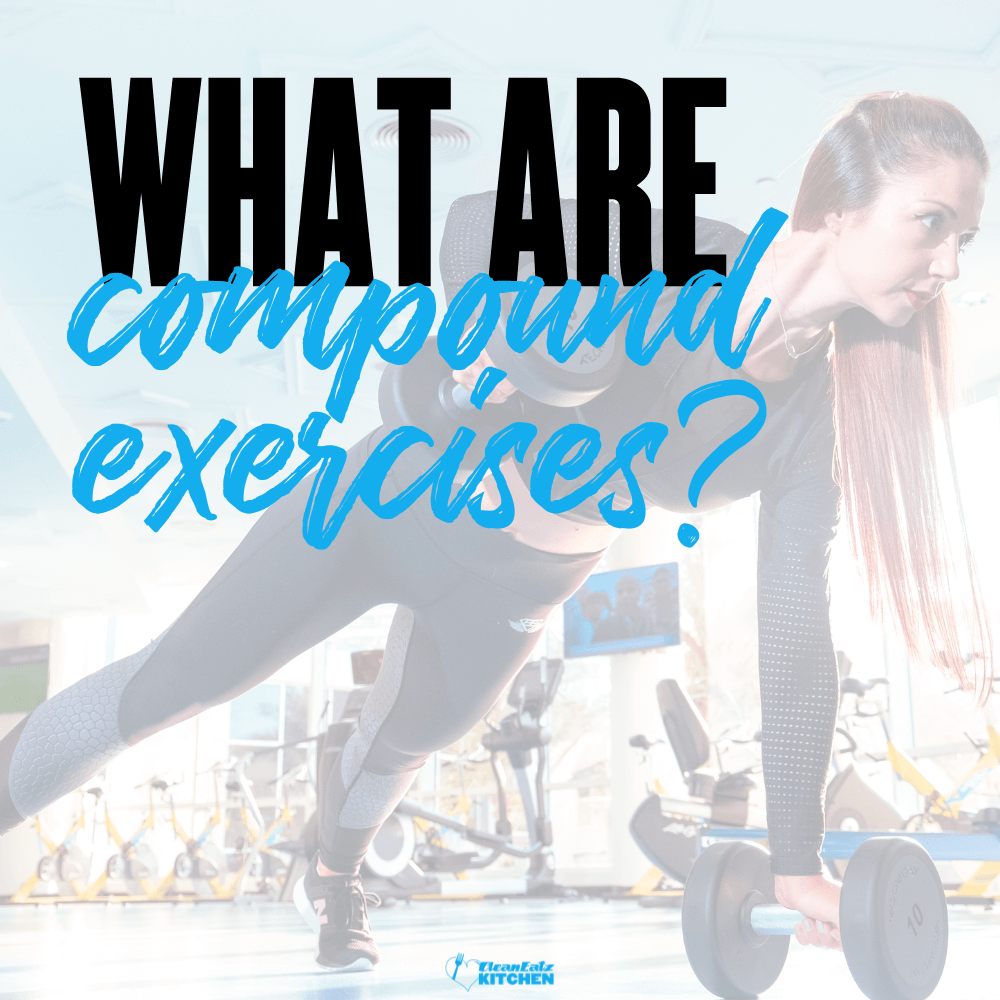

Quick Answer: Compound exercises are multi-joint movements that train several muscle groups at the same time—think squats, deadlifts, rows, presses, and lunges. They’re one of the most efficient ways to build strength, improve coordination, and get more out of each workout. While isolation exercises still have a place, compound movements usually form the foundation of a well-rounded strength program.
Last reviewed & updated: April 15, 2026
What Makes Compound Exercises Different
When you perform a biceps curl, you’re mainly training one muscle group through one joint. That’s an isolation exercise. Compound exercises work differently: they involve more than one joint and recruit multiple muscle groups to complete a single movement.
Take the squat, for example. Your ankles, knees, and hips all move together while your quads, hamstrings, glutes, and core work as a team to control the lift. Your upper back also helps stabilize the weight. Instead of asking one muscle to do most of the work, compound exercises train your body to produce and control force in a more integrated way.
That matters because everyday movement rarely happens one muscle at a time. Sitting down and standing up, carrying groceries, climbing stairs, and lifting objects off the floor all rely on coordinated movement patterns. Training compound exercises can help build strength that carries over more naturally to daily life, sport, and general physical function.
Complete Exercise Guide.
Get our free guide — all the info you need on exercising, all in one place.
The Science Behind Why Compound Exercises Work
Compound exercises work so well because they allow you to train more muscle mass with each rep. Instead of isolating one area at a time, movements like squats, deadlifts, rows, and presses challenge multiple joints and muscle groups together. That makes them one of the most practical and time-efficient ways to build strength and structure a well-rounded training program. Recent ACSM guidance also continues to support multi-joint resistance training as a key part of effective programming for healthy adults.
Research supports a simple idea: effective strength training does not have to be overly complicated. When compound lifts form the foundation of a workout, you can train the major movement patterns efficiently and make good progress without relying on long lists of separate exercises. That efficiency is one reason compound movements are so often used as the base of strength programs.
It’s also important to avoid overstating the hormonal argument. Bigger lifts can produce short-term hormonal changes, but current evidence does not support treating those temporary spikes as the main reason compound exercises lead to long-term results. The bigger advantages come from training more total muscle mass, using meaningful loads, and applying progressive overload consistently over time.
From a practical standpoint, that’s really the takeaway: compound exercises help you do more with less. They train the body as a coordinated system, make workouts more efficient, and give most people a strong foundation for building strength, muscle, and overall fitness.
The Best Compound Exercises to Master
Not every compound exercise needs to be in every program, but a few movement patterns show up again and again for a reason: they train a lot of muscle at once, build practical strength, and give you a strong return on your training time. For most people, the goal is not to collect as many exercises as possible. It’s to get really good at a handful of foundational lifts and build from there. Recent guidance on resistance training continues to support simple, consistent programs built around effective multi-joint movements.
The squat is one of the most useful lower-body movements to learn. Whether you use a barbell, dumbbells, kettlebells, or just your body weight, squats train your quads, glutes, and hamstrings while also challenging your trunk to stay stable. They also reinforce a basic pattern you use in everyday life every time you sit down, stand up, or lower yourself under control.
The deadlift is a key hip-hinge exercise that trains the glutes, hamstrings, back, and grip. It’s especially valuable because it teaches you how to create tension through the posterior chain and move load from the floor with control. In well-designed programs, deadlift variations are often used to build full-body strength and improve force production through the hips.
The bench press is a classic upper-body pushing movement that targets the chest, shoulders, and triceps. It’s a practical way to build pressing strength, and it fits easily into many beginner and intermediate programs because load and progression are easy to track over time.
Rows help balance out pressing work by training the upper back, rear shoulders, and arms. Different row variations can support postural strength and help round out an upper-body program, especially for people who spend a lot of time sitting or who tend to overemphasize chest-focused exercises.
The lunge adds a unilateral element to training, which can be especially useful for coordination, balance, and side-to-side strength development. Recent evidence suggests unilateral and bilateral resistance training can both be effective, with exercise selection depending more on the goal of the program than on one method being universally better. That makes lunges, split squats, and step-ups valuable options alongside bilateral lifts like squats and deadlifts.
The overhead press builds shoulder and triceps strength while demanding more trunk control than many seated or machine-based alternatives. It’s a good example of how a simple compound lift can train strength and coordination at the same time, especially when programmed with appropriate load and technique.
Taken together, these exercises cover the major movement patterns most strength programs are built around: squat, hinge, push, pull, and single-leg work. You do not need to use all of them in every workout, and you do not have to perform them with a barbell for them to be effective. What matters most is choosing variations that fit your experience level, mobility, equipment, and goals, then practicing them consistently over time. Recent evidence also suggests that effective resistance training does not depend on using one specific type of equipment, as long as the program applies sound training principles.
Compound Exercises for Weight Loss
If fat loss is your goal, compound exercises deserve a prominent place in your training plan. Not because they magically melt fat, but because they make resistance training more efficient. Movements like squats, deadlifts, rows, presses, and lunges let you train a lot of muscle at once, which can help you get more work done in less time and make your workouts easier to sustain consistently.
That efficiency matters during a fat-loss phase. Resistance training helps preserve lean mass while you lose weight, which is important for both physical function and body composition. More recent evidence also suggests that combining calorie restriction with exercise is more effective for reducing body weight and fat while helping maintain lean mass than dieting alone.
Compound lifts can also increase the overall training demand of a workout because they involve more total muscle mass per exercise. That may increase the energy cost of a workout compared with smaller, more isolated movements, especially when the session is built around several large movement patterns. But it’s best not to overstate this point: the calorie burn from exercise alone is usually smaller than people expect, and long-term fat loss still depends mostly on nutrition, consistency, and total activity over time.
The “afterburn effect,” or excess post-exercise oxygen consumption (EPOC), is real, but it should be kept in perspective. Hard training can increase energy use for a period after exercise, but the size of that effect varies and is not usually the main reason people lose fat. In practice, the bigger advantage of compound training is that it helps you build a simple, challenging program you can repeat consistently while preserving strength and muscle during a calorie deficit.
That’s really the key message: compound exercises support weight loss best when they’re part of a bigger strategy that includes a realistic calorie deficit, enough protein, and regular training. They’re valuable because they help you maintain lean tissue and make workouts more productive—not because they replace the fundamentals of fat loss.
How to Add Compound Exercises to Your Routine
Adding compound exercises to your routine does not have to be complicated. The best place to start is by learning the movement patterns first, then increasing the load gradually as your technique improves. In most cases, a simple program done consistently works better than an overly complicated one.
A smart approach is to place compound lifts near the beginning of your workout, when your energy and focus are highest. Movements like squats, rows, presses, and deadlifts usually require more coordination and total effort than isolation work, so doing them first can help you get more out of each set. Isolation exercises can still be useful, but they usually work best later in the session.
Form matters more than weight, especially in the beginning. A controlled bodyweight squat or well-executed hinge pattern builds the foundation you will rely on as resistance increases. If needed, working with a qualified coach or filming your sets can help you improve technique and build confidence.
When choosing weight, use a load that lets you complete your target reps with good form while still feeling challenged near the end of the set. Over time, gradually increasing that challenge is the basis of progressive overload—and one of the main drivers of strength and muscle gains.
Recovery matters too. For many people, training the major movement patterns two to four times per week is a practical and sustainable way to build strength without overcomplicating the program.
Common Mistakes to Avoid
Compound exercises can be incredibly effective, but they also require more coordination than smaller isolation movements. That does not make them inherently risky, but it does mean that poor setup, rushed reps, and inconsistent technique can make them less effective and harder to perform well over time.
One of the most common mistakes is moving too fast and relying on momentum instead of control. Rather than chasing a “perfect” tempo, focus on smooth, controlled reps through a range of motion you can manage well. Current evidence suggests that rep speed has only a small overall effect on muscle growth, so good technique and consistent effort matter more than deliberately slowing every repetition down.
Another easy mistake is overlooking mobility and warm-up quality. If you do not have enough mobility to get into a stable squat, hinge, or pressing position, the movement usually becomes harder to execute well. A short warm-up with dynamic movement can help prepare your body for training, while longer static stretching is usually better saved for after the workout or separate mobility sessions.
It is also easy to overcomplicate your program. You do not need a huge rotation of compound lifts to make progress. In most cases, a small number of well-chosen movements performed consistently—and progressed over time—will take you much further than constantly changing exercises. The basics tend to work best because they are simple, repeatable, and easy to improve.
Fueling Your Compound Exercise Training
Compound exercises place a bigger overall demand on the body, so nutrition plays an important role in both performance and recovery. If protein intake is too low, recovery and muscle repair can suffer. If overall energy intake is consistently too low, training quality often drops as well.
Protein matters, but it is more accurate to focus on total intake first and timing second. Eating a protein-rich meal within a few hours before or after training can support recovery, and 20 to 40 grams of high-quality protein is still a practical target for many adults. More recent evidence suggests that protein timing can help, but it is not the main driver of results if total daily protein intake is already adequate.
Carbohydrates matter too, especially when training is intense or frequent. They help support performance, replenish glycogen, and make it easier to maintain training quality over time. Cutting carbs too aggressively can make hard sessions feel harder than they need to and may compromise recovery, particularly in more active individuals.
In practice, the biggest challenge for many people is not knowing what to eat—it’s eating well consistently. That is where meal prep can make a real difference. Having balanced, protein-rich meals ready to go makes it much easier to support your training instead of leaving recovery up to whatever is convenient in the moment.
The Bottom Line
Compound exercises are one of the most efficient ways to build strength, support body composition goals, and improve overall fitness. Because they train multiple muscle groups at once, movements like squats, deadlifts, rows, and presses help you get more from each workout while reinforcing the movement patterns your body uses every day. Recent ACSM guidance continues to support multi-joint resistance training as a key part of effective programming for healthy adults.
They are not “better” than isolation exercises in every possible context, but they usually provide the strongest foundation for a well-rounded program. Compound lifts make training more time-efficient, help you train the body as a coordinated system, and are especially useful when your goal is to build strength while preserving lean mass during a fat-loss phase. Current evidence also suggests that the big advantage is not a special hormonal effect, but the ability to train more total muscle mass with consistent progressive overload over time.
Start with the basics, focus on good form before adding load, and make sure your nutrition supports your training. When done consistently, a simple program built around compound movements can take you a long way. For a deeper dive into building an effective routine, explore our Complete Exercise Guide for Weight Loss, where we break down programming, progression, and the habits that help results last.
FAQs
What are compound exercises?
Compound exercises are multi-joint movements that train several muscle groups at once, such as squats, deadlifts, presses, rows, and lunges. Unlike isolation exercises, they train the body to work as a coordinated system.
Why are compound exercises useful for weight loss?
They can make workouts more efficient by training more total muscle mass per exercise. That can help increase overall training demand and support lean mass while dieting, but fat loss still depends mostly on nutrition, consistency, and total activity.
What are the best compound exercises for beginners to start with?
Good beginner options include bodyweight squats, push-ups, lunges, rows, assisted pull-ups, and hip-hinge variations. Start with movements you can control well, then add load gradually.
How many compound exercises should I do per workout?
For most people, 3 to 5 compound exercises per workout is a practical starting range. That is usually enough to cover the main movement patterns without making the session overly long.
Can you build muscle with only compound exercises?
Yes. Many people can build plenty of strength and muscle with mostly compound exercises. Isolation work can still help in some cases, but it is not essential for everyone.
Disclaimer: This content is for educational purposes only and does not replace personalized professional advice.
References
- Nuzzo JL, Pinto MD, Kirk BJC, Nosaka K. Resistance Exercise Minimal Dose Strategies for Increasing Muscle Strength in the General Population: an Overview. Sports Med. 2024 May;54(5):1139-1162.
- Van Every DW, D'Souza AC, Phillips SM. Hormones, Hypertrophy, and Hype: An Evidence-Guided Primer on Endogenous Endocrine Influences on Exercise-Induced Muscle Hypertrophy. Exerc Sport Sci Rev. 2024 Oct 1;52(4):117-125.
- Currier, Brad et al. American College of Sports Medicine Position Stand. Resistance Training Prescription for Muscle Function, Hypertrophy, and Physical Performance in Healthy Adults: An Overview of Reviews. 2026. Medicine & Science in Sports & Exercise. 58. 851-872.
- Kassiano W, et al. Comparison of Muscle Growth and Dynamic Strength Adaptations Induced by Unilateral and Bilateral Resistance Training: A Systematic Review and Meta-analysis. Sports Med. 2025 Apr;55(4):923-936.
- Tao M, et al. Impact of training volume settings between unilateral training and bilateral training on athletic performance: A systematic review and meta-analysis. J Exerc Sci Fit. 2025 Oct;23(4):291-298.
- Haugen ME, et al. Effect of free-weight vs. machine-based strength training on maximal strength, hypertrophy and jump performance - a systematic review and meta-analysis. BMC Sports Sci Med Rehabil. 2023 Aug 15;15(1):103.
- Wewege MA, et al. The Effect of Resistance Training in Healthy Adults on Body Fat Percentage, Fat Mass and Visceral Fat: A Systematic Review and Meta-Analysis. Sports Med. 2022 Feb;52(2):287-300.
- Xie Y, Gu Y, Li Z, He B, Zhang L. Effects of Different Exercises Combined with Different Dietary Interventions on Body Composition: A Systematic Review and Network Meta-Analysis. Nutrients. 2024 Sep 5;16(17):3007.
- Faleiro V, et al. Isocaloric High-Intensity Interval and Circuit Training Increases Excess Post-Exercise Oxygen Consumption and Lipid Oxidation Compared to Moderate-Intensity Continuous Training. Sports (Basel). 2025 Oct 6;13(10):355.