
Quick Answer: The best fats for weight loss are unsaturated fats from olive oil, nuts, avocado, and fatty fish. They don't magically burn fat, but they keep you satisfied and support heart health when used to replace butter, processed foods, or refined carbs. Keep fat at 20-35% of calories, measure portions (oils and nut butters add up fast), and pair fats with protein and fiber for meals that actually keep you full.
Why Fat Doesn't Make You Fat (When You Do It Right)
For decades, fat was the villain of weight loss. Low-fat everything dominated grocery store shelves, and people avoided avocados like they were made of pure cholesterol. We now know that advice was misguided. Dietary fat doesn't automatically become body fat—excess calories do, regardless of whether they come from fat, carbs, or protein.
What fat does is make food satisfying. A salad with olive oil and nuts keeps you full for hours. The same salad with fat-free dressing leaves you raiding the pantry within hours. That satisfaction matters for weight loss because restrictive diets often lead to the excess calorie intake that derails attempts at losing weight.
When meals feel balanced and complete, you're less likely to snack on empty calories, less likely to overeat during meals, and more likely to stick with your dietary plan long-term.
The research backs this up. Mediterranean-style diets—which are relatively high in healthy fats from olive oil, nuts, and fish—consistently perform as well as or better than low-fat diets for weight loss and maintenance. That pattern held in the landmark PREDIMED trial published in the New England Journal of Medicine and in a later systematic review of Mediterranean diet adherence and weight-loss maintenance in Nutrients. The key isn't avoiding fat; it's choosing the right fats and using them strategically.
For a complete overview of foods that support weight loss (including which fats made the list), see our 100 Best Foods for Weight Loss guide.
The Fats to Prioritize
Not all fats are equal. Here's where to focus your attention—and where we've written deeper guides if you want the full breakdown.
Olive Oil and Other Liquid Plant Oils
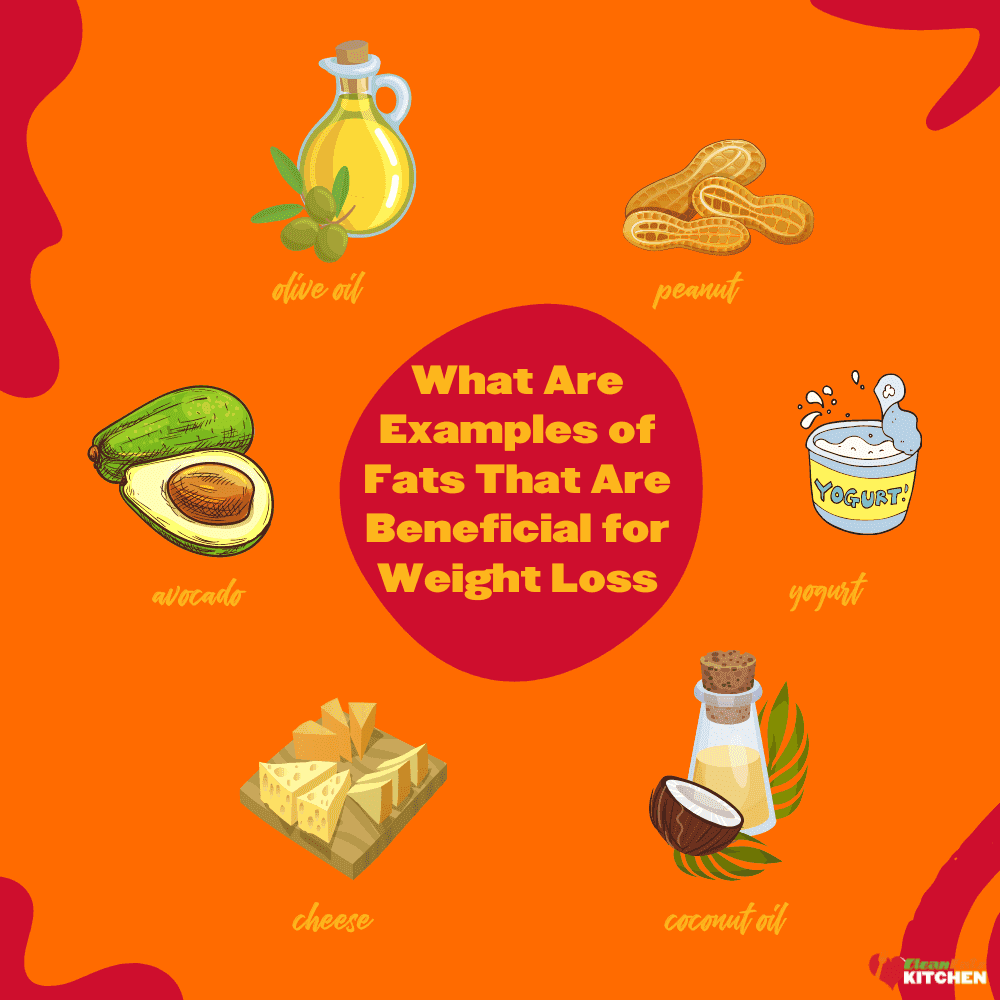
Extra-virgin olive oil is the gold standard. It's rich in monounsaturated fats and polyphenols that support heart health, and a 2025 cohort study of more than 16,000 adults in Frontiers in Nutrition found that regular extra-virgin olive oil intake was linked with lower body mass index and waist circumference. Use it for salad dressings, roasting vegetables, and low-to-medium-heat cooking.
Other good options include canola, soybean, and sunflower oils. The rule of thumb: choose liquid oils over solid fats (butter, shortening, coconut oil) when possible. One tablespoon of olive oil does have about 120 calories though, according to the USDA nutrient database, so be sure to measure it rather than pouring it freely over your food.
Nuts and Nut Butters
Here's something that surprises most people: despite being one of the most calorie-dense foods on the planet, regular nut intake can actually help you eat less and lose weight over time. Multiple meta-analyses confirm that nut eaters don't weigh more than nut avoiders—and often weigh less.
The reason comes down to satiety and compensation. Nuts are so filling that people naturally eat less at subsequent meals. A 2026 randomized controlled trial in Obesity Research & Clinical Practice found that eating almonds may help regulate appetite in a way that supports weight loss. Research on nut portion guidance suggests we compensate for about 75% of the calories from nuts without even trying. Plus, a systematic review in Advances in Nutrition found that some of the fat in whole nuts isn't fully absorbed due to their cell structure.
For the full science and practical tips, read our deep dive: Are Nuts Good for Weight Loss?
Nut butters deserve special attention because they're one of the easiest foods to overeat. Two tablespoons of peanut butter is about 190 calories—but most people eyeball closer to three or four tablespoons. The fix is simple: measure with an actual tablespoon, not a spoon from the drawer. Our peanut butter guide covers portion strategies, label reading, and why peanut butter actually can help some people lose weight faster.
Avocados
Avocados are having a moment, and for good reason. They're creamy, versatile, and packed with monounsaturated fats and fiber. About 100 grams (roughly half a medium avocado) delivers 160 calories, 7 grams of fiber, and enough healthy fat to make any meal more satisfying, per USDA nutrient data.
That said, they're not a magic weight loss food. A large 6-month trial in the Journal of the American Heart Association found that adding one avocado per day without changing anything else didn't reduce belly fat or body weight. The benefit comes from using avocado as a replacement for mayo, cheese, or butter on sandwiches and toast; not as an addition.
For portion guidance and the research on avocados and weight, see: Are Avocados Good for Weight Loss?
Fatty Fish
Salmon, sardines, mackerel, trout, and herring provide omega-3 fatty acids that most people don't get enough of. The American Heart Association recommends at least two 3-ounce servings of fatty fish per week for heart health.
For weight loss, fatty fish has an added advantage: it's protein rich. A 6-ounce wild Atlantic salmon fillet delivers about 34 grams of protein alongside the healthy fats, making it one of the most satisfying dinner options available. Bake it, grill it, or pan-sear it—just skip the deep fryer.
Seeds
Chia seeds, flaxseeds, hemp seeds, and pumpkin seeds are nutritional powerhouses. They deliver omega-3s (particularly chia and flax), fiber, and minerals in a compact package. Sprinkle them on yogurt, blend them into smoothies, or add them to oatmeal. A tablespoon runs about 70 calories.
The Fats to Limit
Some fats work against both your waistline and your heart. These aren't "never eat" foods, but they shouldn't be your defaults.
Saturated fats from butter, lard, fatty cuts of meat, and tropical oils (coconut, palm) should be limited. The Dietary Guidelines for Americans suggest keeping saturated fat under 10% of daily calories. That doesn't mean you can never cook with butter, but olive oil should be your go-to.
Trans fats from partially hydrogenated oils have been largely removed from the U.S. food supply but check labels on older products or anything imported. If you see "partially hydrogenated" in the ingredients, skip it.
Unmeasured fats are the sneaky problem. A "drizzle" of olive oil can easily be 3 tablespoons (360 calories). Cooking with "a little butter" often means half a stick. Nut butter eaten directly from the jar has no portion control at all. The fats themselves aren't bad, but like with most foods, everything in moderation.
How to Use Fat for Weight Loss (Without Overdoing It)
Fat is a calorie-dense macronutrient—9 calories per gram versus 4 for protein or carbs. That's why it's so satisfying, but also why it's easy to overdo. Here's how to get the benefits without the excess.
Substitute, don't add. The biggest mistake people make with "healthy fats" is adding them on top of what they're already eating. Avocado toast is great—if you're not also buttering the bread. Olive oil dressing works—if you're not also adding cheese and croutons. Think replacement, not accumulation.
Measure your oils and nut butters. This single habit can save hundreds of calories per day. Use measuring spoons, not eyeballs. Once you've calibrated what a tablespoon actually looks like, you can relax a bit—but most people are shocked at how much they've been using.
Pair fats with protein and fiber. Fat alone doesn't keep you full as well as fat combined with protein and fiber. Salmon (fat + protein) with roasted vegetables (fiber) is a perfect weight loss meal. Avocado (fat) on whole grain toast (fiber) with eggs (protein) covers all bases. This is the formula behind our Weight Loss Meal Plan—balanced macros in portions that are already measured.
Hit your targets. Most people do well with fat at 20-35% of calories. On a 1,600-calorie diet, that's equal to around 35 to 60 grams of daily fat intake. On a 2,000-calorie diet, it's around 45 to 75 grams of fat daily. Use a calorie calculator to set your baseline, then build meals that fit.
What Clean Eatz Kitchen Meals Include
Every Clean Eatz Kitchen meal is designed with balanced macros, including appropriate portions of healthy fats. Our proteins are cooked with olive oil rather than butter or heavy sauces. Salmon and other fatty fish appear regularly on the menu. Portions are pre-set, so you don't have to measure anything—the work is done for you.
Check the Nutrition Info page to see exact macros for any meal, or start with the Build-a-Meal Plan and use the goal and dietary-restriction filters to customize based on your preferences.
Frequently Asked Questions
Can eating fat help you lose weight?
Fat doesn't directly cause weight loss, but including healthy fats in your diet can help you stay full longer and make meals more satisfying. When unsaturated fats replace saturated fats or refined carbs (not added on top), they support both weight management and heart health. The key is substitution, not addition—and keeping total calories in check.
How much fat should I eat per day to lose weight?
Most guidelines recommend 20-35% of daily calories from fat. On a 1,800-calorie weight loss diet, that's roughly 40 to 70 grams of fat per day. Prioritize unsaturated sources (olive oil, nuts, avocado, fatty fish) and limit saturated fats from butter, fatty meats, and tropical oils.
Are nuts too high in calories for weight loss?
Despite being calorie-dense, research consistently shows that people who eat nuts regularly don't gain weight—and often lose more successfully than those who avoid them. Nuts increase satiety, and studies suggest people naturally compensate for most nut calories by eating less at other meals. Stick to about 1 oz (a small handful) per serving. See our full guide: Are Nuts Good for Weight Loss?
Is olive oil better than butter for weight loss?
Yes, for most people olive oil is better than butter for weight loss. Olive oil is rich in monounsaturated fats that support heart health, while butter is high in saturated fat. Long-term studies show that increasing olive oil intake is associated with less weight gain over time. Use olive oil for cooking and dressings in place of butter, not in addition to it.
What are the worst fats for weight loss?
Artificial trans fats (from partially hydrogenated oils) are the worst for weight loss since they're linked to heart disease and have been largely removed from the food supply. Saturated fats from butter, lard, and tropical oils should be limited. The biggest practical issue is usually unmeasured fats: cooking oils poured freely, nut butter eaten from the jar, and creamy dressings added without tracking.
The Bottom Line
Fat isn't the enemy, it's a tool. The right fats (olive oil, nuts, avocado, fatty fish) make meals satisfying and support long-term health. The key is using them to replace less-healthy options, measuring portions, and pairing them with protein and fiber.
For specific guidance on individual foods, explore our deep dives:
→ Are Nuts Good for Weight Loss?
→ Is Peanut Butter Good for Weight Loss?
→ Are Avocados Good for Weight Loss?
And for the complete picture of weight loss nutrition, see our 100 Best Foods for Weight Loss guide.
Disclaimer: This article is for informational purposes only and not medical advice. Consult a healthcare provider before making significant dietary changes.