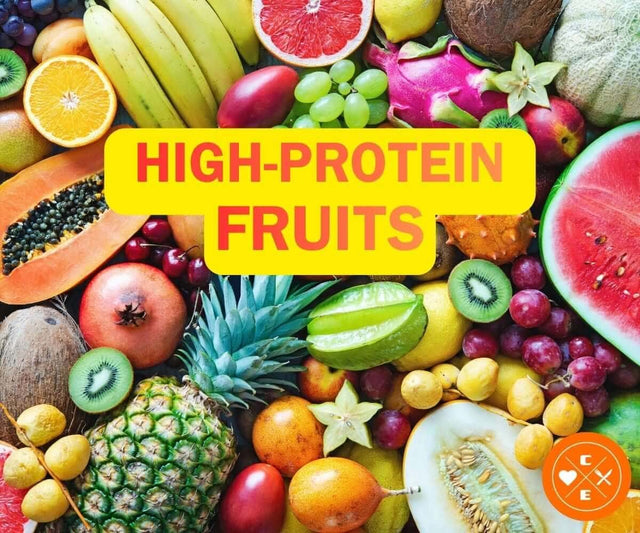
Best Fruits for Weight Loss: Portions & Fiber

Berries, apples, pears, citrus, melon and kiwi give you the most food for the calories. Eight fruits with USDA portions, the fiber in each, and simple ways to make them part of a weight loss plan.

Ellie Lopez, LDN, MS
Ellie Lopez, LDN, MSLicensed Dietitian · Feb 3, 2023
A Clean Eatz Kitchen delivery box held above a row of ready-to-heat meals
Quick answer

Whole fruit helps weight loss because it is low in calories for its size and brings water and fiber that keep you full. A cup of raspberries has 64 calories and 8 grams of fiber. Reviews of the research find whole fresh fruit doesn't cause weight gain and may modestly help, especially when it replaces denser snacks. Choose whole fruit over juice.

Fruit has a strange reputation in weight loss circles. Some plans treat it as a free food, others warn you off the sugar. Both miss what fruit actually does well.

Fruit doesn't burn fat. What it does is give you a lot of food for few calories, which makes a calorie target easier to live with. A full cup of strawberries is 49 calories, about half a tablespoon of peanut butter.

Below are the fruits that do that job best, with real portions from USDA FoodData Central, how to use them and the mistakes that stall progress. For the full list of weight loss friendly foods, fruit and beyond, see our 100 Best Foods for Weight Loss guide.

Why fruit helps with weight loss

Fruit makes a calorie-controlled eating pattern easier to stick with. Whole fruit is mostly water, so it gives you a lot of volume for relatively few calories, and its fiber slows digestion and helps you feel full.

The evidence backs this up, at a modest size. A 2019 systematic review of randomized trials found that eating more whole, fresh fruit led to weight maintenance or modest weight loss over 3 to 24 weeks, rated moderate certainty. Single-meal trials found fruit tends to lower how much people eat, especially when it comes before a meal or replaces something more calorie-dense. Long-term studies found higher fruit intake was not linked to weight gain over five or more years.

Fiber is a big part of the reason. A review of fiber and obesity describes how fiber slows digestion, triggers fullness hormones like GLP-1 and PYY and reduces appetite. Our Ultimate Guide to Dietary Fiber explains why most Americans fall short on fiber and how to close the gap without the bloating.

Fruit is also practical. A medium apple, orange or banana is a portion you can understand without a scale. That makes fruit an easy habit to repeat, which matters more than any single food choice. Current federal guidance agrees: the Dietary Guidelines for Americans, 2025 to 2030 set a goal of 2 fruit servings a day on a 2,000-calorie diet and recommend eating whole fruit in its original form.

1

Berries

Most fiber
3 to 8g fiber per cup · 49 to 84 calories

Berries lead the list. A cup of raspberries has 8 grams of fiber for 64 calories and a cup of blackberries 7.6 grams for 62 calories, per USDA FoodData Central. Strawberries are the lightest at 49 calories a cup of halves, with 3 grams of fiber and 89 mg of vitamin C. Blueberries are the sweetest at 84 calories and 3.6 grams of fiber a cup.

Raspberries give you two and a half times the fiber of strawberries for 15 more calories. That makes them the best fiber deal in the produce section.

How to use them: frozen berries cost less, keep for months and work just as well. Stir a cup into our High Protein Overnight Oats (20 grams of protein a pouch, $3.49) or blend them with a scoop of Shakez Protein Powder (20 grams of whey a scoop) for a snack that holds you until the next meal.

2

Apples & pears

Most portable
4 to 6g fiber · 95 to 101 calories (1 medium)

Apples and pears are the easiest fruit to carry. A medium apple has about 95 calories and 4.4 grams of fiber, and a medium pear about 101 calories and 5.5 grams, per USDA.

Eat the skin. A peeled apple has about 1.3 grams of fiber per 100 grams against 2.4 grams with the skin on, so peeling throws away close to half the fiber.

Whole apples also have the best satiety study on this list, covered in the strategy section below.

How to use them: slice one and pair it with a measured tablespoon of peanut butter (about 95 calories) or a cup of Greek yogurt for staying power.

3

Citrus fruits

Vitamin C
62 calories · 3g fiber · 70mg vitamin C (1 medium orange)

Oranges, clementines and grapefruit are juicy and refreshing when you want something sweet. A medium orange has 62 calories, 3.1 grams of fiber and 70 mg of vitamin C, per USDA. Half a pink grapefruit has 52 calories and 2 grams of fiber. A medium tangerine or clementine-size mandarin has 47 calories and 1.6 grams.

One caution: grapefruit can change how your body handles some prescription drugs, including certain statins and blood pressure medicines. The FDA explains that grapefruit can block an enzyme in the gut, so more of the drug reaches the blood. If you take prescription medicine, ask your pharmacist or doctor before making grapefruit a daily habit.

How to use them: keep a bag of mandarins at your desk, or segment an orange into a salad of greens and grilled chicken.

4

Melons

Most volume
46 to 61 calories per cup · about 90% water

Watermelon, cantaloupe and honeydew are about 90% water, which makes them the volume eaters' pick. A cup of diced watermelon has 46 calories, a cup of cantaloupe 54 and a cup of honeydew 61, per USDA.

They are low in fiber, about 0.6 to 1.4 grams a cup, so they fill you through volume and water rather than fiber. Two cups of watermelon come to about 92 calories, still less than a medium banana.

How to use them: cube a whole melon on Sunday and keep it in a container at eye level in the fridge. You will reach for it before the snack drawer.

5

Kiwi

Vitamin C pick
84 calories · 4g fiber · 128mg vitamin C (2 kiwis)

Kiwi does more than its size suggests. Two kiwis have about 84 calories, 4.1 grams of fiber and 128 mg of vitamin C, per USDA. That is nearly twice the vitamin C of a medium orange.

The sweet-tart flavor works in yogurt bowls or straight from the skin with a spoon. You can eat the fuzzy skin too, which adds fiber, if the texture doesn't bother you.

How to use them: halve two kiwis and eat them with a spoon as an afternoon snack, or slice them over cottage cheese.

6

Bananas

Pre-workout
105 calories · 3g fiber · 422mg potassium (1 medium)

Bananas get a worse reputation than they deserve. They are higher in carbs than berries, but a medium banana is still about 105 calories, with 3.1 grams of fiber and 422 mg of potassium, per USDA.

That easy-to-digest carbohydrate makes a banana a good choice before a workout, and potassium supports normal muscle function. The only catch is portion size: bananas run small to extra large, and an extra-large one is about 135 calories.

How to use them: before a workout, or paired with protein, like a banana with Greek yogurt. Stick to one when calories are tight.

7

Grapes

Portion first
104 calories · 1.4g fiber (1 cup)

Grapes are easy to love and easy to overeat. A cup has about 104 calories and only 1.4 grams of fiber, per USDA, and they disappear by the handful straight from the bag.

They still beat a processed snack. The fix is portioning, not avoiding them.

How to use them: wash a bag, split it into one-cup containers, and freeze some. Frozen grapes eat slowly, like a sorbet.

8

Mango

Dessert swap
99 calories · 2.6g fiber · 60mg vitamin C (1 cup)

Mango is the sweetest fruit here and a good swap for dessert. A cup of mango pieces has about 99 calories, 2.6 grams of fiber and 60 mg of vitamin C, per USDA.

How to use it: frozen mango chunks blend into a thick smoothie with milk or yogurt, or top plain Greek yogurt with a half cup for about 50 calories.

Fruit calories & fiber at a glance

Use this table when planning meals. The numbers come from USDA FoodData Central (SR Legacy), rounded. Real fruit varies by variety, size and ripeness, so treat them as close estimates. You can look up any fruit yourself on FoodData Central.

  • Berries, 1 cup: Calories 49 to 84 · Fiber 3 to 8g · Best use Yogurt bowls, smoothies, snacking
  • Apple, 1 medium: Calories 95 · Fiber 4.4g · Best use Portable snack with nut butter
  • Pear, 1 medium: Calories 101 · Fiber 5.5g · Best use Very filling afternoon snack
  • Orange, 1 medium: Calories 62 · Fiber 3.1g · Best use Hydrating, post-workout
  • Grapefruit, 1/2: Calories 52 · Fiber 2g · Best use Breakfast, check medication interactions
  • Kiwi, 2: Calories 84 · Fiber 4.1g · Best use Yogurt bowls, vitamin C boost
  • Melon, 1 cup: Calories 46 to 61 · Fiber 0.6 to 1.4g · Best use High volume, very hydrating
  • Banana, 1 medium: Calories 105 · Fiber 3.1g · Best use Pre-workout fuel
  • Grapes, 1 cup: Calories 104 · Fiber 1.4g · Best use Pre-portion to avoid over-snacking
  • Mango, 1 cup: Calories 99 · Fiber 2.6g · Best use Yogurt bowls, smoothies

Two patterns stand out. Berries and pears give you the most fiber for the calories. Melon gives you the most volume. Grapes and mango sit at the other end: still good food, just the ones to measure.

How to use fruit for weight loss

Whole fruit is usually better for appetite control than juice. In a Penn State preload study, 58 adults ate a whole apple, applesauce, apple juice or nothing 15 minutes before lunch. Each preload had the same 125 calories. The whole apple cut total lunch intake, preload included, by about 15% (187 calories) compared with no preload, and it beat the applesauce and both juices on fullness. Adding fiber to the juice didn't help.

That doesn't mean you need fruit before every meal. It does support choosing whole fruit more often when staying full is the goal.

A practical approach is to put fruit inside balanced meals and snacks. Berries with Greek yogurt, apple slices with peanut butter or kiwi with cottage cheese are more satisfying than fruit alone, because the protein does part of the work.

Frozen fruit is a strong option too. The Dietary Guidelines count frozen fruit with no or limited added sugar as a good choice, and a bag in the freezer makes it easy to keep fruit in the house. For how blended fruit compares with juiced fruit, see our Juicing vs. Blending guide.

Fruit mistakes that stall weight loss

The biggest issue usually isn't fruit itself, it's the form it comes in. Juice is easy to drink fast and has little to no fiber, so it is less filling than the fruit it came from.

The research on juice and weight is mixed, and calories seem to explain it. A 2024 meta-analysis in JAMA Pediatrics of 42 studies found that in children, each daily serving of 100% juice was linked to a small rise in BMI. In adults, cohort studies that didn't account for total calories linked juice to slightly more weight gain (about 0.2 kg per daily serving), while those that did account for calories did not. The authors' takeaway: limit juice to avoid extra calories. Whole fruit remains the better default.

The second mistake is treating every fruit product like whole fruit. Dried fruit, fruit-flavored yogurt and large smoothie-shop drinks can fit now and then, but they are much easier to overeat. For day-to-day weight loss, start with recognizable portions of whole fruit and build from there.

The third is guessing at portions. Fruit is a small part of your day, but it still has calories. Use our Calorie Calculator to set your daily target, then fit fruit into it.

Weight loss meals with room for fruit

If counting portions at every meal is what wears you down, let the meals handle that part. Our Weight Loss Meal Plan is portion-controlled, calorie-controlled and macro-balanced, so a piece of fruit fits as a snack without recalculating the day. Plans start at $89.95 for 10 meals, or about $7.56 a meal on the 30-meal plan, with free shipping and no subscription. Meals arrive frozen and keep up to 12 months.

Prefer to choose your own? Build A Meal Plan lets you pick meals one by one, from $8.99 to $13.99 each. And if you like cooking around fruit, our recipes have plenty of ideas.

Sources

  1. Guyenet SJ. Impact of whole, fresh fruit consumption on energy intake and adiposity: a systematic review. Front Nutr 2019 (PMC)
  2. Waddell IS, Orfila C. Dietary fiber in the prevention of obesity and obesity-related chronic diseases. Crit Rev Food Sci Nutr 2023 (PubMed)
  3. Nguyen M et al. Consumption of 100% fruit juice and body weight in children and adults. JAMA Pediatr 2024 (PMC)
  4. Flood-Obbagy JE, Rolls BJ. The effect of fruit in different forms on energy intake and satiety at a meal. Appetite 2009 (PubMed)
  5. U.S. FDA: Grapefruit juice and some drugs don't mix
  6. USDA MyPlate: Fruits
  7. Dietary Guidelines for Americans, 2025 to 2030 (PDF)
  8. USDA FoodData Central
  9. USDA FoodData Central: Raspberries, raw
  10. USDA FoodData Central: Apples, raw, with skin
  11. USDA FoodData Central: Oranges, raw, all commercial varieties
  12. USDA FoodData Central: Watermelon, raw
  13. USDA FoodData Central: Kiwifruit, green, raw
  14. USDA FoodData Central: Bananas, raw
  15. USDA FoodData Central: Grapes, red or green
  16. USDA FoodData Central: Mangos, raw

Frequently asked questions

What fruit is best for weight loss?

The best fruit is the one you will eat consistently, in portions that fit your calories. Berries, apples, pears, citrus, kiwi and melon are the most practical because they offer good volume, fiber or both for the calories. Raspberries and blackberries lead on fiber, with about 8 grams a cup.

Is fruit sugar bad for weight loss?

Not in whole fruit. The sugar comes packaged with water and fiber, which slow you down and fill you up, very different from candy or juice. Research reviews find whole fresh fruit doesn't promote weight gain. Juice is less filling, so keep it limited.

How much fruit should I eat per day?

For many adults, about 1.5 to 2 cups or 2 servings a day is a good starting point. The Dietary Guidelines set 2 fruit servings a day for a 2,000-calorie pattern and say to adjust for your own needs, and MyPlate gives targets by age and calorie level, so yours may be a little lower or higher.

Are bananas okay for weight loss?

Yes. A medium banana is about 105 calories with 3 grams of fiber, a moderate-calorie food. It is a convenient choice before activity or as part of a snack with protein. The key is portion awareness, since extra-large bananas run about 135 calories, not avoidance.

Is frozen fruit as good as fresh for weight loss?

Yes, for practical purposes. Frozen fruit with no added sugar counts toward your fruit intake, and the Dietary Guidelines list it as a good option. It is cheaper out of season, keeps for months and makes it easy to have fruit ready for smoothies, oatmeal and yogurt bowls.

Is dried fruit good for weight loss?

In small amounts. Drying removes the water, so the calories concentrate. A cup of grapes is about 104 calories, while the same grapes as raisins fit in a small handful. Measure dried fruit by the tablespoon, and choose kinds with no added sugar.

Tap a meal count to add

30 meals work out to $7.56 a meal

View plan details

Tap a meal count to add

18 meals work out to $8.82 a meal

View plan details