GLP-1 snack ideas: 29 high-protein picks for low appetite
Snacks on a GLP-1 have one job: close a protein gap without crowding out dinner. 29 small, high-protein picks, the numbers behind each one, and how our own snacks measure up.
The best GLP-1 snacks carry about 15 to 20 grams of protein in a small, low-fat, easy-to-digest package. Plain Greek yogurt, two hard-boiled eggs, cottage cheese, turkey roll-ups, a protein shake and edamame all qualify. Snack only to close a protein gap or bridge five or more hours between meals, and keep fat and volume low.
Snacking advice usually assumes you're hungry. On Ozempic, Wegovy, Mounjaro or Zepbound, you often aren't, and that flips the whole question. The risk is no longer eating too much between meals. It's eating too little protein across the day while the weight comes off.
So a GLP-1 snack has a narrow job. It should carry real protein, sit lightly in a stomach that empties slowly, and leave room for the next meal. Most of the snack aisle fails at least one of those tests, and a few things marketed as protein snacks fail all three.
Below: whether you need snacks at all, the rules a good one meets, an honest look at our own snacks, 29 picks with their numbers, what to avoid, and a Sunday routine that makes it all automatic.
Do you need snacks on GLP-1s
Maybe not, & that's fine
Honestly? Maybe not.
These medications reduce appetite and stretch out how long you feel full. Plenty of people find that three small meals are all they want, and if those three meals get you to your protein target, there's no prize for adding a fourth eating occasion you didn't ask for.
Snacks earn their place under specific conditions. You're falling short of your daily protein most days. You're going five or six hours between meals and feeling the drop. Your meals have shrunk under 300 calories because you get full four bites in. You need something portable. Or you're losing weight fast and want to protect lean mass on the way down.
If none of those describe you, close the tab and go about your day. If one or more do, the rest of this is the practical version.
The stakes are real. In the STEP 1 semaglutide trial the advisory cites, about 38% of the weight people lost was lean body mass rather than fat.
Run the arithmetic on a typical day and the gap shows up fast. Breakfast at 25 grams, lunch at 30 and dinner at 35 come to 90 grams. If your target is 110, you're 20 grams short before you've done anything wrong. Two modest snacks close that without forcing a bigger dinner you can't finish.
If your target is 110, you're 20 grams short before you've done anything wrong.
Don't snack on a schedule just because a schedule exists. Skip it if you're already meeting your protein target across three meals, if you're within two or three hours of your next one, if eating makes you queasy, or in the day or two after a dose if that's when your appetite bottoms out. Forcing food in on a bad day usually turns it into a worse day.
The goal is adequate nutrition. Not maximum eating occasions.
Protein snack guidelines for GLP-1s
15 to 20 grams in a small package
A good GLP-1 snack lands in a fairly narrow window: roughly 15 to 20 grams of protein, 150 to 250 calories, single-digit fat where possible, little added sugar, and a small physical volume. That last one gets overlooked. A 16-ounce smoothie and a half cup of Greek yogurt can carry similar protein, but only one of them leaves room for dinner three hours later.
The fat guidance isn't arbitrary. A 2025 review in Mayo Clinic Proceedings (linked in the sources below) reports that 40% to 70% of patients on these medications have gastrointestinal side effects, and that first-line management is dietary: smaller, more frequent meals, enough fluids, and steering clear of high-fat and high-sugar foods. That is the whole rationale for the profile above, and it's why a handful of almonds behaves differently from a hard-boiled egg even when the protein looks comparable on paper.
So the order of priorities is protein first, then low fat, then small volume. Fiber matters for constipation, which is common on these drugs, but a snack is not the place to load it up on a day you already feel full.
GLP-1 snack timing
Mid-morning and mid-afternoon, roughly three to four hours after the meal before, works for most people. That gives you five or six small eating occasions across the day instead of three larger ones, which is a much easier structure to execute when your stomach has opinions.
How our own snacks score
We sell snacks. Here are the numbers.
We sell snacks. It would be easy to end that last section and quietly imply that everything on our grab-and-go shelf clears the bar. It doesn't, and you'd figure that out the first time you read a label, so here are the actual numbers.
Our grab-and-go snacks against the 15 to 20 gram target (product pages, October 2026)
Snack
Protein
Calories
Price
High Protein Overnight Oats, Peanut Butter Cup
20g
300
$3.49
Protein Empanada, Cheeseburger
13g
270
$4.99
Protein Empanada, BBQ Chicken
12g
240
$4.99
Protein Peanut Butter & Jelly, Honey
12g
250
$2.99
Protein Peanut Butter & Jelly, Grape or Strawberry
11g
250
$2.99
Protein Empanada, Pepperoni Pizza
11g
260
$4.99
Our grab-and-go snacks against the 15 to 20 gram target (product pages, October 2026)
Our High Protein Overnight Oats are the strongest fit in the lineup at 20 grams of protein per pouch. You add milk and chill them overnight, and cold food is generally the easiest thing to get down when nothing sounds good. The Peanut Butter Cup flavor is 300 calories and Apple Cinnamon is 270.
Our Protein Empanadas run 11 to 13 grams at 240 to 270 calories, with BBQ Chicken the lowest-calorie of the three. Our Protein Peanut Butter & Jelly is 250 calories with 11 to 12 grams of protein, and it's ready to eat with no heating at all. On the days when standing at a microwave feels like too much, that matters more than the macros.
The honest summary: a 15 to 20 gram protein snack is a higher bar than most packaged food clears, ours included. One of our items gets you to 20 grams. The rest sit between 11 and 13, which is real protein and not nothing, but plan around it rather than assuming a wrapper that says protein has solved the problem. Peanut butter and the empanada crusts also bring fat, so check each product page before a rough-stomach day. The full lineup is in our grab-and-go collection, and every product page lists complete macros.
Grab & go GLP-1 snacks
Zero prep, zero decisions
No preparation, no decisions. These are what you reach for on the days when cooking isn't happening. Protein figures come from USDA FoodData Central for the portion named, or from the label range where products vary.
1
Greek yogurt cup
Easiest to tolerate
About 15g protein · about 90 calories (5.3 oz plain nonfat)
A single-serve cup of plain nonfat Greek yogurt has about 15 grams of protein, and some higher-protein styles reach 20. It's cold and smooth, which is the texture most people tolerate best when nausea is in play.
Go plain or low-sugar. Flavored and fruit-on-the-bottom cups can carry a lot of added sugar, so read the label. Cinnamon fixes the flavor problem for free.
2
String cheese & a small apple
Shelf-stable
About 7g protein (13g with almonds) · about 150 calories
One stick of part-skim string cheese has about 7 grams of protein, so this one is more about being familiar and easy to carry than about hitting a number.
An ounce of almonds alongside brings it to about 13 grams, at the cost of roughly 165 more calories and a fair amount of fat. On a queasy day, skip the almonds and add a second cheese stick instead.
3
Hard-boiled eggs
Cheapest
About 12.5g protein · about 155 calories (2 large eggs)
Two large hard-boiled eggs give you about 12.5 grams of protein for about 155 calories, and almost nothing else to digest.
Buy them pre-peeled if peeling a dozen eggs on Sunday is the thing standing between you and eating them.
4
Protein bar
Read the label
Aim for 15g+ protein · under 5g sugar · under 200 calories
A good bar has 15 to 20 grams of protein, needs no refrigeration and lives in a bag for weeks. The screening rule is simple: more than 15 grams of protein, less than 5 grams of sugar, under 200 calories.
Plenty of bars on the same shelf don't pass, including some sold as whole-food or date-based bars, which tend to run lower in protein and higher in sugar. Turn the bar over before you buy a box.
5
Beef jerky
Most protein-dense
About 14g protein per 1.5 oz
Jerky has about 14 grams of protein in 1.5 ounces, which gives it one of the best protein-to-volume ratios on this list. That's exactly what you want when your stomach holds less than it used to.
Pick a lower-sodium version, and skip teriyaki and other sweet glazes, which add sugar. Spicy jerky belongs in the avoid section below if reflux is a problem for you.
6
Cottage cheese singles
Already portioned
About 14g protein · about 80 calories (1/2 cup, 1% fat)
A half-cup container of 1% cottage cheese has about 14 grams of protein, already portioned. Cucumber slices or cherry tomatoes turn it into something you actually want to eat.
7
Ready-to-drink protein shake
No chewing needed
20 to 30g protein · check the label
Shelf-stable shakes carry 20 to 30 grams of protein and are the single most reliable option for days when solid food isn't going to happen. Check the label, since protein, sugar and calories vary a lot by brand.
Keep a few in a desk drawer or the car for exactly that scenario. Sip it over 20 or 30 minutes rather than finishing it in a minute.
Quick assembly snacks
Under 5 minutes, better protein
Slightly more effort, noticeably better protein. Each of these takes less than five minutes once the ingredients are in the fridge.
8
Turkey & cheese roll-ups
Best per effort
15 to 18g protein · about 150 calories
Three slices of deli turkey wrapped around a string cheese gets you 15 to 18 grams of protein with no bread and almost no volume.
This is probably the highest protein-per-effort item on the whole list. Pick a lower-sodium turkey if you eat these often.
9
Tuna salad on crackers
Omega-3 bonus
About 20g protein
Mix a tuna pouch with a tablespoon of Greek yogurt instead of mayo and serve it on five whole-grain crackers. You get about 20 grams of protein, some omega-3s and something with a crunch to it.
Light tuna is lower in mercury than albacore, so it's the better pick if this becomes a regular.
10
Protein smoothie
Keep it small
About 25g protein · 10 to 12 oz
Blend one scoop of protein powder, half a cup of frozen berries, three-quarters of a cup of unsweetened almond milk and ice. That's about 25 grams of protein.
Keep it at 10 to 12 ounces. A large smoothie is the classic way to accidentally replace your dinner.
11
Edamame
Plant-based pick
About 18g protein · about 190 calories (1 cup shelled)
Microwave frozen edamame for two to three minutes and add a pinch of sea salt. A cup of shelled edamame has about 18 grams of protein, a rare plant-based option that hits the target without a supplement.
It also brings about 8 grams of fiber, which is useful for constipation but worth knowing if bloating is already an issue.
12
Cottage cheese with everything bagel seasoning
Savory swap
About 14g protein per 1/2 cup
A half cup of cottage cheese has about 14 grams of protein. The social media version is popular because it works: the seasoning and a few cucumber slices turn a texture a lot of people avoid into something savory and snackable.
13
Apple with nut butter
Measure it
About 7 to 8g protein · about 270 calories (2 tbsp)
Two tablespoons of peanut or almond butter with an apple gives you about 7 to 8 grams of protein, less than most people assume.
Measure it. Nut butter eaten by feel is how a 200-calorie snack quietly becomes a 400-calorie one, and the fat load is high enough to matter on a queasy day.
14
Protein mug cake
Warm option
About 25 to 30g protein
Stir together a scoop of protein powder, one egg, two tablespoons of almond milk and a pinch of baking powder, then microwave for 60 to 90 seconds. With a typical scoop plus the egg, that's about 25 to 30 grams of protein.
It's warm, which occasionally is the only thing that appeals. Use half a scoop if a full mug cake is more than you want.
Make-ahead snack options
Prep once, coast all week
Prep once, coast all week. This is where the strategy lives or dies for most people, because the snack you already made is the one you eat.
15
Mini egg muffins
Freezer friendly
About 12g protein (2 muffins)
Whisk eggs with chopped vegetables and cheese, pour into a muffin tin and bake for about 20 minutes at 350°F, until the centers are set. Two muffins give you about 12 grams of protein, and they reheat in 30 seconds.
They keep 3 to 4 days in the fridge, the usual window for cooked egg dishes, or two to three months in the freezer.
16
Chicken salad
High protein
About 20g protein per 1/2 cup
Shred rotisserie chicken and mix it with Greek yogurt instead of mayo, plus celery and seasoning. A half cup has about 20 grams of protein, and it works on crackers, in lettuce cups or eaten off a fork standing at the fridge.
It keeps three to four days refrigerated.
17
Protein energy balls
Two-ball snack
About 6 to 8g protein each
Roll protein powder, oats, nut butter and honey into balls by hand. Each has about 6 to 8 grams of protein depending on the size and your powder, so plan on two as a snack.
They freeze for up to three months and cover the sweet-craving slot. Weigh a batch once so you know what one ball really holds.
18
Yogurt parfait jars
Grab from the fridge
About 20g protein
Layer about 3/4 cup of plain nonfat Greek yogurt with berries and a restrained amount of granola in mason jars. That's about 20 grams of protein, ready to grab.
They last about three days, after which the granola goes soft. Add the granola the morning you eat it if you want it crisp.
19
Deli meat & cheese boxes
Familiar format
About 15 to 17g protein
Portion three slices of turkey, an ounce of cheese, cherry tomatoes and a few crackers into containers. Each box has about 15 to 17 grams of protein.
They keep three to four days, and the format is familiar enough that you'll actually eat it.
20
Protein overnight oats
Cold & filling
About 30g protein with a full scoop
Stir half a cup of oats, a scoop of protein powder and three-quarters of a cup of milk together and refrigerate overnight. With a full scoop that's about 30 grams of protein, so a half scoop lands closer to 20 if a full one is too much. It's cold and filling without being heavy.
If you'd rather not measure anything, our High Protein Overnight Oats come pre-portioned at 20 grams of protein per pouch.
Sweet craving snacks
Redirect the craving
Cravings don't disappear because you're on a medication. Ignoring them isn't a strategy. Redirecting them is.
21
Protein pudding
Dessert texture
About 30g protein with a full scoop
Stir a scoop of protein powder into half a cup of Greek yogurt with a splash of milk until it thickens. With a full scoop that's about 30 grams, or about 20 with half a scoop.
Chocolate and cookies-and-cream flavored powders do the most work here.
22
Cottage cheese with cinnamon
Tastes like cheesecake
About 14g protein per 1/2 cup
Add cinnamon, a dash of vanilla extract and a little zero-calorie sweetener to a half cup of cottage cheese for about 14 grams of protein.
It tastes remarkably like cheesecake filling, which is either delightful or unnerving depending on your relationship with cottage cheese.
23
Protein ice cream
Read the pint
About 5 to 6g protein per 1/2 cup
Light, higher-protein ice creams print about 20 grams of protein on the front of the pint. That's the whole pint. A half cup is a quarter of it, so it's closer to 5 or 6 grams.
Stick to the half cup anyway. A full pint is a lot of cold volume for a stomach that empties slowly, and it's a treat with some protein, not a protein snack.
24
Greek yogurt with dark chocolate chips
Chocolate fix
About 15g protein · about 170 calories
Two-thirds of a cup of plain nonfat Greek yogurt with a tablespoon of dark chocolate chips gives you about 15 grams of protein.
It handles a chocolate craving without a detour to the pantry.
25
Berries with whipped cream cheese
Light & fruity
About 2g protein as written · about 16g with cottage cheese
Two tablespoons of cream cheese whipped with a little sweetener over half a cup of berries is light and fruity for the days when heavier options are unappealing. On its own it has only about 2 grams of protein.
To make it count, whip the cream cheese into half a cup of cottage cheese first. Same flavor, about 16 grams of protein.
Savory snack options
When nothing sweet sounds good
For when nothing sweet sounds remotely good, which happens more than people expect on these medications.
26
Roasted chickpeas
Crunchy
About 6g protein per 1/2 cup (11g per cup)
Toss drained canned chickpeas with a little olive oil and seasoning and roast at 400°F for about 30 minutes, until crunchy. A half cup of chickpeas has about 6 grams of protein, so a full cup, about 11 grams, is the snack-sized portion.
They're also high in fiber, which is worth knowing if bloating is already an issue for you.
27
Cucumber slices with tuna salad
Lowest volume
About 20g protein
Spoon tuna salad made with Greek yogurt onto cucumber rounds. You get about 20 grams of protein, cold and refreshing, in about as little volume as 20 grams of protein gets.
28
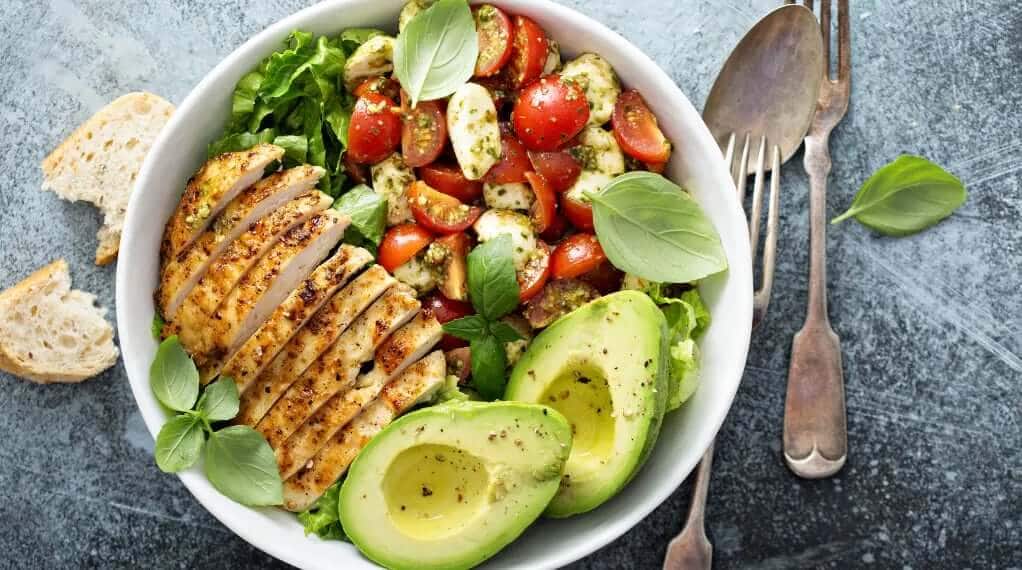
Caprese skewers
Doesn't feel like diet food
About 12g protein (2 oz mozzarella)
Thread cherry tomatoes, mozzarella balls and basil onto toothpicks and add a drizzle of balsamic. Two ounces of mozzarella gives you about 12 grams of protein.
It takes four minutes to make something that doesn't feel like diet food.
29
Deviled eggs
Uses boiled eggs
About 12.5g protein (4 halves, 2 eggs)
Mash boiled egg yolks with Greek yogurt, mustard and seasoning and spoon them back into the whites. Four halves, which is two eggs, have about 12.5 grams of protein.
Old-fashioned, protein-dense, and they use up the eggs you boiled on Sunday.
Snacks to avoid on GLP-1s
Not banned, just expensive
Nothing on this list is banned. But each category tends to cost you more than it returns.
High-fat foods: chips, fried anything, large portions of nuts, generous amounts of full-fat cheese. Fat slows how fast food leaves the stomach, and your stomach is already emptying slowly. This is the category most likely to turn a mildly uncomfortable afternoon into a bad one.
Sugary snacks: candy, cookies, pastries, regular ice cream, and most granola bars, which are candy bars in an outdoor-themed wrapper. The issue isn't moral. They take up stomach space you have very little of and return no protein for it.
High-volume snacks: 16-ounce smoothies, large salads, big bowls of popcorn. These can keep you full for hours and push your next real meal out of reach, which is the opposite of what you want when total intake is already low.
Carbonated drinks: soda, and sparkling water in quantity. Added gas on top of slowed stomach emptying is a predictable path to bloating and reflux.
Spicy and acidic foods: hot chips, spicy jerky, a lot of citrus at once. Reflux is common on these medications, and this category reliably makes it worse.
GLP-1 meal prep snack strategy
One hour on Sunday covers the week
Everything above is theory until the food is physically in your fridge. About an hour on Sunday covers a week.
Boil a dozen eggs, which takes ten minutes of attention. Whisk ten eggs with vegetables and cheese into a muffin tin and bake for twenty. Portion five snack boxes of turkey, cheese, tomatoes and crackers. Roll a batch of energy balls. Wash and cut carrots, celery, cucumbers and peppers, and store them in water so they stay crisp. That's the whole routine, and it works because it removes every decision from the moment you have the least capacity to make one.
Each morning, pack the day: a small cooler bag, an ice pack, one snack for mid-morning, one for mid-afternoon, and a protein bar somewhere permanent, like a desk drawer or the car, as a backup. For a more systematic approach to batching, our Complete Meal Prep Guide covers the full week rather than just the snack layer.
What to keep stocked
Greek yogurt, string cheese, eggs both raw and boiled, protein powder, three or four kinds of protein bar so you don't burn out on one, deli turkey, cottage cheese, hummus, pre-washed vegetables, berries, tuna pouches and jerky.
The variety matters more than it sounds like it should. Taste preferences shift on these medications, and the snack you loved in month one is sometimes intolerable by month three.
If Sunday prep isn't happening
Our GLP-1 Meal Plan is built around chef-cooked, portion-controlled meals, from $94.95 for 10 meals with no subscription. If you'd rather pick every meal yourself, Build A Meal Plan lets you filter the full menu by protein. We make no claim that our food treats or interacts with any medication. Talk with your prescriber about your own protein target.
GLP-1 snacks bottom line
A tool, not an obligation
Snacking on a GLP-1 is a tool, not an obligation. Its job is to close the gap between the protein you get from meals and the 80 to 120 gram range that clinical guidance points to, and to do that without triggering the fullness, nausea or reflux that makes people quit these medications.
Which means the rules are short. Target 15 to 20 grams of protein. Keep fat and physical volume low. Prep in advance so the decision is already made. And don't force a snack on a day you're already at target, because eating for the sake of eating isn't the goal and never was.
Some days you'll need two snacks. Some days none. Both are the plan working.
Track your protein honestly for three days before you add any snacks. If you're short, start with one 15 to 20 gram snack mid-afternoon and see how it sits. Cold, smooth and lean foods are the easiest wins, and your prescriber or dietitian can help set your daily target.
No. Snacks are a tool for closing a protein gap, not a requirement. If three meals get you to your daily protein target and you feel fine, skip them. If you're landing well short, or going six or more hours between meals, one or two snacks at 15 to 20 grams of protein each is the simplest fix.
How much protein should GLP-1 snacks have?
Aim for 15 to 20 grams. Below about 10 grams you're mostly eating calories. Above about 25 grams, the snack starts competing with your next meal, which works against you when appetite is already suppressed. The 15 to 20 gram band is big enough to matter against a daily target and small enough to leave room for dinner.
What are the best high-protein snacks for Ozempic?
Plain Greek yogurt at about 15 grams, two hard-boiled eggs at about 12.5, cottage cheese at about 14 per half cup, a ready-to-drink shake at 20 to 30, turkey and cheese roll-ups at 15 to 18, and edamame at about 18 per cup. They're lean, compact and need no decisions at the moment you need them.
Should I snack if I'm not hungry on Wegovy?
Only if the numbers say you should. Track your protein honestly for three days. If you're consistently hitting your target, hunger or no hunger, you don't need snacks. If you're running 20 or 30 grams short most days, a snack is easier to get down than a bigger meal, and hunger isn't a reliable signal on these medications anyway.
What snacks should I avoid on Mounjaro?
Clinical guidance for managing GLP-1 stomach symptoms points to smaller, more frequent meals and steering away from high-fat and high-sugar foods. In practice that means chips, fried food, large portions of nuts, candy and pastries, oversized smoothies and carbonated drinks. None are forbidden, but they sit heavily and add little protein for the space they take.
Can I have sweet snacks on GLP-1 medications?
Yes, and pretending otherwise is how people quit. The useful question is whether the sweet thing carries protein. Greek yogurt with berries, protein pudding, cottage cheese with cinnamon and a protein mug cake all satisfy a craving and count toward your target. A cookie counts toward nothing, which is fine occasionally if you call it a treat.
How often should I snack on Zepbound?
One or two snacks a day works for most people, usually mid-morning and mid-afternoon, which gives you five or six small eating occasions instead of three larger ones. Some days you'll want both, some days neither. The daily protein total is what matters, not the schedule, so let your three-day tracking decide.
Are protein bars good for GLP-1 diets?
They're convenient and consistent, which counts for a lot on a bad day. Look for 15 to 20 grams of protein, under 5 grams of sugar and under 200 calories. Skip anything that is basically a candy bar with whey added. Bars work as a few-times-a-week option rather than a replacement for whole food.