
Quick Answer: Black seed (Nigella sativa) produces a small but real additional weight loss when taken alongside a calorie-controlled diet. A 2023 GRADE-assessed meta-analysis found an average reduction of 1.46 kg and 0.58 kg/m² of BMI against placebo — with a confidence interval wide enough that the true effect could be under a pound. Waist circumference did not move. Trials used 1–3g of powder or 500–2,000mg of oil over 6–12 weeks. It interacts with diabetes, blood pressure and blood-thinning medication, so this is a conversation to have with your doctor rather than a decision to make in a supplement aisle.
Table of Contents
The Ancient Seed Making Modern Headlines
Every few months a miracle supplement takes over social media. This one arrives with "black seed oil melted my belly fat" and, inevitably, "better than Ozempic."
What is unusual about black seed is that underneath the nonsense there is a real, if small, effect. Nigella sativa has been used for thousands of years in traditional medicine across the Middle East and South Asia, and unlike most things with that pedigree it has actually been run through randomized trials and pooled into meta-analyses.
The honest summary is that it works a little, in a specific way, for people who are already doing the rest of it. Which is a less interesting claim than the one being sold, and a more useful one.
This guide covers what the pooled evidence actually found, what dose the trials used, which medications it interacts with — that last part matters more than the weight loss — and where it does and does not fit.
What Black Seeds Actually Are
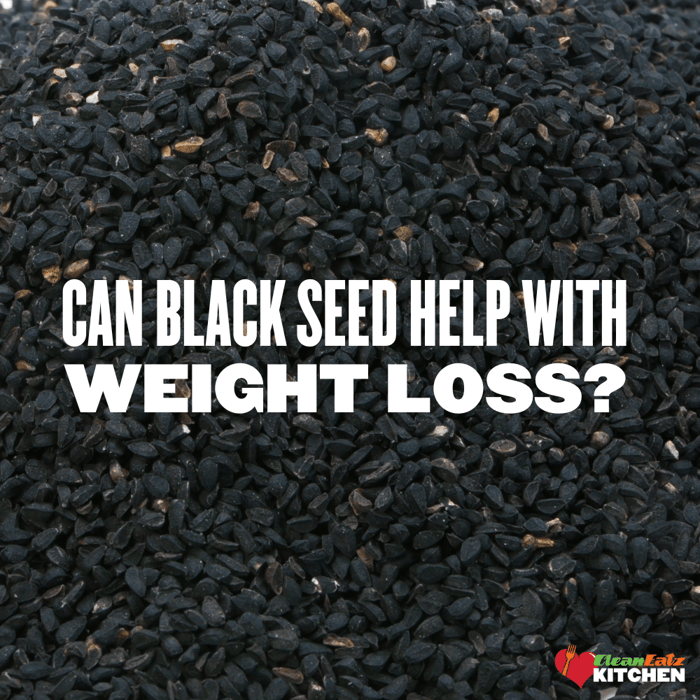
Black seeds come from Nigella sativa, a flowering plant in the buttercup family native to the Middle East, South Asia and North Africa. Despite the common name "black cumin," they are unrelated to cumin, which belongs to the carrot family.
You will also see them sold as kalonji, black caraway, nigella, or black onion seed. Same thing.
The active compound is thymoquinone, which makes up roughly 30 to 48 percent of the essential oil and is responsible for most of the antioxidant, anti-inflammatory and metabolic activity attributed to the seed. The seeds themselves also provide fats, protein and fibre along with small amounts of vitamins and minerals, though not in quantities that matter at supplement doses.
Why They May Help
Three mechanisms have reasonable support, and understanding them tells you who is most likely to notice anything.
Blood sugar regulation
This is the best-documented effect and probably the most relevant. A review in Frontiers in Nutrition describes thymoquinone improving insulin sensitivity partly by increasing GLUT-4 transporters in muscle, which helps skeletal muscle pull glucose out of the blood more efficiently.
Clinical trials have found modest reductions in fasting blood glucose and HbA1c in people with prediabetes or type 2 diabetes. Steadier blood sugar means fewer crashes, and fewer crashes means less of the late-afternoon hunger that derails an otherwise decent day of eating.
This is also why the effect is likely to be larger in people with existing metabolic dysfunction than in someone who is already metabolically healthy and simply wants to lose a few pounds.
Inflammation
Chronic low-grade inflammation interferes with insulin signalling and with the hormones that regulate appetite, and it tends to accompany excess body fat in a loop that is difficult to break from either end.
Black seed has shown anti-inflammatory activity in human trials, including reductions in inflammatory markers and in leptin, the hormone involved in appetite and energy balance. As with curcumin and most anti-inflammatory compounds, the connection to actual weight change is indirect: it may make the environment slightly more favourable rather than doing anything to fat directly.
Appetite
A crossover, double-blind, placebo-controlled trial in overweight and obese women gave 2,000mg of black seed oil daily and found significant reductions in appetite and hunger alongside increases in satiety and fullness, with reductions in body fat percentage, fat mass and visceral fat area. No clinically relevant adverse effects were reported.
Notably, that trial did find a significant waist circumference reduction, which the pooled data does not. Individual trials and meta-analyses disagreeing is normal, and when they do, the pooled result is the one to trust.
Anything that reduces appetite without stimulants is useful, but it works best on top of meals that are already filling. Our guide to the 100 best foods for weight loss covers the foods that do that heavy lifting.
What the Research Shows
The strongest evidence available is a 2023 GRADE-assessed systematic review and dose-response meta-analysis published in the Journal of Functional Foods. Here is exactly what it found:
Body weight: reduced by 1.46 kg (95% CI: −2.53 to −0.39). Statistically significant.
BMI: reduced by 0.58 kg/m² (95% CI: −0.86 to −0.29). Statistically significant.
Waist circumference, hip circumference, waist-to-hip ratio: no significant effect. Waist circumference came in at −2.54 cm but with a confidence interval running from −6.27 to +1.19, which includes the possibility of no change at all.
An earlier 2018 meta-analysis reported a similar picture: significant reductions in body weight and BMI, nothing significant on waist circumference.
Two things deserve more attention than they usually get. First, that confidence interval on body weight is wide — the true average effect could plausibly be as small as 0.39 kg, under a pound, across three to sixteen weeks. Second, the failure to move waist circumference matters because "belly fat" is precisely what black seed is marketed for. The pooled data does not support that claim.
The trials themselves ran 3 to 16 weeks in adults who were mostly overweight or obese, and participants were typically also following calorie-restricted diets. The effect is additional to diet, not independent of it. Long-term data past a few months barely exists.
For how black seed compares against everything else on the shelf, our weight loss supplements guide applies the same standard across the category.
Powder vs. Oil vs. Capsules
| Form | Upside | Downside | Best for |
|---|---|---|---|
| Whole seeds | Cheapest; fibre intact; works as a spice | Peppery; hard to dose precisely | People who will actually cook with them |
| Ground powder | Easy to mix into food; affordable; fibre retained | Strong flavour | Yogurt, smoothies, spice blends |
| Cold-pressed oil | Higher thymoquinone concentration | Strong taste; ~120 cal per tablespoon | Potency, if you can handle it |
| Softgel capsules | No taste; precise labelled dose | Most expensive per serving | Anyone who wants it over with |
Oil appears somewhat more potent than powder, probably on thymoquinone content, though both have produced results in human trials.
The dosing caveat matters more than the form. Thymoquinone content varies substantially between products, so teaspoon measures tell you very little — a teaspoon of one brand is not equivalent to a teaspoon of another. Go by labelled milligrams where the product provides them. These are supplements, not FDA-approved treatments, and label accuracy in this category is inconsistent enough that third-party testing (NSF, USP, ConsumerLab) is worth paying for.
One practical note people miss: black seed oil is a fat like any other. A tablespoon twice daily is roughly 240 calories. If you are tracking, count it, because it is entirely possible to take a weight loss supplement into a calorie surplus.
How to Use It
Assuming your doctor has cleared it, the trials point to a fairly narrow protocol.
Dose: 1–3g of powder daily, or roughly 500–2,000mg of oil or extract. Start at half your target for the first week to check tolerance, then move up if nothing is upset.
Duration: 6–12 weeks is what almost every trial used, and it is a reasonable window to judge by. Sporadic use will tell you nothing.
Timing: no trial has established a best time. Consistency beats optimisation here. Take it with food if it bothers your stomach.
What will actually determine your outcome is everything around it: a real calorie deficit, enough protein to hold onto muscle while you lose fat, resistance training, and sleep. The participants in the successful trials were not simply taking a capsule — they were on calorie-restricted diets, and the supplement added to that. Our complete meal prep guide covers building that foundation, and if the constraint is time rather than knowledge, our Weight Loss Meal Plan handles the portioning and macros so the deficit takes care of itself.
Safety, Side Effects & Drug Interactions
This is the section that matters most, and it is the reason black seed is not a casual purchase.
Speak to your doctor before starting if you take any prescription medication. The interactions below are documented, not hypothetical, and several involve drugs where an unplanned additive effect is genuinely dangerous.
Drug interactions. Diabetes medication including metformin and insulin — black seed lowers blood glucose and the combination can push into hypoglycaemia. Blood pressure medication — the same additive problem, with dizziness and fainting as the warning signs. Blood thinners such as warfarin and aspirin — increased bleeding risk. Immunosuppressants — black seed stimulates immune function and may work against them. It may also affect drugs metabolised through the CYP3A4 and CYP2D6 pathways, which covers a very large slice of common prescriptions.
Who should avoid it. Anyone pregnant, since it may affect uterine contractions — culinary amounts as a seasoning are a different matter from supplement doses. Anyone breastfeeding, on insufficient data. Anyone with a bleeding disorder or already low blood pressure. And stop at least two weeks before any scheduled surgery, for both the bleeding and blood sugar effects.
Common side effects are digestive: discomfort, nausea, bloating, more likely at higher doses and usually settling. Allergic reactions are rare, and contact dermatitis is a documented risk with topical use specifically.
Stop and get advice for severe dizziness or fainting, difficulty breathing or throat swelling, unusual bruising or bleeding, signs of low blood sugar such as shakiness, sweating and confusion, or any significant skin reaction.
Where People Go Wrong
The largest error is expecting it to work without the diet. Black seed will not offset a surplus, and every trial showing benefit ran alongside calorie restriction. If the fundamentals are not in place, the supplement is a rounding error on a number that is going the wrong way.
Ignoring the interactions is the dangerous one rather than merely the ineffective one. People on diabetes or blood pressure medication have a genuine reason to check first, and "it's natural" is not a safety argument.
Then the practical ones. Starting at a full dose and being surprised by the digestive upset. Buying the cheapest bottle in a category where label accuracy is poor and active compound content varies wildly. Forgetting that oil carries calories. Taking it three days a week and expecting a twelve-week result. And the subtle one — unconsciously easing off on food and training because a supplement is now doing some of the work. It is not.
Frequently Asked Questions
How much weight can you lose with black seed oil?
The best pooled estimate is 1.46 kg, about 3.2 pounds, over trials lasting 3 to 16 weeks. That comes from a 2023 GRADE-assessed meta-analysis in the Journal of Functional Foods. The confidence interval ran from 0.39 kg to 2.53 kg, so the true effect could be under a pound. It is a supporting tool alongside a calorie deficit, not a weight loss strategy in itself.
What is the best dosage of black seed for weight loss?
Clinical trials have generally used 1 to 3 grams of powder daily or roughly 500 to 2,000 mg of oil, for 6 to 12 weeks. Start at the lower end to check tolerance. Teaspoon measures are unreliable here because thymoquinone content varies substantially between products, so go by the labelled milligrams where you can.
Is black seed oil safe to take every day?
At standard doses it appears well tolerated by healthy adults for 8 to 12 weeks, which is as long as most trials ran. Safety beyond about three months has not been well studied. Anyone taking medication for diabetes, blood pressure, or blood clotting should speak to their doctor first, because the interactions are real rather than theoretical.
Can you take black seed oil while on medication?
Not without asking your prescriber. Black seed can lower blood sugar on top of diabetes medication, lower blood pressure on top of antihypertensives, increase bleeding risk alongside blood thinners, and may work against immunosuppressants. It may also affect drugs processed by the CYP3A4 and CYP2D6 enzyme pathways, which covers a wide range of prescriptions.
What is the difference between black seed oil and black seed powder?
Oil carries a higher concentration of thymoquinone, the main active compound, and may be somewhat more potent gram for gram. Powder keeps the fibre and the rest of the whole seed. Both have produced results in human trials. Oil is also calorie-dense at roughly 120 calories a tablespoon, which is worth counting if you are tracking.
When should I take black seed oil?
Timing does not appear to matter much and no trial has established a best time. Consistency matters considerably more, so pick a slot you will actually keep. If it upsets your stomach, take it with food.
Does black seed oil help with belly fat specifically?
The pooled evidence says no. The 2023 meta-analysis found no significant effect on waist circumference, hip circumference, or waist-to-hip ratio, even though body weight and BMI both moved. Some individual trials have reported reductions in visceral fat, but that has not survived pooling. No supplement targets fat in a specific area.
Are there any side effects of black seed oil?
Digestive discomfort, nausea and bloating are the common ones, more likely at higher doses. Allergic reactions are rare but possible, particularly with topical use. Stop and seek advice for severe dizziness, breathing difficulty, unusual bruising or bleeding, or symptoms of low blood sugar.
The Bottom Line
Black seed is one of the more defensible supplements in a category that mostly is not. The evidence is real, replicated, and pooled: roughly a kilogram and a half of additional weight loss over a couple of months, on top of a calorie-controlled diet.
It is also considerably smaller than the marketing, does nothing measurable for the belly fat it is sold for, and carries interactions serious enough that anyone on medication needs to ask first.
If you want to try it: get clearance from your doctor, buy something third-party tested, start at half dose, give it eight to twelve weeks, and keep everything else constant so you can actually tell whether it did anything.
And be honest about the arithmetic. A pound and a half over three months is roughly what one better decision a day would produce. If the nutrition side is where things slip, that is the higher-leverage place to spend attention — our Weight Loss Meal Plan handles portion control directly, and the High Protein Meal Plan covers protein if holding onto muscle is the priority.
This article is for informational purposes only and does not constitute medical advice. Consult a healthcare professional before starting any new supplement, particularly if you take prescription medication or have an existing health condition. Individual results vary.