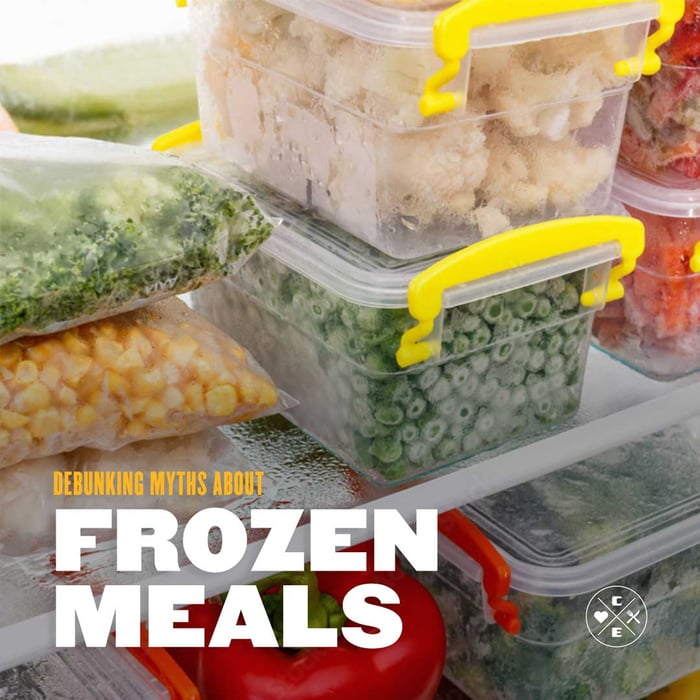
Quick Answer: Frozen prepared meals can be nutritious, safe, and convenient when you choose well. Freezing preserves food safety and nutritional quality, microwaving doesn't "kill all nutrients," and many modern options keep sodium and added sugar in check. The key is reading labels (protein, fiber, sodium) and choosing meals built around real ingredients. Below, we debunk the most common myths and show you what to look for.
Why the "Frozen Meals Are Unhealthy" Belief Persists
Frozen meals got a bad reputation decades ago—and some of it was deserved. Early frozen dinners were often loaded with sodium, made with processed ingredients, and light on protein and vegetables. But the category has evolved dramatically. Today, you can find frozen meals with 30+ grams of protein, recognizable whole-food ingredients, and sodium levels comparable to what you'd use cooking at home.
The problem is that the old reputation stuck. Many people still assume all frozen meals are "TV dinners" full of preservatives and mystery ingredients. Let's address these concerns one by one.
Meal prep doesn't have to be complicated.
Get our free guide — shortcuts, meal ideas, and a system that makes eating well the easy option.
Top Myths About Frozen Meals (And the Facts)
Myth #1: "Frozen meals are less nutritious than fresh."
Fact: Research comparing fresh vs. frozen produce finds comparable vitamin levels—and sometimes frozen comes out ahead. Why? "Fresh" produce often travels for days before reaching your grocery store, then sits in your fridge losing nutrients. Frozen vegetables and proteins are typically flash-frozen at peak freshness, locking in nutritional value.123
The nutritional quality of any frozen meal depends on what's in it. A frozen meal built around grilled chicken, brown rice, and roasted vegetables is nutritious. A frozen meal that's mostly refined carbs and processed meat isn't. The freezing process itself doesn't diminish nutrition—the recipe matters.
Myth #2: "Microwaving destroys nutrients."
Fact: Nutrient retention depends on cooking time and temperature, not the appliance. Because microwaves cook quickly and use little water, they often preserve heat-sensitive vitamins better than longer cooking methods like boiling or roasting.45
The key is following package directions—use microwave-safe containers, allow standing time for even heating, and don't overcook.6
Myth #3: "Frozen meals need lots of preservatives."
Fact: Freezing itself is the preservation method. Food held at 0°F (-18°C) stops bacterial growth indefinitely—no chemical preservatives required.78
Some frozen meals include stabilizers to maintain texture after reheating, but these aren't the same as the preservatives used in shelf-stable packaged foods. If ingredient simplicity matters to you, check the label—many brands now emphasize short, recognizable ingredient lists.
Myth #4: "Freezer burn means the food is unsafe."
Fact: Freezer burn is a quality issue, not a safety problem. Those dry, discolored spots happen when air reaches the food's surface, but they don't make the food dangerous to eat. Trim affected areas if the texture bothers you.9
Myth #5: "All frozen meals are salt bombs."
Fact: Some are high in sodium, but many 2025 options are moderate. The key is checking labels. Aim for roughly 600-700 mg sodium per entrée, which leaves room to stay within the American Heart Association's daily limit of 2,300 mg (ideally 1,500 mg for most adults).10
Also check the "Added Sugars" line, now required on Nutrition Facts labels. Some frozen meals—especially those with sweet sauces—contain more sugar than you'd expect.11
Myth #6: "'Net carbs' on the front tells you everything."
Fact: "Net carbs" isn't a legally defined FDA term. Different brands calculate it differently. Rely on the Nutrition Facts panel instead: look at total carbohydrates, fiber, and protein to understand how the meal fits your goals.12
Myth #7: "All frozen meals are ultra-processed and unhealthy."
Fact: "Processed" exists on a spectrum. Frozen vegetables are processed. So is frozen grilled chicken. The question isn't whether something is processed—it's what the processing involves.1314
You can choose frozen meals made with whole-food ingredients: real vegetables, whole grains, lean proteins, and healthy oils. Or you can choose ones loaded with refined starches, added sugars, and processed meats. Reading ingredients takes 30 seconds and tells you which is which.
Myth #8: "Frozen meals cause weight gain."
Fact: Weight change depends on total calories and consistency—not whether food was frozen. Pre-portioned frozen meals can actually help with weight loss because they remove the guesswork: you know exactly how many calories and how much protein you're getting.
Many people find that having grab-and-go healthy meals in the freezer prevents the "I'm too tired to cook, let's order pizza" moments that derail weight loss. For more on structuring your nutrition, see our Complete Meal Prep Guide and Portion Control vs. Calorie Counting comparison.
How to Choose Healthy Frozen Meals
Not all frozen meals are created equal. Here's what to look for when shopping:
Protein: Target 25-40 grams per meal. This keeps you full and supports muscle during weight loss. Good sources include chicken, turkey, fish, shrimp, tofu, tempeh, and legumes. Our 100 Best Foods for Weight Loss guide covers the highest-protein options in detail.
Fiber and vegetables: Look for at least 5 grams of fiber per meal. If the frozen entrée is light on vegetables, add a side of frozen veggies or a simple salad.
Carbohydrate quality: Prefer meals with whole grains, beans, or legumes over those built around refined white rice or pasta. Ignore front-of-package "net carb" marketing—use the Nutrition Facts panel.
Fats: Favor meals made with olive oil, avocado oil, or canola oil over those heavy in cream, butter, or processed cheese. This matters more for heart health than weight loss specifically.
Sodium and added sugar: Check both lines on the label. Keep individual meals under 600-700 mg sodium when possible, and watch for hidden sugar in sauces and glazes.
Safe Storage, Thawing, and Reheating
Proper handling ensures both food safety and quality.
Storage: Keep your freezer at 0°F (-18°C) or below. At this temperature, food remains safe indefinitely, though quality slowly declines over months. Colder is better.7
Thawing: The safe options are refrigerator thawing (slowest but safest), microwave thawing (cook immediately after), or cold water thawing (submerged, changing water every 30 minutes). Never thaw on the counter—the outer layer can reach unsafe temperatures while the center is still frozen.7
Reheating: Use microwave-safe containers, cover or vent as directed, stir or rotate midway through, and allow standing time for temperature to equalize. A food thermometer can verify the center reaches safe temperature (165°F for most reheated foods).615
A note on Listeria: Ready-to-eat refrigerated foods can allow Listeria growth over time, which is why frozen storage and proper reheating are important. People at higher risk (pregnant women, elderly, immunocompromised) should follow CDC guidance on food safety.16
How Clean Eatz Kitchen Meals Fit In
We designed Clean Eatz Kitchen meals to address the exact concerns covered in this article. Every meal is chef-prepared with real ingredients, portion-controlled for consistent calories, and built around lean proteins—typically 25-40 grams per serving. We keep sodium moderate and use straightforward recipes you could make at home if you had the time.
The convenience factor matters too. Having healthy, ready-to-heat meals in your freezer means you're not relying on willpower at 7 PM after a long day. You just grab a meal, heat it, and eat. No cooking, no measuring, no cleanup beyond throwing away the tray.
Explore our meal plan options—including Weight Loss, High Protein, and Build-Your-Own—and check the full nutrition information for every meal. No subscription required; order what you need, when you need it.
Frequently Asked Questions
Are frozen vegetables as healthy as fresh?
Often yes. Studies show comparable micronutrient levels between frozen and fresh produce. In fact, "fresh" vegetables can lose vitamins during transport and home storage, while frozen vegetables are typically flash-frozen at peak ripeness, locking in nutrients.13
Can I microwave food in the package tray?
Yes—if the tray is labeled microwave-safe and the package instructions say to do so. Always follow the printed directions, heat thoroughly, and allow standing time for even temperature distribution.615
What's a good sodium target for a frozen entrée?
Aim for approximately 600-700 mg or less per meal. This leaves room to stay within the American Heart Association's recommended daily limit of 2,300 mg (ideally 1,500 mg for most adults) when combined with your other meals and snacks.10
Do frozen meals have a lot of preservatives?
Not necessarily. Freezing itself is the preservation method—food held at 0°F stops bacterial growth without chemicals. Some frozen meals use stabilizers for texture, but preservatives aren't required for food safety. Check ingredient lists if this concerns you.7
Are frozen meals good for weight loss?
They can be excellent for weight loss. Pre-portioned frozen meals remove the guesswork from calorie control—you know exactly what you're eating. The key is choosing meals with adequate protein (25+ grams), moderate sodium, and ingredients you recognize. Many people find frozen meals help them stay consistent because there's no cooking or measuring required.
References
1. Bouzari A, et al. Vitamin retention in eight fruits & vegetables: A comparison of refrigerated and frozen storage. 2015. PubMed
2. Rickman JC, et al. Nutritional comparison of fresh, frozen & canned fruits/vegetables (Part II). 2007. Journal of the Science of Food and Agriculture
3. Li L, et al. Selected nutrient analyses of fresh, fresh-stored & frozen produce. 2017. Food Chemistry
4. Harvard Health. Microwave cooking and nutrition. health.harvard.edu
5. Cross GA. Effect of microwaves on nutrient value. 1982 review. PubMed
6. FDA. Microwave ovens: safety and use of microwave-safe containers. fda.gov
7. USDA FSIS. Freezing and food safety. fsis.usda.gov
8. FDA. Are you storing food safely? fda.gov
9. USDA. What is freezer burn? ask.usda.gov
10. American Heart Association. How much sodium should I eat per day? heart.org
11. FDA. Changes to the Nutrition Facts label. fda.gov
12. American Diabetes Association. Get to know carbs. diabetes.org
13. Harvard T.H. Chan School of Public Health. Processed foods and health. HSPH Nutrition Source
14. Harvard Heart Letter. Putting processed foods into perspective. 2024. health.harvard.edu
15. USDA FSIS. Cooking with microwave ovens. fsis.usda.gov
16. FDA. What you need to know about preventing Listeria infections. fda.gov
Links verified December 2025. This content is for educational purposes only and is not medical advice.