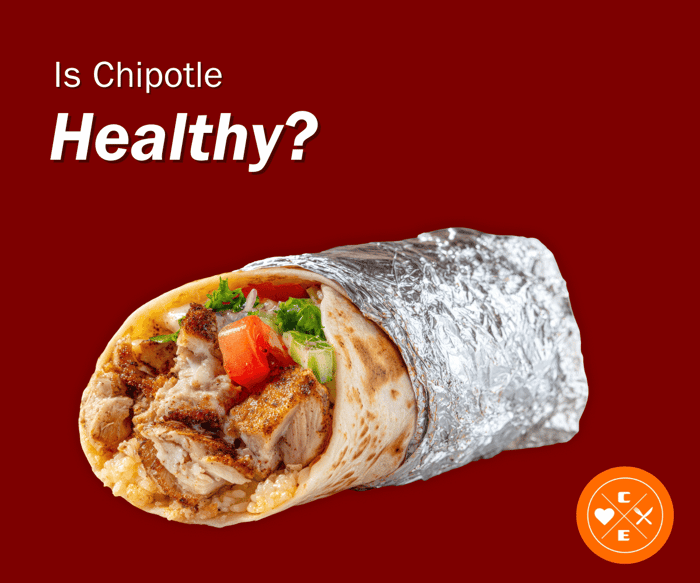

Quick Answer: Chipotle can be a healthy choice—but it depends entirely on how you build your meal. A smart burrito bowl with chicken, brown rice, beans, and veggies typically lands around 500–650 calories with 40+ grams of protein. But a loaded burrito with all the extras can hit 1,200+ calories and push you close to—or over—the general 2,300 mg/day sodium limit. The build-your-own format gives you control, which is both the opportunity and the risk.
The Chipotle Health Halo: What's Real and What's Marketing
Chipotle has built its brand on being the "healthier" fast food option. Fresh ingredients, no artificial preservatives, responsibly raised meats—the messaging works. Walk into a Chipotle and you feel virtuous compared to hitting a drive-thru burger joint.
Here's the thing: Chipotle's ingredients genuinely are better quality than most fast food. They use real chicken, actual vegetables, and beans cooked from scratch. There are no freezers full of processed patties or deep fryers bubbling with mystery oil. That part of the reputation is earned.
But "better ingredients" doesn't automatically mean "healthy meal." The build-your-own format means your Chipotle order could be a balanced 500-calorie bowl or a 1,400-calorie sodium bomb—and most people land closer to the latter without realizing it. Because portions and add-ons vary, it’s surprisingly easy for a Chipotle order to reach ~1,000+ calories—especially once you stack tortilla + rice + beans + cheese/sour cream + guac.
The question isn't whether Chipotle can be healthy. It's whether you know how to build a healthy meal there. Most people don't—and that's where the health halo becomes a trap.
The Real Nutrition Numbers: What You're Actually Eating
Let's break down what goes into a typical Chipotle order and where the calories and sodium actually come from.
The Tortilla Tax: That flour tortilla wrapped around your burrito adds 320 calories and 600mg of sodium before you've added a single filling. It's essentially 50 grams of refined carbohydrates that won't keep you full. Choosing a bowl instead of a burrito is the single biggest calorie-saving decision you can make at Chipotle.
Rice Reality: A standard serving of white rice adds 210 calories and 350mg of sodium. Brown rice has the same calories but nearly half the sodium (190mg) plus more fiber. Ask for "light rice" and you'll cut about 100 calories while barely noticing the difference.
Protein Math: Chicken is your leanest option at 180 calories and 310mg sodium for a 4oz serving, delivering 32 grams of protein. Steak is similar. Barbacoa and carnitas run higher in both calories and sodium (barbacoa hits 530mg sodium per serving). Sofritas, the tofu option, sounds healthy but packs 560mg of sodium—more than the chicken.
The Topping Trap: This is where meals go sideways. Cheese adds 110 calories. Sour cream adds 110. Guacamole—which people assume is healthy—adds 230 calories. The creamy queso adds 120 calories and 250mg sodium. Pile on all four and you've added nearly 600 calories to your bowl.
A "standard" chicken burrito with rice, beans, salsa, cheese, sour cream, and guacamole easily exceeds 1,100 calories and 2,000mg of sodium. That's half your daily calories and nearly your entire sodium allowance in one meal.
For a deeper dive into which foods actually support weight loss, check out our complete guide to the best foods for weight loss.
How to Build a Genuinely Healthy Chipotle Meal
The good news: you can absolutely build a nutritious, macro-friendly meal at Chipotle. You just need to be strategic.
Start with a bowl or salad. Skipping the tortilla saves 320 calories and 600mg sodium instantly. If you want something to scoop with, the crispy corn tacos are only 70 calories each with zero sodium—use a couple on the side instead.
Choose your protein wisely. Chicken and steak are your best bets for protein-to-sodium ratio. Chicken gives you 32g protein for only 310mg sodium. Double protein is available if you're prioritizing muscle building—you'll get 64g protein for around 360 calories.
Go brown rice, light portion. Brown rice has half the sodium of white rice and more fiber. Asking for a light scoop saves about 100 calories while still giving you the base you want.
Add black beans. At 130 calories, beans deliver 8g of protein and 7g of fiber. They're one of the most nutritious items on the line and help keep you full longer.
Load up on fajita veggies. Only 20 calories for a serving of grilled peppers and onions. Ask for extra—they add bulk and flavor without meaningful calories.
Choose salsa over creamy toppings. Fresh tomato salsa adds flavor for just 25 calories (though 550mg sodium—salsas are sodium-heavy). The tomatillo green salsa is lower sodium at 260mg. Skip the cheese, sour cream, and queso if you're watching calories or sodium.
Be strategic with guacamole. Guac is healthy fat, but 230 calories adds up. If you want it, skip the cheese and sour cream to make room in your calorie budget.
Sample Orders: From Lean to Loaded
The Lean Bowl (best for weight loss): Bowl with chicken, light brown rice, black beans, fajita veggies (extra), fresh tomato salsa, lettuce. Comes in around 480 calories, 42g protein, 900mg sodium. This is a genuinely healthy fast-food meal.
The Balanced Bowl (moderate approach): Bowl with chicken, brown rice, black beans, fajita veggies, fresh tomato salsa, and half-portion guacamole. Around 610 calories, 44g protein, 1,100mg sodium. Satisfying without going overboard.
The Loaded Burrito (what most people order): Flour tortilla, chicken, white rice, pinto beans, roasted chili-corn salsa, cheese, sour cream, guacamole. This hits approximately 1,150 calories, 52g protein, and over 2,100mg sodium. It's not a health food—it's a treat.
The difference between the lean bowl and the loaded burrito? About 670 calories and 1,200mg of sodium. Same restaurant, completely different nutritional impact.
What to Skip (or Limit)
Some Chipotle items are best treated as occasional indulgences rather than regular choices.
Chips: A bag of chips adds 540 calories before you dip them in anything. Add guacamole and queso, and your "side" becomes a 900+ calorie appetizer. If you must have chips, split a bag with the table.
Queso: The creamy cheese dip adds 120 calories and 280mg sodium per serving. It's easy to pour on without thinking—and it adds up fast.
Chipotle-Honey Vinaigrette: This salad dressing sounds healthy but delivers 220 calories and a staggering 850mg of sodium per serving. Ask for it on the side and use sparingly, or skip it entirely and use salsa to dress your salad instead.
Carnitas and Barbacoa: Both are higher in fat and sodium than chicken or steak. Barbacoa in particular hits 530mg sodium per serving. Not off-limits, but know what you're getting.
For consistent nutrition without the guesswork, meal prep services like Clean Eatz Kitchen's High-Protein Meal Plan deliver balanced macros and controlled sodium (typically 500-700mg per meal) without requiring you to calculate every ingredient. Prefer to eat in? Find a Clean Eatz café near you for fresh, macro-friendly meals ready when you are.
The Bottom Line
Chipotle can absolutely be part of a healthy diet—but it requires intentionality. The fresh ingredients and customizable format give you more control than most fast-food restaurants. A well-built bowl with chicken, brown rice, beans, veggies, and salsa is a legitimately nutritious meal with solid protein and reasonable calories.
The problem is that Chipotle makes it very easy to build a calorie bomb without realizing it. The tortilla, the generous scoops of rice, the creamy toppings, the chips on the side—each addition seems small but compounds quickly. Most people ordering "healthy" at Chipotle are actually consuming 1,000+ calories and a full day's worth of sodium.
Know what you're ordering. Use their nutrition calculator before you go. And if you're eating out regularly and want more predictable nutrition, consider building a Clean Eatz Kitchen meal plan where the macros are already dialed in—no mental math required.
Frequently Asked Questions
Is Chipotle actually healthy?
Chipotle can be healthy depending on what you order. A well-built bowl with chicken, brown rice, black beans, fajita veggies, and salsa runs about 500-650 calories with 40+ grams of protein. However, a loaded burrito with all the toppings can easily exceed 1,200 calories and 2,000mg of sodium. The build-your-own format is both Chipotle's strength and its trap—you control the nutrition, for better or worse.
What is the healthiest thing to order at Chipotle?
The healthiest option is a burrito bowl or salad with chicken, brown rice, black beans, fajita veggies, and fresh tomato salsa—skipping cheese, sour cream, and the tortilla. This gives you around 500 calories, 40g protein, and keeps sodium closer to 900mg. For even fewer calories, skip the rice and double the fajita veggies.
Is a Chipotle bowl healthier than a burrito?
Yes, significantly. The flour tortilla alone adds 320 calories and 600mg of sodium. A bowl with identical fillings saves you those calories and nearly a quarter of your daily sodium limit. If you love the tortilla, ask for it on the side and use half, or choose crispy corn tacos (70 calories, 0mg sodium each) instead.
Why is Chipotle so high in sodium?
Sodium accumulates from multiple ingredients: the tortilla (600mg), rice (190-350mg), beans (210mg), protein (310-555mg depending on type), and salsas (230-460mg each). A typical bowl hits 1,200-1,500mg of sodium, while a fully loaded burrito can exceed 2,000mg—nearly your entire daily limit in one meal.
Can I eat Chipotle while trying to lose weight?
Yes, Chipotle can work for weight loss if you order strategically. Choose a bowl over a burrito, pick chicken or steak for protein, add black beans and fajita veggies, and use salsa instead of cheese and sour cream. A smart bowl runs 500-650 calories with 40+ grams of protein—solid macros for a weight loss meal. Avoid chips (540 calories) and queso.
References
- Chipotle — Nutrition Calculator (Accessed Feb 2026)
- Chipotle — U.S. Nutrition Facts (Accessed Feb 2026)
- U.S. Food & Drug Administration (FDA). Sodium in Your Diet. Updated March 5, 2024. Accessed 2026 Feb 11.
- American Heart Association. How much sodium should I eat per day? Updated July 15, 2025. Accessed 2026 Feb 11.
Disclaimer: This article is for educational purposes only and does not replace medical or personalized nutrition advice.