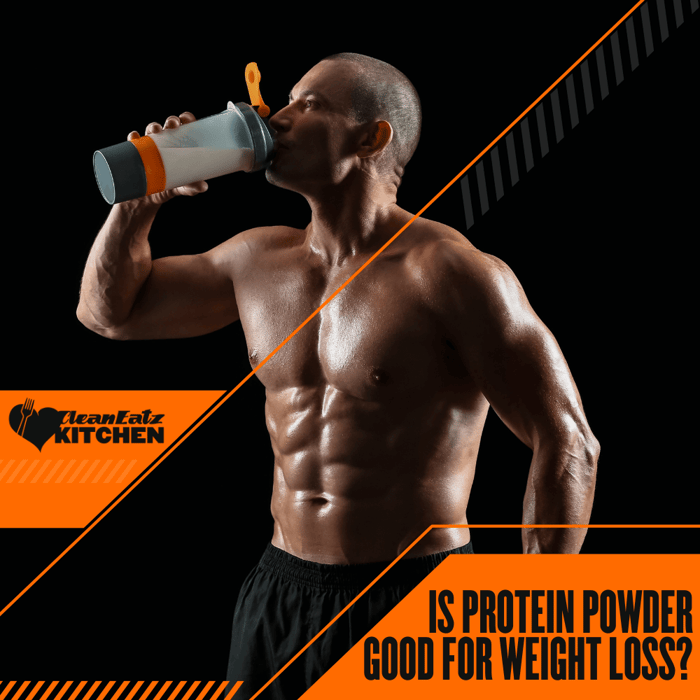

Quick Answer: Yes, protein powder supports weight loss — but only because it helps you hit a daily protein target, not because there’s anything fat-burning about the powder itself. Research points to roughly 1.3 g of protein per kg of body weight daily for holding onto muscle while losing fat. Work out how far your meals fall short of that, then use powder to close the gap. Look for at least 20 g of protein and under 3 g of sugar per serving.
What Protein Powder Actually Does
Protein powder is not a weight loss product. It’s a convenience product that solves a specific problem: most people trying to lose weight don’t eat enough protein, because protein is the macronutrient that takes the most effort to prepare and the most planning to distribute across a day.
Close that gap and three things follow, though not in equal measure.
Hunger control does most of the work. Protein is the most satiating macronutrient, and a shake in the morning or mid-afternoon can head off the specific kind of hunger that ends in a second dinner. This is the effect you’ll actually feel, and it’s the reason powder helps people who otherwise stall.
Muscle preservation is the one that matters long-term. A calorie deficit doesn’t selectively burn fat. Without enough protein, some of what you lose is muscle, and since muscle is metabolically active, losing it makes the next round of weight loss harder. A 2024 systematic review and meta-analysis in Clinical Nutrition ESPEN found that enhanced protein intake significantly prevents muscle loss in adults with overweight or obesity who are losing weight. Findings from the International Weight Control Registry point the same way, with higher protein intakes predicting leaner body composition among people who have lost weight. Pair it with resistance training and the effect gets stronger.
The metabolism boost is real and oversold. Protein does carry a higher thermic effect than carbohydrate or fat — your body spends more energy digesting it. Plenty of supplement marketing treats this as the headline benefit. It isn’t. Across a day it amounts to a modest number of calories, nowhere near enough to matter on its own. Treat it as a bonus on top of the first two effects, not a reason to buy anything.
How Much Protein You Actually Need
This is the number most articles skip, and it’s the one that makes the rest of the decision easy.
The Clinical Nutrition ESPEN analysis put usable thresholds on it. Intake above roughly 1.3 g per kg of body weight per day was associated with increased muscle mass during weight loss. Intake below 1.0 g per kg was associated with a higher risk of muscle loss. A 2024 analysis in Nutrients of 267 patients in a multimodal obesity program found the same pattern with supplemental protein during a very low calorie phase.
Run your own numbers. A 180-pound person is about 82 kg, so 1.3 g/kg lands near 105 g of protein a day. If breakfast is coffee and toast and lunch is a salad, you might be at 50 g by dinner. That’s a 40–55 g shortfall, which is two scoops, or one scoop plus one better-built meal. Our protein intake calculator will do the arithmetic and split it across meals.
Once you know the gap, you know how much powder you need. Usually less than people assume.
What to Look For on the Label
Protein powders vary more than the shelf suggests, and a few of them are working against the goal you bought them for. Four things are worth checking.
At least 20–25 g of protein per serving. Enough to meaningfully move your daily total and to support muscle protein synthesis in most adults. Below about 15 g you’re paying for flavoring.
Under 3 g of sugar. This is where the biggest differences hide. Mass gainers and many dessert-flavored powders carry 15 g or more, which adds calories without adding fullness — the exact opposite of what you want in a deficit.
A short ingredient list. Long additive lists don’t make a powder more effective and often make it harder on the stomach. Digestive enzyme blends are one of the few additions that earn their place, since they reduce the bloating that makes people quit a powder before it does anything.
Roughly 100–150 calories per serving. Higher than that, check where the extra is coming from. Added fats and carbohydrates are fine in a mass gainer and counterproductive here.
Our own Clean Eatz SHAKEZ protein powder was built to those criteria, with input from registered dietitian Crystal Zabka-Belsky: 20 g of complete protein per scoop from a whey isolate, whey concentrate, and casein blend, 1 g of sugar with none added, a DigeSEB Plus enzyme complex, and added electrolytes. The whey-plus-casein combination is the part worth understanding, and it’s covered below.
Whey, Casein, or Plant
Whey is the most researched option and the default for anyone who tolerates dairy. It digests quickly, delivers all essential amino acids, and is unusually rich in leucine, the amino acid that most directly triggers muscle protein synthesis. In a randomized controlled trial in older adults losing weight, a 21 g whey supplement significantly preserved muscle mass against an isocaloric control.
Casein comes from the same milk but digests slowly, releasing amino acids over hours instead of minutes. That makes it better at holding hunger off, which is why it’s often suggested before bed or across long gaps between meals.
Blending the two is the practical answer for weight loss, and it’s more useful than picking a side. Fast whey covers the post-workout window; slow casein covers the four-hour stretch where people usually snack. A single blended powder does both without buying two products.
Plant proteins — pea, hemp, brown rice, soy — work for anyone avoiding dairy, with one caveat that matters. Single-source plant powders tend to have incomplete amino acid profiles and a chalkier texture. Multi-source blends, usually pea combined with rice or soy, fix both. Get the dose right and plant protein performs comparably to whey.
How to Use It
Consistency beats timing, but a few placements are more useful than others.
The highest-value slot is a carb-heavy breakfast. If your morning is toast, cereal, or fruit, stirring a scoop into oatmeal or drinking a shake alongside changes the hunger curve for the whole day. The second is the afternoon, replacing whatever you’d otherwise grab from the kitchen at 3pm. Post-workout is genuinely useful if you lift, though the window is far wider than supplement marketing implies.
What to mix it with: water is fine and lowest in calories. Unsweetened almond milk or low-fat dairy milk cost you very little. The trap is the smoothie — a scoop of powder, a banana, a tablespoon of peanut butter, honey, and full-fat yogurt is a 500-calorie drink wearing a health halo. Our guide to smoothies for weight loss covers how to build one that doesn’t blow the day.
For the difference between using powder and drinking shakes as a broader strategy — meal replacement, calorie targets, timing — see are protein shakes good for weight loss.
Where People Go Wrong
Treating powder as the protein plan. Whole foods should carry the majority of your intake. Chicken, fish, eggs, Greek yogurt, and legumes bring micronutrients, fiber, and actual satiety from chewing that no powder replicates. Powder is for the gap, not the foundation. Our best foods for weight loss guide covers what should be doing the heavy lifting.
The second mistake is a shopping error. Mass gainers sit on the same shelf as weight loss powders, in similar tubs, with similar athletic photography, and they are engineered for the opposite outcome. Read the calorie count before the flavor name.
The third is subtler and more common. A shake added on top of your existing intake is a surplus, and a surplus is a surplus no matter how good the macros look. Powder earns its place when it displaces something — the pastry, the bag of chips, the skipped lunch that turns into overeating at 7pm. If you can’t name what the shake replaced, it didn’t replace anything.
And the last one is expecting too much of it. Calorie deficit, adequate protein, and regular movement produce the result. Powder makes the middle one easier to sustain on a Tuesday when you didn’t plan lunch. That’s the whole contribution. It’s a real one, and it’s smaller than the label suggests.
The Bottom Line
Work out your protein target, find out how far your meals fall short, and use powder to close that specific gap. Anything more than that is marketing.
If you want the powder, Clean Eatz SHAKEZ hits 20 g of protein and 1 g of sugar per scoop. If the harder problem is that your meals aren’t supplying enough protein to begin with, that’s worth fixing before you buy a supplement — our Weight Loss Meal Plan is calorie-controlled with macros printed on every label, which takes the guesswork out of the arithmetic above.
For the wider picture on which supplements are worth the money and which aren’t, see our best supplements for weight loss guide.
Frequently Asked Questions
Is protein powder good for weight loss?
Yes, as a tool rather than a treatment. Protein powder makes it easier to hit a daily protein target, and hitting that target is what controls hunger and protects muscle while you’re in a calorie deficit. The powder itself does nothing special. What matters is whether it gets your total protein where it needs to be.
How much protein powder should you take per day for weight loss?
Usually one to two scoops, depending on how much protein your meals already supply. Research points to roughly 1.3 grams of protein per kilogram of body weight per day for preserving muscle during weight loss. Work out the gap between that number and what you eat, then fill the gap. A 20-gram scoop closes about a fifth of a typical target.
What should you mix protein powder with for weight loss?
Water is the lowest-calorie option and works fine. Unsweetened almond milk or low-fat dairy milk add creaminess for very little. Skip juice, and be careful with smoothie add-ins like nut butter, honey, and full-fat yogurt, which can quietly turn a 120-calorie shake into a 500-calorie one.
What type of protein powder is best for weight loss?
Whey is the most researched and works well for most people who tolerate dairy. A whey and casein blend digests over a longer window, which tends to hold hunger off better between meals. If you avoid dairy, choose a multi-source plant blend such as pea and rice rather than a single-source powder.
Can protein powder make you gain weight?
Only through calories, like any other food. Protein powder added on top of everything you already eat is a surplus, and a surplus adds weight regardless of the macronutrient. Mass gainer powders make this easy to do by accident, since some carry 1,000 or more calories per serving.
This content is for educational purposes only and does not replace personalized advice from a qualified healthcare professional. Dietary supplement statements have not been evaluated by the FDA.