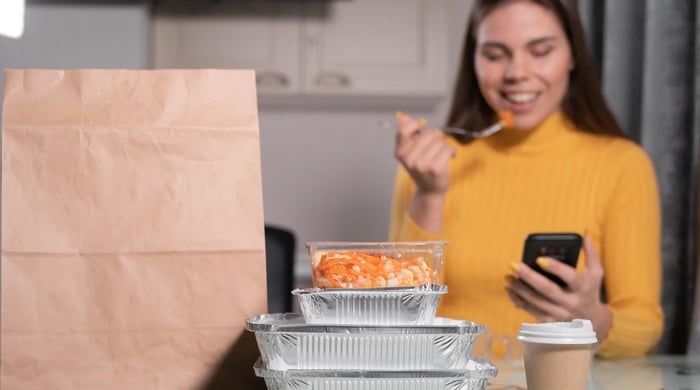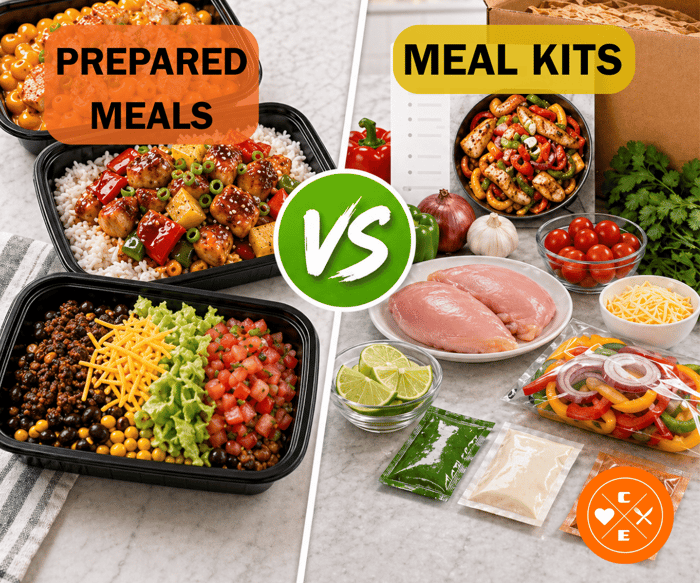

Quick Summary: Prepared meals deliver more reliable weight loss outcomes than meal kits for most people. Clinical research shows pre-portioned, fully cooked meals improve adherence, eliminate calorie estimation errors, and reduce decision fatigue — the three strongest predictors of staying in a calorie deficit. Meal kits help with planning but still require 25-45 minutes of cooking per meal, and the meal kit category churns over 60% of subscribers within six months for that exact reason.
Every January, millions of people set weight loss goals and turn to meal delivery services for help. The market reflects this demand. The global meal kit delivery sector was valued at $32.8 billion in 2024, while the prepared meal delivery segment is projected to reach $27 billion by 2032. But here's the problem: most people lump these two formats together as if they're interchangeable. They're not. Meal kits send you pre-portioned raw ingredients with recipe cards, expecting you to cook everything yourself. Prepared meals arrive fully cooked, requiring nothing more than reheating. The format you choose shapes whether you stick with the plan long enough to see results on the scale.
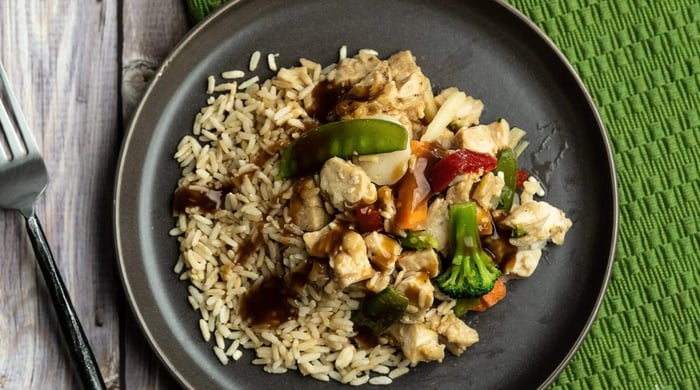
The Structural Differences That Shape Weight Loss Outcomes
It's worth understanding exactly what you're getting, because the day-to-day experience differs more than most comparison articles acknowledge.
- Meal kits deliver raw or semi-prepared ingredients alongside step-by-step recipe instructions. You're responsible for chopping, seasoning, cooking, and plating. Most kits take 25–45 minutes of active kitchen time per meal. The nutritional information is provided per serving, but the final calorie count depends on how closely you follow the recipe. An extra tablespoon of olive oil or a heavier pour of sauce can add 100+ calories without you realizing it. Our Clean Eatz Kitchen vs HelloFresh comparison walks through the time-cost math in detail for the largest meal kit brand.
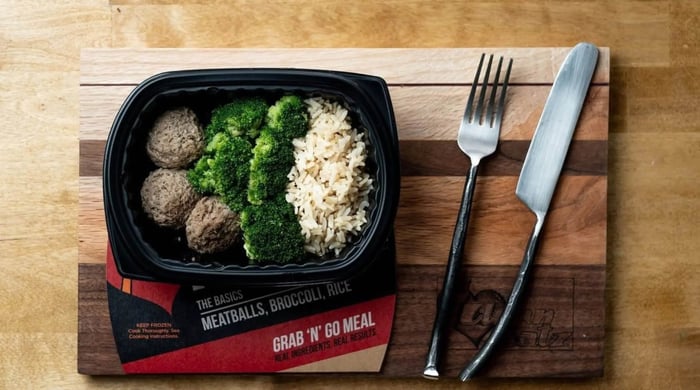
- Prepared meals arrive fully cooked and portioned. You remove the lid, heat for two to four minutes, and eat. The calorie count printed on the label is the calorie count you consume, as there's no variability introduced by cooking technique or ingredient estimation. Services like Clean Eatz Kitchen build their entire model around this precision, offering meals under 500 calories with at least 20 grams of protein per serving, macro-balanced across protein, carbohydrates, and fats.
This structural gap, cooking required versus cooking eliminated, creates a cascade of downstream effects on consistency, calorie accuracy, and long-term adherence that most surface-level comparisons gloss over entirely.
Meal prep doesn't have to be complicated.
Get our free guide — shortcuts, meal ideas, and a system that makes eating well the easy option.
What Clinical Research Reveals About Pre-Portioned Meals and Weight Loss
Portion Control Outperforms Willpower
A study published in the International Journal of Obesity examined whether incorporating portion-control strategies into behavioral weight loss programs improved outcomes. The results were instructive: participants using pre-portioned foods lost weight at a faster rate during the initial phase of the study. The researchers attributed this not to any metabolic advantage, but to the elimination of estimation errors that plague self-prepared meals.
Meanwhile, research published in Nutrients found that portion-controlled meals also improved overall diet quality scores. Participants who ate pre-portioned meals consumed more balanced macronutrient profiles and better micronutrient distribution than those who assembled their own meals. This matters because weight loss that comes at the expense of nutritional quality isn't sustainable and often leads to fatigue and cravings that derail long-term progress. Participants who relied on pre-portioned foods also regained weight at a faster rate after stopping. This doesn't mean prepared meals are a dead end. It means they work best as part of a longer-term strategy rather than a short-term fix. The most successful outcomes appear when people use prepared meals to build consistent eating habits and gradually develop the skills to maintain those patterns independently.
Decision Fatigue: The Hidden Force Undermining Your Diet
Meal kits reduce some decision fatigue compared to cooking from scratch. You don't have to decide what to make or what to buy, as those choices are made for you. But you still face micro-decisions during the cooking process: how much oil to use, how long to sauté, whether to follow the recipe exactly or improvise. Each small decision chips away at your diminished evening willpower.
Prepared meals, by contrast, eliminate virtually every food-related decision from the moment you open the refrigerator. There's no cooking technique to debate, no ingredient quantity to eyeball, no recipe step to interpret. You choose a meal, heat it, and eat it. For someone managing a calorie deficit, removing even a handful of daily decisions can be the difference between staying on plan and ordering takeout. Decision fatigue affects not just what people eat, but whether they eat according to plan at all.
Why Adherence Beats Every Other Dietary Variable
This is where the meal kit versus prepared meal distinction becomes most consequential. Meal kits require 25–45 minutes of active cooking per meal. That's manageable on a relaxed Sunday evening. It's far less manageable on a Wednesday after back-to-back meetings, a late commute, and kids who need attention. While home cooking is associated with better dietary quality, the frequency of home cooking drops significantly when time pressure increases.
Prepared meals don't have this vulnerability. A two-minute reheat time is equally feasible whether you're relaxed or exhausted, whether it's the first week of your diet or the eighth. That consistency of effort translates directly into consistency of calorie intake, which is the mechanical driver of weight loss.
Calorie Accuracy: The Underestimated Advantage of Ready-to-Eat Meals
How Meal Kits Handle Calorie Tracking
Meal kits provide per-serving nutritional information based on precise ingredient quantities. In theory, this should make calorie tracking straightforward. In practice, variability creeps in at every stage. Did you use all the sauce, or leave some in the packet? Did you trim the protein exactly as assumed, or leave extra fat on? Did the vegetables cook down more or less than expected? Each deviation introduces calorie uncertainty. Over the course of a day with three meals, those small inaccuracies can compound into a 200–400-calorie discrepancy, which is enough to erase a moderate calorie deficit entirely.
How Prepared Meals Handle Calorie Tracking
With prepared meals, the calorie count on the label matches what you eat. Period. There's no cooking variability, no ingredient estimation, and no room for unintentional miscounting. Consistent self-monitoring was among the strongest predictors of weight-loss success. Prepared meals make that monitoring almost effortless. You scan a label or log a pre-set entry, rather than weighing and measuring individual ingredients.
For services like Clean Eatz Kitchen, this transparency is baked into the product design. Every meal ships with complete macro and calorie breakdowns, and because the meals are portion-controlled at the point of production, the margin of error is negligible. That level of nutritional certainty is difficult to replicate in any home-cooking format. For a deeper look at which foods support weight loss most effectively, our complete guide to the best foods for weight loss covers the underlying nutritional science.
When Meal Kits Still Make Sense
Building Cooking Skills for Long-Term Independence
If you're early in your health journey and have little experience cooking nutritious meals, meal kits offer a structured way to develop skills you'll need long after you stop using any delivery service. Learning to prepare lean proteins, build flavor without excess calories, and portion ingredients accurately are valuable capabilities. Some meal kit services build their calorie-controlled plans around meals in the 400–700 calorie range with at least 10 grams of protein, providing a framework for understanding what balanced home cooking looks like.
Engagement and Enjoyment
There's a psychological component to cooking that matters for some people. The act of preparing food can feel more satisfying than reheating it, and that satisfaction can reinforce positive associations with healthy eating. If the cooking process itself motivates you to stay on plan, a meal kit may better support your commitment than a prepared meal.
The Realistic Caveat
The honest assessment, though, is that most people who start meal kits with weight loss goals don't sustain the cooking commitment beyond a few weeks. The novelty wears off, the time investment accumulates, and the gap between intention and execution widens. If you know from experience that you're unlikely to cook four to five nights a week consistently for months, a meal kit is probably not your best path to sustained weight loss. Our head-to-head comparisons of Clean Eatz Kitchen vs HelloFresh and Clean Eatz Kitchen vs Factor walk through specific decision frameworks for switching from cooking-based services to prepared meals.
Why Prepared Meals Have the Edge for Sustainable Fat Loss
When you stack the evidence, prepared meals hold a clear structural advantage for most people pursuing weight loss.
The Convenience-Consistency Connection
The prepared meal format removes the three biggest friction points in any diet: planning what to eat, preparing it, and accurately tracking what you consumed. Each of these friction points is a potential failure point, and each failure point is an opportunity to abandon the plan. By collapsing all three into a single step — open, heat, eat — prepared meals dramatically shorten the distance between deciding to eat well and actually doing it. It is particularly relevant for busy professionals, parents managing hectic evenings, and anyone whose schedule doesn't reliably allow 30–45 minutes for cooking.
What to Look for in a Prepared Meal Service
Not all prepared meal services are created equal, and choosing poorly can undermine the format's inherent advantages. The most effective services for weight loss share several characteristics: calorie-controlled portions (generally 350–500 calories per meal), a minimum of 20 grams of protein per serving to support satiety and muscle preservation, balanced macronutrient ratios, transparent nutritional labeling, and meals built from whole, recognizable ingredients rather than processed fillers. For a side-by-side breakdown of how the major prepared meal services compare on these criteria, see our 2026 Best Prepared Meal Delivery comparison.
Clean Eatz Kitchen checks these boxes with a Weight Loss Meal Plan designed around meals under 500 calories, each containing at least 20 grams of protein and balanced macros across protein, carbohydrates, and fats. Their no-subscription model also removes commitment anxiety — you can order six meals to test the approach without locking into a recurring plan, which lowers the barrier to getting started.
Building a Long-Term Strategy That Actually Lasts
During the active weight loss phase, when you're maintaining a consistent calorie deficit and the margin for error is smallest, prepared meals offer the most reliable path to daily compliance. The calorie precision, time savings, and decision reduction compound into weeks and months of consistent intake, which is exactly what drives measurable fat loss. As you approach your goal weight and transition into maintenance, incorporating meal kits or home cooking can help you develop the skills and habits needed to sustain your results independently. Faster regain after stopping pre-portioned foods underscores this point, because prepared meals are most powerful as a tool within a larger strategy, not as a permanent crutch.
Many people find success using prepared meals for weekday dinners, while cooking on weekends when they have more energy and leisure to enjoy the process. This hybrid model captures the adherence benefits of prepared meals during high-friction moments while preserving the skill development and enjoyment of cooking during low-friction moments. Weight loss that lasts isn't built on motivation. It's built on removing the obstacles between you and consistent execution. For most people, prepared meals remove more of those obstacles than any other single tool available.
Frequently Asked Questions
Are meal kits or prepared meals better for weight loss?
Prepared meals deliver more reliable weight loss results than meal kits for most people. Clinical research shows pre-portioned, fully cooked meals improve adherence, eliminate calorie estimation errors, and reduce decision fatigue — three of the strongest predictors of whether someone maintains a calorie deficit. Meal kits help with planning and shopping but still require 25-45 minutes of cooking per meal, which most dieters stop doing within a few weeks of starting.
Why do most people quit meal kits?
The meal kit category sees churn rates exceeding 60% within six months. The most common reasons cited in customer reviews are unexpected time burden, ingredient spoilage when life gets busy, weekly subscription fatigue, and the realization that meal kits eliminate grocery shopping but not cooking. Many former meal kit users switch to prepared meal delivery services for the full convenience promise.
How much time do meal kits actually save?
Meal kits eliminate grocery shopping and meal planning but still require 25-45 minutes of active cooking per meal. For someone preparing 3 meals per week from a kit, that's 75-135 minutes of weekly cooking time, plus cleanup. Prepared meal services like Clean Eatz Kitchen require only 3-5 minutes per meal in the microwave, recovering 8-15 hours per month for someone replacing all dinners.
Are prepared meals healthier than meal kits?
Prepared meals offer more nutritional consistency than meal kits because the calorie and macro counts on the label match exactly what you eat — there's no cooking variability to introduce errors. Both formats can be healthy or unhealthy depending on the specific service. Look for prepared meals under 500 calories with at least 20g of protein per serving as the indicator of a genuinely weight-loss-supportive option.
Can you lose weight with meal delivery services?
Yes, multiple clinical trials show that pre-portioned, calorie-controlled meals produce faster initial weight loss than self-prepared meals because they eliminate estimation errors. The key factors are calorie control (meals under 500 calories for active weight loss), adequate protein (20g+ per meal to preserve muscle and satiety), consistent macros, and a service you'll actually use long enough for the deficit to add up.
What is the difference between meal kits and prepared meals?
Meal kits ship raw, pre-portioned ingredients with recipe cards. You cook the meals yourself in 25-45 minutes per meal. Examples include HelloFresh, Blue Apron, Home Chef, and Sunbasket. Prepared meals ship fully cooked and portioned. You heat and eat in 3-5 minutes. Examples include Clean Eatz Kitchen, Factor, CookUnity, and Trifecta. The choice between them comes down to whether you want to cook or want cooking eliminated.
Ready to Try Prepared Meal Delivery for Weight Loss?
If you've tried meal kits and the cooking commitment didn't last, prepared meal delivery removes the friction that derailed your last attempt — without the subscription pressure that comes with most competitors.
For active weight loss: The Weight Loss Meal Plan at $9.49/meal delivers portion-controlled meals under 500 calories with 20g+ protein per serving — engineered for sustained calorie deficits.
For protein-focused goals: The High Protein Meal Plan at $10.99/meal includes an extra 2 oz of protein per serving, delivering 35-47g protein per meal for muscle preservation and satiety during weight loss.
For maximum customization: The Build-a-Meal Plan at $8.99/meal lets you choose any 12+ meals from the menu — no commitment, no subscription.
Comparing options? Our head-to-heads on Clean Eatz Kitchen vs HelloFresh and Clean Eatz Kitchen vs Factor walk through specific cost and time comparisons for the most popular meal kit and prepared meal services.
Sources
- Grand View Research. "Meal Kit Delivery Services Market Size & Share Report, 2033." grandviewresearch.com
- Coherent Market Insights. "Prepared Meal Delivery Market Size and YoY Growth Rate, 2032." coherentmarketinsights.com
- Rock, C.L., et al. "Randomized Clinical Trial of Portion-Controlled Prepackaged Foods to Promote Weight Loss." PMC/National Institutes of Health. pmc.ncbi.nlm.nih.gov
- American Institute for Cancer Research. "Study: Prepackaged Meals May Spur More Weight Loss." aicr.org
- Rolls, B.J. "What is the role of portion control in weight management?" International Journal of Obesity. nature.com
- Meier, T., et al. "Does the incorporation of portion-control strategies in a behavioral program improve weight loss in a 1-year randomized controlled trial?" International Journal of Obesity. nature.com
- Raynor, H.A., et al. "Portion Controlled Meals Provide Increases in Diet Quality During Weight Loss and Maintenance." PMC/National Institutes of Health. pmc.ncbi.nlm.nih.gov
- Gkouskou, K., et al. "The Effect of Decision Fatigue on Food Choices: A Narrative Review." Nutrients. mdpi.com
- American Medical Association. "What doctors wish patients knew about decision fatigue." ama-assn.org
- Goldstein, S.P., et al. "Strategies to Improve Adherence to Dietary Weight Loss Interventions in Research and Real-World Settings." PMC/National Institutes of Health. pmc.ncbi.nlm.nih.gov
- Mills, S., et al. "Frequency of eating home-cooked meals and potential benefits for diet and health." International Journal of Behavioral Nutrition and Physical Activity. ijbnpa.biomedcentral.com
- Berkowitz, S.A., et al. "A pilot randomized controlled trial comparing nutritious meal kits and no-prep meals." BMC Public Health. pmc.ncbi.nlm.nih.gov
- Harvey, J., et al. "The Effect of Adherence to Dietary Tracking on Weight Loss." Obesity (PMC). pmc.ncbi.nlm.nih.gov
- Ducrot, P., et al. "Meal planning is associated with food variety, diet quality and body weight status in a large sample of French adults." International Journal of Behavioral Nutrition and Physical Activity. pmc.ncbi.nlm.nih.gov
- Tважko, D., et al. "New Dietary Trends—Meal Kit Delivery Services as a Source of Nutrients: A Scoping Review." Nutrients. mdpi.com