
Reviewed and updated: February 2, 2026
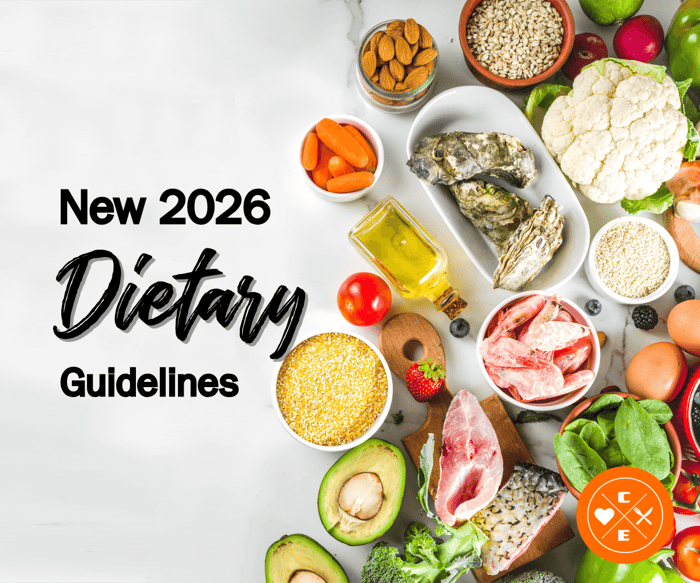
Quick Summary: The USDA and HHS released the 2025–2030 Dietary Guidelines for Americans on January 7, 2026 (often referred to as the 2026 dietary guidelines because that’s when the final update was published). The new guidance emphasizes minimally processed, nutrient-dense foods, introduces an inverted pyramid-style visual, and strengthens messaging around added sugars and highly processed packaged foods.
On January 7, 2026, the USDA and HHS released the 2025–2030 Dietary Guidelines for Americans. Many headlines focused on the new visual—an inverted pyramid that places protein alongside fruits and vegetables, while showing whole grains as a smaller supporting slice. But the bigger shift is the document’s framing: it leans harder into food quality—“real food” and minimal processing—while being more direct about limiting highly processed packaged foods, sugar-sweetened beverages, and added sugars. Some experts praise the clarity; others caution that the emphasis on animal foods and full-fat dairy may be interpreted in different ways.
Here’s what changed, what stayed the same, and how to apply it in real life
The Big Picture: What the New Guidelines Prioritize
At a high level, the 2025–2030 Dietary Guidelines reflect a shift in emphasis rather than a total overhaul. The core message running through the document is simple: prioritize minimally processed, nutrient-dense foods and reduce reliance on packaged, highly processed products.
Compared with the softer “limit” language of earlier editions, the new guidelines are more direct about foods and drinks to avoid or minimize, including sugar-sweetened beverages and highly processed packaged ready-to-eat foods that skew salty or sweet (think chips, cookies, candy).
Another major shift is what the 2025–2030 guidelines choose to highlight. Protein is positioned as a more foundational part of the diet—paired visually with fruits and vegetables—along with explicit targets that are higher than the long-standing minimum many people know.
The updated visual reinforces this change. The inverted pyramid places protein/dairy/healthy fats alongside vegetables and fruits, while whole grains appear as a smaller, supporting section. Grains are not eliminated—but the visual shift moves away from the idea that grains must be the “base” of every plate.
Taken together, these changes reflect a broader shift in nutrition messaging: less focus on single nutrients and more focus on overall food quality, adequate protein, and minimal processing.
Quick note: The official document is concise (about 10 pages) and is designed to be highly practical—targets and patterns you can apply without complex tracking.
Protein Targets Increased
One of the most significant updates is the recommended protein range: 1.2–1.6 grams per kilogram of body weight per day.
For context, the long-standing adult protein RDA many people recognize is 0.8 g/kg/day—often described as a minimum baseline. The new range is framed more like a practical target for muscle maintenance, satiety, and metabolic health—especially relevant as people age or pursue weight loss and fitness goals.
How to apply it (simple):
If you eat 3 meals/day, a practical starting point is ~25–40 g protein per meal (then adjust for your body size, activity, goals, and medical context).
Choose from a mix of protein sources the guidelines explicitly list (animal + plant): eggs, poultry, seafood, red meat, beans, peas, lentils, nuts, seeds, soy.
Who should personalize protein targets: people with kidney disease, advanced liver disease, or other conditions where protein needs individual medical guidance.
For a deeper dive into how protein supports weight management and overall health, our Complete Guide to the Best Foods for Weight Loss breaks down the science.
Full-Fat Dairy (No Added Sugars) Is Explicitly Encouraged
The 2026 guidelines explicitly support full-fat dairy with no added sugars, with a target of 3 servings/day in a 2,000-calorie pattern (adjust as needed).
Practical take: prioritize plain options (plain Greek yogurt, plain kefir, milk, cottage cheese) and sweeten naturally (fruit, cinnamon, vanilla) instead of choosing flavored products that often add sugars.
Highly Processed Packaged Foods Are Called Out Directly
This edition more explicitly calls out minimizing highly processed packaged/ready-to-eat foods that are salty or sweet (chips, cookies, candy) and avoiding sugar-sweetened beverages (soda, fruit drinks, energy drinks).
This matters because the Dietary Guidelines influence federal nutrition programs—and, over time, the broader “default food environment.”
The emphasis on whole foods also aligns well with meal prep strategies. When you're cooking at home or eating pre-portioned, dietitian-designed meals, you naturally reduce the excess sodium, added sugars, and "mystery ingredients" that come with convenience foods. Our Complete Meal Prep Guide covers how to make this practical for busy schedules.
Added Sugars: “None Recommended”
The language is notably firmer:
No amount of added sugars or non-nutritive sweeteners is recommended as part of a healthy diet.
One meal should contain no more than 10 g of added sugars.
For infancy and early childhood (birth–4 years), the guidelines explicitly say: avoid added sugars.
Reality check: CDC data show that in 2017–2018, adults averaged about 17 teaspoons of added sugar per day, and intake among teens is also high—so this guidance can be a meaningful shift for many households.
Quick label rule: scan ingredients for “sugar/syrup” or “-ose” endings.
What Stayed the Same (But Is Clearer Now)
Several long-standing anchors remain, with explicit targets:
Vegetables: 3 servings/day
Fruits: 2 servings/day
Whole grains: 2–4 servings/day (adjusted to calorie needs).
Saturated fat: generally ≤10% of daily calories (the document notes more research is needed on optimal fat types).
Alcohol: simplified to “consume less” for better overall health.
Sodium: general guidance remains <2,300 mg/day for ages 14+.
The New Inverted Food Pyramid: A Visual Shift
The guidelines introduce an inverted pyramid-style visual that shifts emphasis toward protein and produce, with whole grains shown as a smaller supporting section.
How to use it at dinner tonight:
Start with a protein anchor
Add 2 colors of produce
Add a fiber-rich grain only if it helps you feel good and energized
Cook with olive oil as a default (and keep overall saturated fat within the ≤10% framework)
What Experts Are Saying
Several major medical organizations praised the clearer stance on processed foods and sugary drinks. For example, the American Medical Association publicly applauded the guidelines for spotlighting highly processed foods, sugar-sweetened beverages, and excess sodium.
At the same time, the American Heart Association urged more research on optimal protein amounts and sources and recommended prioritizing plant proteins, seafood, and lean meats—while being cautious with higher-fat animal products in the context of cardiovascular risk.
Bottom line: there’s broad alignment on “less ultra-processed, more whole foods.”Where debate continues is how the new emphasis on animal foods and certain fats will play out in everyday diets—especially alongside the longstanding saturated-fat ceiling.
What This Means for You (Simple, Actionable)
If you do nothing else, do these three things:
Hit protein at each meal (use the 1.2–1.6 g/kg/day target as your compass).
Keep added sugars under control: aim for ≤10 g added sugar per meal and make sugary drinks the exception.
Make “real food” the default: protein + produce + minimally processed staples, and treat packaged snacks as occasional.
If you're working toward weight loss or fitness goals, the higher protein recommendations are especially relevant. Protein supports muscle retention during weight loss, keeps you fuller longer, and requires more energy to digest than carbohydrates or fat. Our High Protein Meal Plan is designed with these principles in mind — balanced macros, real ingredients, and nothing artificial.
FAQs
What replaced MyPlate?
The 2025–2030 release highlights an inverted pyramid-style graphic (a shift away from the MyPlate-style era), emphasizing protein/produce more prominently and showing whole grains as a smaller supporting section.
How much protein do the new 2026 dietary guidelines recommend?
They recommend 1.2 to 1.6 grams per kilogram of body weight daily, adjusted to individual needs and context.
Do the guidelines address processed foods explicitly?
Yes—highly processed packaged salty/sweet foods and sugar-sweetened beverages are called out directly.
What do the 2026 dietary guidelines say about added sugar?
No amount is recommended as part of a healthy diet, and one meal should contain no more than 10 g of added sugars.
Is full-fat dairy recommended now?
The guidance explicitly supports full-fat dairy with no added sugars, with a goal of 3 servings/day in a 2,000-calorie pattern (adjust as needed).
The Bottom Line
The 2026 Dietary Guidelines represent a meaningful shift toward protein, whole foods, and away from processed products — changes that align with what many nutrition experts have been advocating for years. The new visual (in inverted pyramid form) reinforces that grains are not presented as the “foundation” of a healthy diet, while protein and produce take center stage.
Whether you follow these guidelines to the letter or simply use them as a general compass, the core advice is consistent: eat real food, prioritize protein, load up on vegetables, and minimize the packaged stuff. It's not complicated, but it does require intention — and that's where meal planning and preparation make all the difference.
References
- U.S. Department of Health and Human Services and U.S. Department of Agriculture. Dietary Guidelines for Americans, 2025-2030. January 2026.
- U.S. Department of Health and Human Services. Fact Sheet: Trump Administration Resets U.S. Nutrition Policy. January 7, 2026.
- Centers for Disease Control and Prevention: Added sugars intake data (17 tsp/day). CDC nutrition, 2024
- AMA applauds Dietary Guidelines, announces commitments on nutrition, American Medical Association Jan 7, 2026.
- Aleccia J. Here's what's in new dietary guidelines from the Trump administration. PBS NewsHour. January 7, 2026.
- Howard J, Dillinger K. New US dietary guidelines urge less sugar, more protein. CNN. January 7, 2026.
- U.S. Department of Agriculture Press Release. Kennedy, Rollins unveil historic reset of US Nutrition policy, put real food back at center of health. Jan 7, 2026
- New dietary guidelines underscore importance of healthy eating, American Heart Association Jan 7, 2026.
Disclaimer: This article is for educational purposes only and does not replace medical or personalized nutrition advice.