
What to eat in your first week on GLP-1
First week on GLP-1: What to eat (complete beginner's guide)
Appetite drops, nausea often shows up, and small protein-first meals make it easier. What each stretch of the week tends to feel like, what helps, and which symptoms mean you should call your prescriber.
- Free Shipping on Every Meal PlanFree Shipping
- Up to 20% Off 30-Meal PlansUp to 20% Off
- Chef Cooked, Dietitian BuiltDietitian Built
- Heat & Eat in MinutesHeat & Eat

What to eat on a GLP-1 in week one
What should you eat in your first week on a GLP-1?
Quick answer
Small, frequent, protein-first meals built from gentle foods such as eggs, Greek yogurt, chicken, white fish, oatmeal and steamed vegetables. Keep fat and portions down, eat on a loose schedule, and sip fluids between meals. Skip greasy, fried and heavily spiced food for now.
Those habits match what a 2023 multidisciplinary expert consensus tells clinicians to pass along: eat slowly, eat smaller portions more often, stop when you feel full, avoid lying down after a meal, and choose easy-to-digest, low-fat, bland foods. It also recommends sipping clear fluids in small amounts, without drinking so much that you feel too full.
| Stretch | What tends to happen | What to eat |
|---|---|---|
| Day 1 | Usually close to normal, maybe a slight drop in appetite by evening | Your usual food, a little smaller, nothing rich |
| Days 2 to 4 | Appetite drops, fullness comes early, and nausea often shows up | 4 or 5 small meals, gentle proteins, simple starches, cold foods if hot ones turn you off |
| Days 5 to 7 | Nausea often recedes while appetite stays low | A slightly wider range, still avoiding high-fat and heavily spiced food |
Week one at a glance
Your week may not follow this shape. Medications, doses and people vary, so treat the table as a guide to what's common, not a schedule your body has to keep.
What to expect in your first week on GLP-1
What does the first week on a GLP-1 feel like?
Quick answer
Mostly a sharp drop in appetite and early fullness, often with some nausea. Across full trials, nausea hit 44% of people on Wegovy 2.4 mg, versus 16% on placebo, and 25 to 29% on Zepbound, versus 8%. Most cases are mild to moderate.
The confusion is what's worth addressing, because the physical side of week one is usually manageable. According to the expert consensus, gastrointestinal side effects are usually temporary, typically start during the dose-escalation period, and are mild to moderate in most cases.
The labels give you the numbers, with one caveat: these rates come from the whole trial, through higher doses, not from week one alone. On the Wegovy label, 44% of people on the 2.4 mg dose reported nausea, compared with 16% on placebo, and 24% reported constipation, compared with 11%. On the Zepbound label, nausea ranged from 25 to 29% across doses, compared with 8% on placebo, and the label says most nausea, vomiting and diarrhea happened during dose escalation and decreased over time.
For a wider look at safety, including stomach emptying and pancreatic and biliary problems, see this 2024 review in Diabetes Care. The practical point is simpler. Plenty of people get some stomach trouble, most of it fades, and a small number of symptoms need a call. We cover those below.
GLP-1 first week day by day
What happens day by day in week one?
Quick answer
Day 1 is usually uneventful. Days 2 to 4 are often the hardest, with appetite dropping and nausea showing up. By days 5 to 7, many people feel better and have a rough sense of what portion leaves them comfortable.
This timeline comes from what people commonly report, not from a study that tracked each day. Use it to plan your cooking and your meals, and don't worry if yours runs earlier or later.
Day 1
Usually uneventful. Most people feel close to normal on injection day, with maybe a slight drop in appetite by evening.
Eat your usual food, a little smaller. This isn't the day to stress-test your tolerance with something rich. It's a good day to cook ahead, because days 2 through 4 are when you'll least want to.
Days 2 to 4
This is the stretch. Nausea often shows up in this window, and many people say it's worse in the morning. Appetite drops noticeably, and fullness arrives much earlier and more forcefully than you expect.
Shift to 4 or 5 small meals instead of 3 normal ones, and lean on gentle proteins and simple starches. Cold food is often easier than hot when you're queasy, so Greek yogurt, a protein smoothie or cold chicken may go down when a hot meal won't.
The single most useful habit here is slowing down. Take 20 to 30 minutes a meal, with your fork down between bites. Feeling full can catch up with you after you've stopped eating, so at your old pace you may overshoot before your body has told you anything.
Days 5 to 7
Many people notice things improving by day 5 or 6. Appetite stays low, but the nausea recedes and you start to get a working sense of what portion size leaves you comfortable.
You can widen the range a little here, still avoiding the high-fat and heavily spiced end of things. By day 7 you should have a rough answer to three questions: how much is too much, which foods sit well, and what your new version of satisfied feels like.
If you'd rather work from a structured week of meals than improvise, our 7-day GLP-1 meal plan lays out every meal with macros and a grocery list. For the longer-term picture, the complete GLP-1 diet guide is the deeper resource.
What to eat on GLP-1 shot day
What should you eat on shot day?
Quick answer
Eat normally, but smaller, and keep meals around your injection light and low in fat. Eggs, Greek yogurt, chicken, white fish or a protein shake all work. Sip fluids between meals, and use the day to cook ahead for the days after.
The injectable forms of Ozempic, Wegovy, Mounjaro and Zepbound are all once a week, so you'll have a shot day every week, not just in week one. The approach that works on day 1 keeps working after that. If you take a GLP-1 as a daily tablet, you won't have a shot day, so follow your label's instructions on food and water.
A heavy or greasy meal on a stomach that's about to empty more slowly can make the next couple of days harder. Gentle protein is the anchor: eggs, Greek yogurt, chicken, white fish, or a protein shake if solid food doesn't appeal.
Two habits make shot day easier to repeat. Use it to cook ahead, because if nausea comes, it tends to show up in the days after the injection, when you'll least want to cook. And keep fluids going through the day, sipped between meals rather than with them.
Many people also find it helps to keep the day before and after their shot predictable: the same few foods that have sat well, at the same times. If your symptoms always land on the same days of the week, mention that pattern to your prescriber.
Protein on GLP-1 medications
How much protein do you need on a GLP-1?
Quick answer
A simple target is 80 to 120 grams a day, suggested by a 2025 joint advisory from four professional societies. It also notes that 1.2 to 1.6 g/kg a day has been proposed during active weight loss. Confirm your number with your dietitian or prescriber.
Protein matters more on these medications than on most diets, and the reason is worth understanding. A meaningful share of the weight lost on GLP-1 medications is lean mass rather than fat. In the STEP 1 semaglutide trial, lean mass made up 38% of the weight lost (5.3 of 13.6 kg). In a 160-person body scan substudy of the SURMOUNT-1 tirzepatide trial, it was about 25%, the same share as with placebo, even though people on tirzepatide lost far more.
Lean mass includes water and organs as well as muscle, and the same 2025 advisory estimates that about half of it is actual muscle. That proportion is broadly similar to what happens with other weight loss. The difference is that the total is larger, so the absolute amount of lean tissue involved is larger too. Our guide to preventing muscle loss on GLP-1 medications covers the training side. What follows here is just the week-one protein piece.
What helps is protein and resistance training. A small study presented at the Endocrine Society's 2025 meeting followed 40 adults for three months, 23 of them on semaglutide. In that group, eating less protein was linked to greater muscle loss, along with being older and being female. That's an association in a small group, not proof of cause, but it points the same way as the rest of this research.
On the number, a 2025 joint advisory from the American College of Lifestyle Medicine, the American Society for Nutrition, the Obesity Medicine Association and The Obesity Society notes that targets of 1.2 to 1.6 grams per kilogram of body weight a day have been proposed during active weight loss, compared with the standard 0.8 g/kg. It also says it's unclear whether that should be based on actual weight or a corrected weight, because using actual weight can overestimate needs in people with obesity.
As a practical alternative, the advisory suggests a simple target of 80 to 120 grams a day. For most people, that's the easiest place to start. For a 70 kg (154 lb) adult, 1.2 to 1.6 g/kg works out to about 85 to 112 grams, which sits inside that range. If you have a lot of weight to lose, ask your dietitian or prescriber which weight to use, and confirm your target with them, especially if you have kidney concerns.
In practice, this means eating your protein first at every meal, which the advisory also suggests. When fullness arrives early and without warning, you want it arriving after the protein rather than before it.
Tips for the first week on GLP-1
What makes the first week easier?
Quick answer
Four habits: eat by the clock rather than by hunger, take at least 20 minutes a meal, stop at satisfied, and sip fluids between meals rather than with them. Smaller plates and something bland and protein-rich within reach also help.
Eat by the clock, not by hunger. Your hunger cues may be unreliable this week. Set rough times, something like 8 AM, noon, 3 PM and 6 PM, and try a little at each one. Even a few bites of yogurt or half a shake counts. One caveat: the expert consensus advises eating only when you're hungry, to limit stomach symptoms. So keep these small, and don't force food if it's making you feel sick.
Slow down past the point of feeling silly. Take at least 20 minutes per meal. Put the fork down and sip water. The gap between satisfied and uncomfortably full can shrink to a few bites, and if you eat fast, you find that out afterward.
Stop at satisfied. Learn the difference between "I could eat more" and "I'm fine." When you think you're fine, stop. If you're still hungry in two hours, eat again. That's what the smaller, more frequent structure is for.
Keep fluids between meals rather than during them. This is the one nobody mentions. Drinking with food fills you up before the food does, and on a stomach that's already emptying slowly, that can push out some of your protein. Sip through the day instead.
Two smaller things can help too. Use smaller plates, since a half-full small plate can feel more satisfying than a quarter-full large one. And keep something bland and protein-rich within arm's reach for the days when cooking isn't going to happen.
Managing common GLP-1 side effects
How do you manage the common side effects?
Quick answer
Food and timing help most. For nausea, try small plain meals and cold food. For constipation, try water, fiber and walking. For reflux, finish dinner 3 hours before bed. If appetite is very low, prioritize protein and count liquids. Severe symptoms need a call.
These are the four that come up most in week one. If your symptoms are severe or don't improve, skip ahead to the call list below, because that's a conversation with your prescriber rather than something to wait out.
Nausea
Nausea is the headline side effect, and many people find it's worst in the mornings during days 2 to 4. Small amounts of plain carbohydrate early in the day may help, and some people like ginger tea. Cold foods are often better tolerated than hot. Stay upright for a couple of hours after eating, and drop greasy, fried and heavily spiced food for now.
Constipation
Constipation catches a lot of people, because these medications can slow your gut along with everything else. Water, fiber from oats, berries and vegetables, and movement all help, even a short walk. Cutting carbohydrate too aggressively can make it worse. Our guide to dietary fiber covers the mechanics if you want more than a list.
Reflux & heartburn
Reflux and heartburn respond to timing more than anything. Finish dinner at least 3 hours before bed, keep meals small, and note which triggers are yours. Tomato, citrus, coffee and chocolate are the usual suspects, but they're not universal.
Very low appetite
Very low appetite is less a problem to solve than a situation to work around. Prioritize protein, accept that liquid nutrition counts, and stop worrying about finishing things. If the difficulty is finding anything appealing that still carries protein, we have a list of high-protein snack ideas built for low appetite.
First week GLP-1 mistakes
Which first-week mistakes should you skip?
Quick answer
The big five are forcing normal portions, skipping meals entirely, testing rich foods too soon, having coffee on an empty stomach, and prepping nothing. Not prepping causes most of the rest, because on day 3, tired and queasy, you probably won't cook.
Forcing normal portions. This is the most common one. Your appetite signals have changed, and pushing through them can make you feel unwell for hours. Many people start at a third to a half of what they used to eat.
Skipping meals altogether. This is the mirror image and just as unhelpful, because it puts your protein target out of reach. Try something protein-rich every 3 or 4 hours, even if it's small.
Testing risky foods "just once." This is a week-one classic. Week one is not when you find out how your stomach handles fried chicken. Give it 2 or 3 weeks.
Coffee on an empty stomach. It's worth mentioning because so many people do it without thinking. Coffee increases stomach acid, and on an empty stomach in week one, that can mean nausea and reflux. Eat something first, even just an egg.
Not prepping anything. This is the mistake that causes the others. On day 3, tired and queasy, you probably won't cook. Either batch-cook some plain proteins before your first injection, or take the cooking off the table for now.
 Make it easy withWeight Loss Meal PlanFrom $89.95View plan
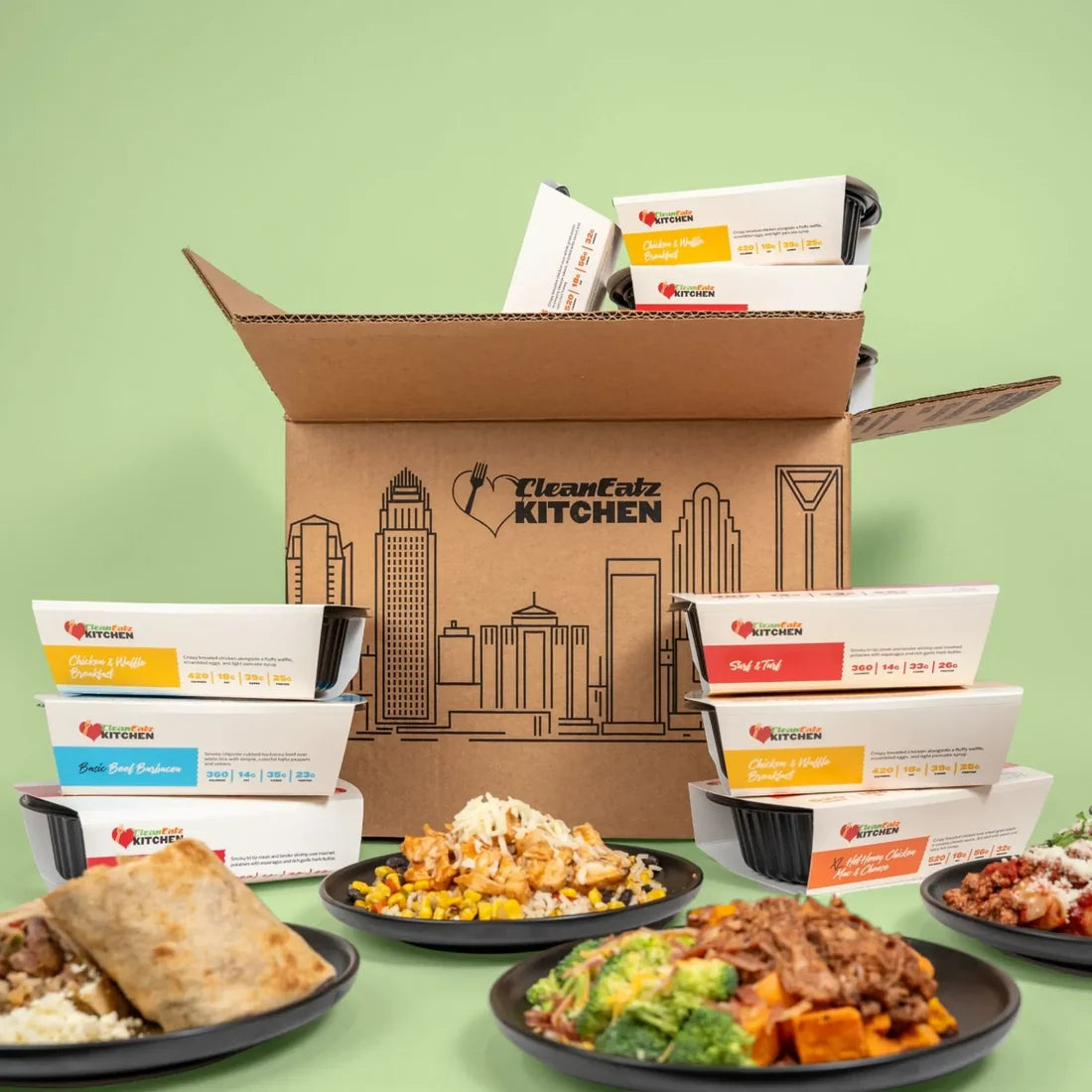
That second option is where we can help. Our GLP-1 Meal Plan starts at $94.95 for 10 meals, and every meal is chef-cooked and portion-controlled. Heating takes a few minutes in the microwave. There's no subscription, so a single box to cover the adjustment period is a sensible way to use it. If you'd rather compare it with other options first, see the full meal plan range. Our Nutrition Info page lists calories, protein, fat and more for every meal, so you can pick lighter ones while your stomach settles. A meal plan doesn't treat anything, and your prescriber's plan still comes first.
One habit worth adding: keep a rough note of what you ate and how you felt an hour or two later. By day 7 you won't remember, and those patterns are what make weeks 2 through 4 easier.
When to call your doctor on GLP-1
When should you call your doctor in week one?
Quick answer
Call right away for vomiting that stops you keeping fluids down, signs of dehydration, severe stomach pain that won't go away, an allergic reaction, or blood sugar below 70 mg/dL. Most of week one is uncomfortable rather than concerning. When you're unsure, call.
Most of week one is uncomfortable rather than concerning. These are the exceptions. The list combines what the Wegovy and Zepbound labels flag with practical thresholds. Your prescriber's instructions come first.
Call during office hours if nausea has stopped you eating anything for more than a day, constipation has run past 4 or 5 days despite fluids and fiber, heartburn isn't responding to over-the-counter treatment, or you're unsure whether your other medications need adjusting. That last one matters more than people expect. Both labels say insulin or sulfonylurea doses may need to come down. The Zepbound label also tells people on birth control pills to switch to a non-oral method, or add a barrier method, for 4 weeks after starting and after each dose increase.
Tell your care team before any procedure that uses anesthesia or deep sedation, since both labels note the medications delay stomach emptying. Also report a lump in your neck, hoarseness or trouble swallowing, which are the symptoms the labels list for their thyroid warning.
Expected, and not usually a reason to call: reduced appetite, mild to moderate nausea, early fullness, mild fatigue, some constipation, mild headache, and food aversions or changes in what tastes good.
When you're not sure, call. Clinical teams expect these questions, and week one is exactly when you should be asking them.
Next steps after your first week on GLP-1
What comes after the first week?
Quick answer
Week one is an adjustment, not a preview. Nausea usually eases and appetite settles into something more predictable as your body adjusts, though each dose increase can bring symptoms back. Keep eating on a schedule, protein first, with portions and fat down.
What to hold onto in the meantime: eat on a schedule rather than on hunger, put protein first, keep portions and fat down, slow your pace, and drink between meals rather than with them. Everything else can wait until you feel more like yourself. Many people have a working routine by week 3 or 4.
Keep the call list somewhere you can find it. Most of week one is just uncomfortable, and the handful of things that aren't are worth recognizing quickly.
When you're ready to think past the adjustment period, our 7-day GLP-1 meal plan gives you a structured week to follow, and the complete GLP-1 diet guide covers the long game. If cooking is the part you'd rather not deal with while you adjust, the GLP-1 Meal Plan takes it off your list.
One day at a time. It usually gets a lot easier than this.
First week on GLP-1 FAQ
Common questions about your first week
What should I eat during my first week on Ozempic or Wegovy?
Small, frequent, protein-forward meals built from gentle foods: scrambled eggs, Greek yogurt, chicken breast, white fish, oatmeal and steamed vegetables. Greasy, fried, spicy and very high-fat foods tend to make nausea worse, partly because fat already slows stomach emptying and these medications slow it further. Eat slowly and stop at satisfied rather than full.
Is it normal to have no appetite during the first week on GLP-1?
Yes. Reduced appetite is the medication working as intended, not a side effect to push through. GLP-1 medications slow stomach emptying and increase fullness signals. Eating small amounts on a schedule helps you meet your nutrition needs, and a protein shake is a reasonable substitute on days when solid food doesn't appeal. Call your prescriber if you can't eat for over a day.
How much should I eat in my first week on semaglutide?
Considerably less than before, though the exact amount is individual. Many people find a first-week meal looks like 3 to 4 ounces of protein, half a cup of a starch and a cup of vegetables, spread across 4 or 5 smaller meals. Your prescriber or a registered dietitian should set your actual targets, particularly if you take other medications.
When will the nausea from Mounjaro go away?
There's no set date. Nausea is most common during dose increases and typically eases as your body adjusts over the following weeks. It's usually mild to moderate. If nausea is severe, stops you keeping fluids down or isn't improving, that's a conversation with your prescriber, not something to wait out.
Can I skip meals on Zepbound if I am not hungry?
Skipping meals entirely makes it hard to meet your protein needs, which matters because lean mass makes up a meaningful share of the weight lost on these medications. If solid food isn't happening, a protein shake, smoothie or small protein-rich snack counts. Eating a little on a schedule is more useful than waiting for a hunger cue that may not arrive.
How much protein do I need on a GLP-1 medication?
A 2025 joint advisory from four professional societies notes that 1.2 to 1.6 grams per kilogram of body weight a day has been proposed during active weight loss, and suggests a simple target of 80 to 120 grams a day as an alternative. If you have a lot of weight to lose, ask your dietitian or prescriber which weight to use.
What foods should I avoid in my first week on GLP-1?
Greasy and fried foods, very spicy dishes, heavy cream-based meals, carbonated drinks, alcohol, high-fat meats and large portions of anything. Fat and volume are the two things most likely to sit uncomfortably. Everyone's triggers differ, so keep a rough note of what bothers you. This also isn't the week to test how your stomach handles pizza.
When should I call my doctor during the first week on GLP-1?
Call right away for severe or persistent vomiting that stops you keeping fluids down, signs of dehydration such as dark urine or dizziness on standing, severe stomach pain that won't go away, including pain that reaches your back, any allergic reaction, or blood sugar below 70 mg/dL if you have diabetes. Mild nausea, reduced appetite and early fullness are expected.
More GLP-1 nutrition guides
Keep reading
 Weight loss
7-Day GLP-1 Meal Plan (2026) + Printable Grocery List
 Crystal Zabka-Belsky MS, RDN, CSSD, LMNT, LDN · Oct 1, 2025
 Weight loss
How to Prevent Muscle Loss on GLP-1 Medications
 Romaine Rusnak, RD, LDN · Oct 16, 2026
 Nutrition
GLP-1 Snack Ideas: 29 High-Protein Picks for Low Appetite
Romaine Rusnak, RD, LDN · Oct 7, 2026Sources
On this page