
Quick Answer: Rice cakes can fit a weight-loss plan—they're low in calories (about 35-45 per cake)—but on their own they're low in fiber and protein, so they won't keep you full for long. The key is using them as a crunchy base for protein-rich toppings like cottage cheese, tuna, or peanut butter. Watch out for flavored varieties with added sugar or sodium.
The Short Answer on Rice Cakes and Weight Loss
Rice cakes occupy a strange place in diet culture. They've been a "diet food" staple for decades, yet most people who've tried eating plain rice cakes as a weight-loss strategy know the truth: you're hungry again in twenty minutes.
That doesn't mean rice cakes are useless for weight loss. It's all about using them correctly!
At just 35-45 calories per cake, rice cakes offer a low-calorie, crunchy base that can carry more satisfying ingredients. The problem is that a plain rice cake has almost no protein (less than 1 gram) and barely any fiber (0-0.5 grams). Those are the two nutrients most responsible for making you feel full. Eat a rice cake by itself and your blood sugar may spike quickly, then crash—leaving you reaching for something else.
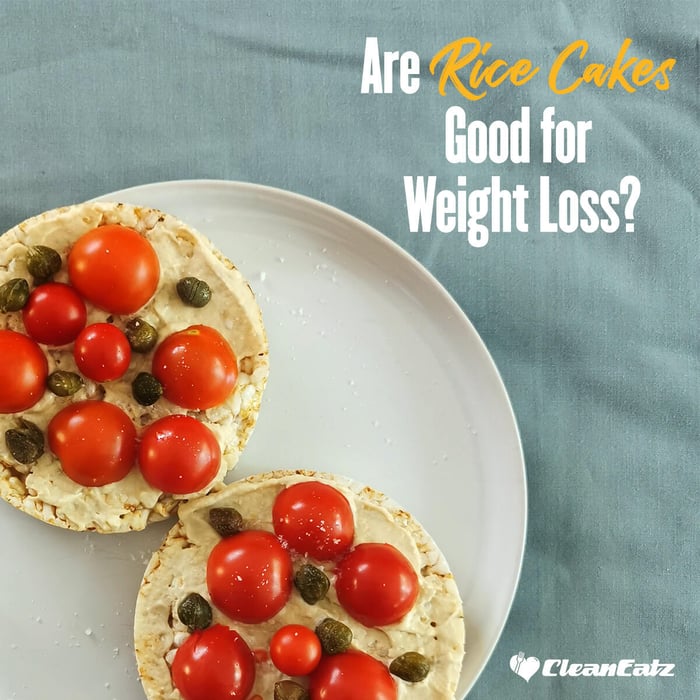
The solution? Build a balanced snack. Top your rice cake with a protein source (cottage cheese, Greek yogurt, tuna, egg, or a measured tablespoon of peanut butter) and add some fiber from vegetables or fruit. Now you've got a snack that actually satisfies. For a comprehensive breakdown of foods that support weight loss—including how to build satisfying snacks—see our 100 Best Foods for Weight Loss guide.
Rice Cake Nutrition at a Glance
A single plain rice cake typically contains 35-45 calories, 7-9 grams of carbohydrates, about 0.5-1 gram of protein, and minimal fiber. If you choose an unsalted variety, sodium is low too.
Without significant amounts of fiber, protein, or fat, rice cakes digest quickly and can spike blood sugar when eaten alone. Still, because of their small serving size and low calorie count, they may not have a huge effect on your blood sugar levels.
However, pairing rice cakes with protein, fat, or fiber significantly boosts the nutrition quality and the satiety factor of this snack.
Why Pairing Matters More Than the Rice Cake Itself
Here's what research tells us about satiety: protein and fiber are the two most important factors for feeling full on fewer calories. A position statement from the International Society of Sports Nutrition supports practical protein targets of 20-40 grams per meal to support fullness and muscle maintenance.
Rice cakes alone deliver neither protein nor fiber in meaningful amounts. But as a vehicle for protein and fiber-rich toppings? They work beautifully. The crunch satisfies the desire for texture that often drives snacking, while the toppings deliver the nutrients that actually keep you full.
Research on energy density also supports this approach—foods with fewer calories per gram help you eat a satisfying volume while controlling total intake. Adding water-rich vegetables like cucumber and tomato to your rice cake creation increases volume without adding many calories.
Smart Topping Ideas
The formula is simple: start with 1-2 plain or whole-grain rice cakes, add a protein source (aim for 10-25 grams), include some produce for fiber and volume, and season to taste. Your target: roughly 150-300 calories with enough protein to keep you satisfied.
Some combinations that work well:
- Cottage cheese + tomato + everything seasoning gives you a high-protein, low-calorie option that feels substantial.
- Tuna salad made with Greek yogurt instead of mayo + cucumber slices keeps the calories reasonable while boosting protein.
- Turkey slices + thin avocado + lettuce offers a sandwich-like experience with better macros.
- One tablespoon of peanut butter + banana coins + cinnamon satisfies a sweet craving with staying power (measure the peanut butter—it's easy to go overboard).
- Hummus + slaw mix + lemon works for a plant-based option.
- Smoked salmon + cucumber + dill feels fancy but comes together in seconds.
For more snack ideas built on this protein-forward philosophy, check out our Best and Worst Snack Foods breakdown.
What to Watch on the Label
Not all rice cakes are created equal. Plain varieties are straightforward, but flavored options can get tricky.
For sodium, "low sodium" means 140 mg or less per serving according to FDA guidelines. Many flavored rice cakes exceed this—check the label and compare brands. Caramel and other sweetened varieties can also add some sugar. When possible, choose plain or lightly seasoned cakes and add your own toppings where you control the ingredients.
Generally, whole grain brown rice is preferable to white rice. However, there's little difference in the fiber and protein content between brown rice cakes and white rice cakes.
A Note on Arsenic in Rice Products
Rice can contain higher levels of inorganic arsenic than many other grains because it's typically grown in flooded conditions that increase arsenic uptake from soil and water. The U.S. FDA recommends varying your grain choices—rotating in oats, wheat, quinoa, corn, or other grains throughout the week—rather than relying heavily on any single grain.
For healthy adults who eat rice cakes occasionally as part of a varied diet, this isn't a major concern. It's more relevant for infants, children, and pregnant women, where relative exposure is higher. The practical takeaway: enjoy rice cakes as part of your rotation, not as your only grain-based snack.
Special Considerations
For people with diabetes or insulin resistance: Rice cakes should always be paired with protein or fat and eaten in small portions to minimize the blood sugar response.
For those working on appetite regulation: Plain rice cakes may not provide enough satiety to prevent overeating later. Make sure your toppings include substantial protein and fiber.
For people with IBS or sensitive digestion: Plain rice cakes are low-FODMAP and generally well tolerated.
The Bottom Line
Rice cakes aren't a magic weight-loss food, but they're not a diet trap either. They're a tool—a low-calorie, crunchy base that becomes genuinely useful when you top it with protein and produce. Used this way, rice cakes can help you manage portions, satisfy crunch cravings, and stay within your calorie goals.
The key is remembering that the rice cake itself isn't the point. It's what you put on it that determines whether you'll feel satisfied or find yourself back in the kitchen twenty minutes later.
Frequently Asked Questions
Are rice cakes "bad carbs"?
No food is inherently "bad." Rice cakes are simply refined, low-fiber carbs. They become a smart choice when paired with protein and produce to improve satiety and blood sugar response.
Are rice cakes good before or after workouts?
Yes—they work well as an easy-to-digest carb source. Add protein like Greek yogurt, cottage cheese, or tuna to support muscle recovery.
Are flavored rice cakes okay for weight loss?
Occasionally. Check sodium (140 mg or less per serving is "low") and added sugar content. Plain or lightly seasoned varieties may be better choices for regular use.
How many rice cakes should I eat?
For a snack, 1-2 cakes paired with protein and fiber is a good starting point. The more important question is whether your overall daily calorie and protein targets are being met—focus on that rather than a specific rice cake count.
Make It Easy
If building balanced snacks feels like too much effort on busy days, consider taking the guesswork out of your main meals instead. Our High-Protein Meal Plans are portion-controlled and macro-balanced, so snacks don't have to carry the nutritional load. You can also customize your weekly meals with our Build-a-Meal Plan option. For grab-and-go protein options, explore our Healthy Protein-Rich Snacks.
Related reading: Healthy Desserts for Weight Loss
References
- Jager et al. International Society of Sports Nutrition Position Stand: protein and exercise – Journal of the International Society of Sports Nutrition (2017)
- Rolls. Dietary energy density: Applying behavioural science to weight management. – Nutrition Bulletin (2017)
- Sodium in Your Diet – U.S. Food & Drug Administration (2024)
- What You Can Do to Limit Exposure to Arsenic – U.S. Food & Drug Administration (2022)