Last updated: November 28, 2025
Top 10 Keto-Approved Foods to Include in Your Diet (Net Carbs, Portions & Easy Swaps)
Quick Review: Keto isn’t magic—weight loss still requires a calorie deficit. However, choosing low-carb, protein-anchored, nutrient-dense meals makes staying in ketosis and feeling full much easier. If you and your doctor have concluded that a keto diet is the right choice for you, keep reading to find the best keto staples, net carb amounts, smart portions, and meal ideas to keep the plan simple and sustainable.
Keto Basics & Net Carb Rules
- Typical keto target: Keep net carbs at 20–50 g/day (individual needs can vary; review with your physician). See the Clean Eatz guide: How Many Carbs on Keto?
- Protein matters: Aim for approximately 0.8–0.9 g per lb/day to protect muscle and fullness. You can check out the Clean Eatz Protein Calculator, but you should discuss your specific needs with your doctor.
- Fat fills in the rest of your calories. It is recommended to get it mostly from whole-food sources.
- Calories still count for weight loss—check out the Clean Eatz Calorie Calculator and discuss the results with your doctor.
- Net carbs = total carbs − fiber (and minus erythritol/allulose when clearly listed). Be conservative with maltitol (subtract half).
- Electrolytes: A low-carb diet can make it challenging to get the proper amount of sodium/potassium/magnesium; make sure to eat foods rich in electrolytes, such as leafy greens, nuts, and seeds.
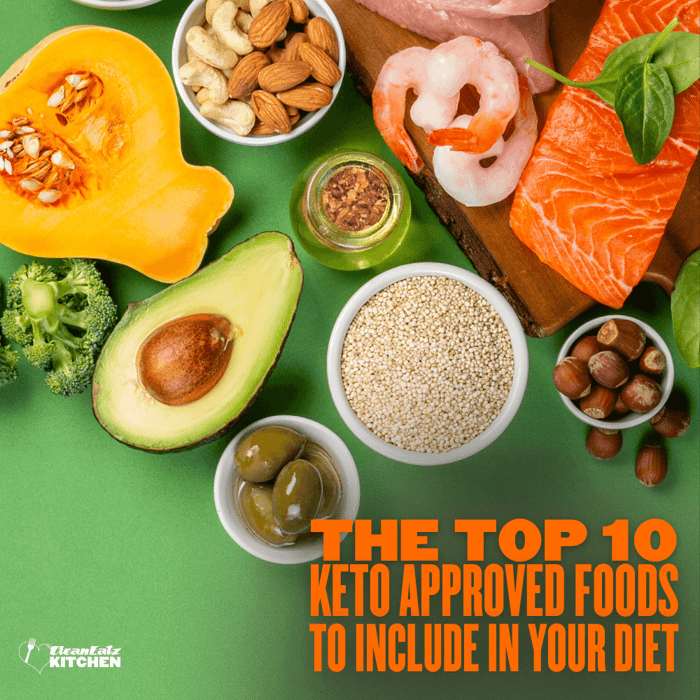
Top 10 Keto-Approved Foods (With Portions & Uses)
1) Eggs
- Net carbs: ~0.6 g per large egg.
- Why: Affordable complete protein; super versatile.
- Use: Omelets with spinach, frittatas, and egg salad.
2) Fish (Salmon, Sardines, Mackerel, Tuna)
- Net carbs: 0 g
- Why: Protein + omega-3s for heart health and appetite control.
- Use: Bake fish with olive oil + lemon; add canned sardines to a salad. Learn more: Salmon guide, Tuna guide.
3) Beef, Pork & Poultry
- Net carbs: 0 g
- Why: Reliable protein; focus on lean cuts to protect your heart.
- Watch: Processed meats (hidden sugars, additives, sodium). Aim for minimally processed.
4) Avocado
- Net carbs: ~2-3 g per medium avocado.
- Why: Fiber, potassium, magnesium, and healthy fats. Plus, they are ultra-satiating!
- Use: Bowls, lettuce-wrap burgers, egg boats.
5) Olives & Extra-Virgin Olive Oil
- Net carbs: Olives ~1-2 g per 10; Oil 0 g.
- Why: Flavor and monounsaturated fats.
- Use: Dressings with lemon/vinegar or make part of a snack.
6) Non-Starchy Vegetables
- Net carbs: Typically 1–4 g per 1 cup raw (leafy greens, zucchini, mushrooms, broccoli, cauliflower, peppers).
- Why: Fiber, micronutrients, and meal volume without many carbs.
- Use: Roast with garlic/herbs; try cauliflower rice or zucchini noodles as the base of a meal.
7) Cheese & Full-Fat Dairy (Unsweetened)
- Net carbs: Cheese ~0–1 g/oz; plain Greek yogurt ~6–8 g per 3/4 cup.
- Why: Protein + satisfaction; easy snacks.
- Watch: Sweetened yogurts/milks. If dairy doesn’t suit you, use products made with unsweetened almond milk (~7 g per 3/4 cup).
8) Nuts & Seeds
- Net carbs: Varies—see table below. Best: macadamia, pecans, walnuts; limit cashews.
- Why: Crunch, minerals, fiber, and heart-healthy fats as a ready-to-go snack.
- Watch: Calories add up quickly—measure 1 oz servings.
9) Berries
- Net carbs: Raspberries/blackberries are lower; blueberries are a bit higher—see table.
- Why: Fruit flavor and fiber without a big carb hit.
- Use: Add to Greek yogurt or chia pudding.
10) Low-Carb Condiments, Herbs & Spices
- Net carbs: Typically 0–1 g per serving (mustard, vinegar, pesto, mayo, hot sauce without sugar).
- Why: They can add big flavor, which keeps meals exciting on a keto diet.
- Watch: Ketchup/BBQ/sweet chili sauce (added sugar)—choose “no sugar added.”
Quick Net-Carb Tables
Typical values are listed below. Check different portion sizes with our Nutrition Label Converter.
Nuts & Seeds (per 1 oz)
| Food | Net carbs | Notes |
|---|---|---|
| Macadamia | ~2 g | Rich in monounsaturated fats |
| Pecans | ~1 g | Very keto-friendly |
| Walnuts | ~2 g | Omega-3 (ALA) |
| Almonds | ~3 g | High in vitamin E |
| Pumpkin seeds | ~3 g | Iron, magnesium, zinc |
| Sunflower seeds | ~3–4 g | Watch portions |
| Cashews | ~8 g | Use sparingly |
Berries (per 1/2 cup)
| Food | Net carbs |
|---|---|
| Raspberries | ~3–4 g |
| Blackberries | ~3–4 g |
| Strawberries | ~4–5 g |
| Blueberries | ~8–9 g |
Non-Starchy Veggies (per 1/2 cup cooked)
| Food | Net carbs |
|---|---|
| Spinach/Kale | ~1–2 g |
| Broccoli/Cauliflower | ~2 g |
| Zucchini | ~2 g |
| Mushrooms | ~2 g |
| Bell peppers | ~3–4 g |
7-Day Simple Keto Menu (Plug-and-Play)
Scale portions to your calories. Choose protein first, then add healthy plant foods and fat. You can also try the Clean Eatz Meal Plan Generator for additional meal ideas.
| Day | Breakfast | Lunch | Dinner | Snack Ideas |
|---|---|---|---|---|
| Mon | Eggs + avocado + spinach | Grilled salmon salad (olive oil, olives) | Chicken thighs, roasted broccoli | Cheese & veg; almonds; Greek yogurt (unsweetened) |
| Tue | Greek yogurt + raspberries + chia | Bunless burger with side salad | Shrimp stir-fry with zucchini noodles | Hard boiled egg; celery + nut butter |
| Wed | Omelet with mushrooms & feta | Tuna salad lettuce wraps | Pork chops + green beans | Macadamias; cottage cheese |
| Thu | Smoothie with protein powder + greens | CEK entrée (choose lower-carb option) + extra veg | Steak + asparagus | Blackberries; olives |
| Fri | Egg scramble with peppers | Chicken caesar salad (no croutons) | Salmon + sautéed spinach | Pumpkin seeds; cucumber + ranch |
| Sat | Egg muffin cups with veg (batch prep) | Charcuterie-style meal: cheese, olives, nuts, veg | Roast chicken + Brussels sprouts | Raspberries; cottage cheese |
| Sun | Chia pudding | Leftovers bowl (protein+veg+olive oil) | Turkey meatballs + zucchini ribbons + pesto | Greek yogurt (unsweetened); pecans |
Smart Shopping List
- Proteins: eggs, salmon, tuna, sardines, shrimp, chicken legs/thighs/breasts, extra lean ground beef/turkey, pork chops.
- Fats: extra-virgin olive oil/olives, avocado oil, butter/ghee, nuts/seeds.
- Fruits & Veggies: berries, avocado, leafy greens, zucchini, mushrooms, broccoli, cauliflower, peppers, cucumbers, tomatoes, asparagus, cabbage, Brussels sprouts, celery.
- Dairy (unsweetened): cheese, cottage cheese, Greek yogurt, skyr, unsweetened almond milk.
- Flavor: herbs, spices, garlic, mustard, vinegar, hot sauce (no sugar).
Common Pitfalls (and Easy Fixes)
| Pitfall | Why it stalls progress | Fix |
|---|---|---|
| Forgetting calories still matter | Keto treats add up | Anchor meals with protein/veg; measure nuts, cheese, oils |
| Too little protein | Hunger, muscle loss | Hit daily target via fish/meat/eggs |
| Hidden sugars | Sauces & deli meats can have carbs | Read labels; use “no sugar added” condiments |
| Dehydration | Fatigue | Make balanced choices and drink adequate fluids |
| Sugar alcohol | GI upset | Keep portions modest |
Related CEK Tools, Guides & Meals
- Calculators: Calories • Protein • Weight-Loss %
- Guides: How Many Carbs on Keto? • Diet Soda on Keto • Salmon • Tuna • Shrimp
- Meals: Build-a-Meal Plan (choose lower-carb picks) • High-Protein Box • Weight-Loss Meal Plan
FAQs
What are the best keto proteins?
Good choices include eggs, salmon, sardines, tuna, shrimp, chicken, turkey, lean beef, lean pork, and lower-carb dairy like cheese and Greek yogurt (unsweetened). Prioritize whole foods.
How many carbs should I eat on keto?
Most do well at 20–50 g net carbs/day. See the carb guide and track what actually keeps you in ketosis.
Can I eat fruit?
Yes, but make sure to avoid large servings of high-sugar fruit.
Do I need exogenous ketones?
No. They may raise blood ketones, but they carry risks and don’t replace a well-structured diet.
Is keto right for everyone?
No. A keto diet should always be discussed with a physician first. If you are pregnant/breastfeeding, have a chronic health condition, or have a history of disordered eating, always consult your clinician before starting any specific diet. This article provides general information and is not offering medical advice.