
Table of Contents
- What Is an Exercise Circuit?
- Benefits of Using Exercise Circuits
- How to Create an Effective Exercise Circuit
- Tips for Getting the Most Out of Your Circuit Workout
- Circuit Training vs. HIIT: What's the Difference?
- Common Exercises Used in Exercise Circuits
- Fueling Your Circuit Training
- Frequently Asked Questions
- The Bottom Line
- References
- FAQs
Quick Answer: Circuit training is a workout method where you perform a series of exercises back-to-back with minimal rest between them. One complete rotation through all exercises equals one "circuit." This approach combines strength and cardio training into a time-efficient workout that can be completed in 20-45 minutes, making it ideal for busy schedules. Circuit training improves cardiovascular fitness, builds muscular endurance, and burns more calories than traditional training methods.
If you're looking to maximize your time at the gym, or you're just looking for a new way to challenge your body, then circuit training is ideal for you. But what exactly is circuit training?
Circuit training is a great way to get in a full-body workout in a short amount of time. Moreover, it's versatile—you can pretty much do any type of exercise in a circuit. In this guide, we'll break down the basics of how to do an exercise circuit the right way to ensure optimum results with minimum effort.
Complete Exercise Guide.
Get our free guide — all the info you need on exercising, all in one place.
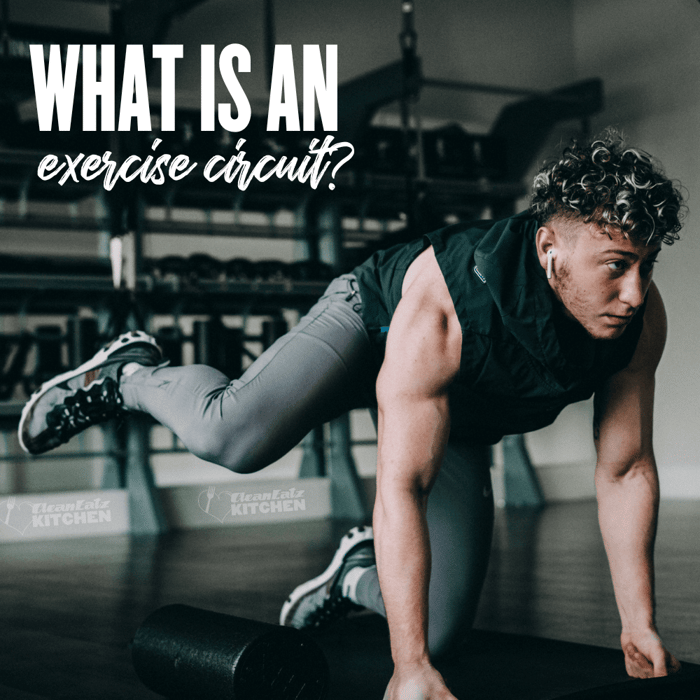
What Is an Exercise Circuit?
The exercise circuit is one of the most effective ways to get fit, but it can also seem tricky to set up when you're first starting out. If you're not sure how to do an exercise circuit or what equipment you need for one, this section will give you all the information that you need.
An exercise circuit is a series of exercises that are done one after the other, with no rest in between. Instead of taking a break between each exercise or group of exercises, you simply go from one exercise to the next.
Circuits are sometimes called "supersets." This refers to the fact that instead of completing all three sets of an exercise before moving on to another exercise, you move directly from one set to another set while only resting briefly at the end of every superset. They may also be called supersets because the results you get from them will make you look like a superhero!
Types of Exercises in a Circuit
The exercises involved in a circuit can be aerobic or strength training exercises. The length of time required for each circuit will vary, but many circuits last from 30 seconds to 2-3 minutes at most.
When done correctly, circuits can be more effective than regular cardio workout routines because they recruit multiple large muscle groups at once and allow you to burn calories faster. In addition, strength training exercises provide more benefits than cardiovascular activity alone by strengthening bones, improving balance and coordination, increasing metabolism, and improving posture.1
Here are some examples of aerobic (cardiovascular) exercises commonly used in circuits:
Running or jogging: Can be done on a treadmill, around a track, or in place with high knees.
Cycling: Stationary bikes work great for indoor circuits.
Swimming: Excellent for full-body cardio with low impact on joints.
Rowing machine: Combines upper and lower body cardio work.
Here are some examples of strength training exercises for circuits:
Push-ups: Classic upper body exercise targeting chest, shoulders, and triceps.
Pull-ups/chin-ups: Great for building back and bicep strength.
Squats: Fundamental lower body movement for legs and glutes.
Lunges: Builds single-leg strength and balance.
For a deeper dive into how different exercise types contribute to weight loss and fitness goals, check out our Complete Exercise Guide for Weight Loss, which covers everything from cardio programming to strength training protocols.
How Sets Work in Circuit Training
When doing a strength training circuit, usually each exercise requires only one set to complete before moving on. Sets are defined as the number of repetitions (reps) and/or time taken to complete an exercise.
How many sets you should do depends on your fitness level and how long you plan on working out for. The goal is not to be able to lift heavy weights, but rather focus on using proper form with lighter weights in order to build up muscle endurance and shape your body over time.
Each exercise should be completed slowly and correctly, with constant tension on the muscles throughout the movement. Once you're done with each exercise, it's important to rest and recover. This allows your muscles to rebuild themselves and get stronger so they can better handle the demands of future workouts.
Sample Circuit Training Exercises
If you want to know what an exercise circuit you can do at home looks like, try picking a few exercises from this list that work well together:
Side lunges with arm curl: Combines lower body and bicep work.
Squat to overhead extension: Full-body movement engaging legs and shoulders.
Forward lunge with tricep kickback: Targets legs and arms simultaneously.
Plié squat with front arm raises: Works inner thighs and shoulders together.
Ordering Your Exercises
In a circuit, you complete the exercises in an order that makes sense for your workout goals. How you order your exercise circuit is important. It depends on your goals and fitness level, as well as the equipment that's available to you.
For example, if you don't have access to weights or kettlebells, it would make sense for you to start with bodyweight exercises. Or maybe you're someone who can already do several sets of push-ups and pull-ups but wants to challenge themselves further; in this case, a circuit that begins with squats and ends with wall sits would be more suitable for your needs.
If none of these options seem like what will work best for your personal routine, don't worry! There are plenty more ways to design circuits—it just takes some creativity (and maybe some trial-and-error).
Benefits of Using Exercise Circuits
You already know what circuit training is, but what benefits does it have? Circuit training is a great way to get fit. You can achieve maximum results in minimum time, and it's a great option if you're short on gym time.
But, like everything else, there are right and wrong ways to do it. Follow our step-by-step guide, and you'll be well on your way to getting fit with circuits.
Circuit training is all about efficiency. You're working multiple muscle groups at once, so you're getting more done in less time. This also means that you're burning more calories, and you're likely to see results sooner than you would with traditional weight-training methods.2
Research from Baylor University and The Cooper Institute demonstrates that circuit training is the most time-efficient way to enhance cardiovascular fitness and muscle endurance simultaneously.3 This makes it particularly valuable for anyone trying to balance fitness with a busy lifestyle.
How to Create an Effective Exercise Circuit
Now that you know what an exercise circuit is, it's time to put one together. Follow these steps to produce the ideal exercise circuit for yourself:
Step 1: Choose the exercises you want to do. Select 5-10 movements that target different muscle groups.
Step 2: Create a circuit that includes each of those exercises. Arrange them so you're not working the same muscle group back-to-back.
Step 3: Alternate between the exercises, doing each one for the prescribed number of repetitions or time (typically 30-60 seconds per exercise).
Step 4: Rest when you need to, but try to keep your rest periods short so you can keep moving. Aim for 15-30 seconds between exercises.
Step 5: Repeat until you've completed all the repetitions or reached the time limit. Most people do 2-4 complete circuits per workout.
It's as simple as that! Just remember to choose exercises that target all of the major muscle groups, and to mix them up often to keep your body guessing and getting the most out of your circuit training.
Tips for Getting the Most Out of Your Circuit Workout
Now that you know what an exercise circuit is and how to put one together, here are a few additional tips for getting the most out of your circuit workout.
First and foremost, warm up with some dynamic stretching, such as arm circles and bodyweight squats. This will help prepare your muscles for the workout to come.
Second, don't be afraid to challenge yourself. Sure, you can start off with lighter weights and shorter durations, but push yourself to increase your intensity over time. It's only when we push our limits that we can really make fitness progress.
Third, focus on form and technique rather than speed or heavy load. Keep track of each rep and rest period and make sure you stay in control throughout the entire exercise. Also, make sure you're breathing at an appropriate rate. This will help keep you energized throughout the entire circuit workout session.
Last but not least—have fun! Keep your motivation high by creating an enjoyable atmosphere as you work out. Playing some upbeat music or incorporating some team challenges into your session can help add an extra layer of positivity to your exercise routine.
Circuit Training vs. HIIT: What's the Difference?
Many people confuse circuit training with HIIT (High-Intensity Interval Training), but they're actually quite different workout styles.
Circuit training is performed at moderate intensity during work periods, includes little to no rest between exercises, and typically lasts 30-60 minutes. You move through multiple different exercises targeting various muscle groups.
HIIT is performed at maximum effort (95-100% intensity) during short work periods, includes adequate rest between bouts to recover, and usually lasts only 15-25 minutes.
The key distinction is intensity and purpose. Circuit training builds muscular endurance and provides a balanced full-body workout, while HIIT focuses on pushing your cardiovascular system to its limits for shorter periods. Both are effective—it just depends on your goals and preferences.
Want to learn more about HIIT and its specific benefits? Check out our article on The Benefits of High-Intensity Interval Training.
Common Exercises Used in Exercise Circuits
When it comes to figuring out what exercises to use in your exercise circuit, you'll want to make sure that you pick exercises that you can complete quickly and efficiently. Common exercises used in exercise circuits consist of bodyweight exercises like push-ups, squats, burpees, and mountain climbers. Depending on your skill level, you can also work kettlebell or barbell movements into your circuit.
The key is to identify exercises that hit the most muscle groups at once—these will give you the most bang for your buck! Compound exercises like squats and push-ups or squats and shrugs are great options because they combine two movements with one exercise. Whatever combination of movements you go with, just be sure to focus on proper form throughout the entire duration of the set.
Fueling Your Circuit Training
So, there you have it! You now know everything you need to know about how to do an exercise circuit. Just make sure you pace yourself, don't overdo it, and drink plenty of water, and you're sure to see results in no time!
If you want to produce better results sooner, then you need to follow a suitable diet plan. A diet plan ensures that your body gets access to all the essential nutrients that it needs to grow stronger. Clean Eatz Kitchen brings you a huge variety of meal plans with the right mix of taste and nutrition to keep you motivated to exercise regularly.
Our High-Protein Meal Plan is specifically designed to support active lifestyles, delivering the protein your muscles need for recovery after demanding circuit workouts. Each meal is portion-controlled and macro-balanced, taking the guesswork out of post-workout nutrition.
Frequently Asked Questions
How long should a typical circuit training session last?
The duration of a circuit training session can vary based on your fitness goals and available time. A typical session may last anywhere from 20 to 45 minutes. Shorter workouts with higher intensity can be effective for time-conscious individuals, while longer sessions can provide a more comprehensive workout.
What equipment do I need for circuit training?
Circuit training can be done with minimal equipment, such as dumbbells, resistance bands, or bodyweight exercises. You can also incorporate gym machines or specialized equipment if available. The key is to choose exercises that align with your goals and equipment accessibility.
Is circuit training good for weight loss?
Yes, circuit training is an excellent choice for weight loss. It elevates your heart rate and burns calories efficiently while building lean muscle mass. Additionally, the afterburn effect (excess post-exercise oxygen consumption) can help you continue burning calories even after your workout. For more comprehensive weight loss strategies, see our Complete Exercise Guide for Weight Loss.
How often should I do circuit training workouts?
The frequency of circuit training workouts depends on your fitness goals and recovery time. Beginners may start with 2-3 sessions per week, while those with more experience can aim for 3-5 sessions. Allow at least 48 hours of rest between intense circuit training sessions to give your muscles time to recover.
What is the difference between circuit training and HIIT?
While both are time-efficient workout methods, they differ in intensity and structure. Circuit training involves moderate-intensity work with minimal rest for 30-60 minutes, moving through various exercises. HIIT involves maximum-effort bursts with adequate recovery periods, typically lasting 15-25 minutes. Circuit training builds overall endurance, while HIIT focuses on cardiovascular intensity.
The Bottom Line
An exercise circuit is a series of exercises done one after another without any rest in between. Circuit training allows you to produce better results in less time. To create the ideal exercise circuit, you need to include exercises that target the muscle groups you want to train.
To make your circuit training more effective, warm up beforehand, challenge yourself progressively, and ensure the right form and technique throughout each movement. A combination of bodyweight exercises and compound exercises will help you get the most results out of an exercise circuit.
Ready to take your fitness further? Explore our Complete Exercise Guide for Weight Loss for evidence-based strategies on optimizing your workouts, or browse our meal plans to fuel your training properly.
References
1 American College of Sports Medicine. (2022). ACSM's Guidelines for Exercise Testing and Prescription (11th ed.).
2 Paoli, A., et al. (2013). High-Intensity Interval Resistance Training (HIRT) influences resting energy expenditure and respiratory ratio in non-dieting individuals. Journal of Translational Medicine, 11, 290.
3 Klika, B., & Jordan, C. (2013). High-Intensity Circuit Training Using Body Weight: Maximum Results With Minimal Investment. ACSM's Health & Fitness Journal, 17(3), 8-13.