
Intermittent fasting & meal planning
Intermittent fasting & meal planning: What you need to know
Intermittent fasting tells you when to eat. A meal plan decides what goes in the window. The methods, what happens in your body, what the trials show and how to build meals that make a fasting schedule work.
- Free Shipping on Every Meal PlanFree Shipping
- Up to 20% Off 30-Meal PlansUp to 20% Off
- Chef Cooked, Dietitian BuiltDietitian Built
- Heat & Eat in MinutesHeat & Eat

Intermittent fasting works about as well as other ways of eating fewer calories, not better. In a 12-month trial of 139 adults, time-restricted eating plus calorie limits lost 8.0 kg versus 6.3 kg for calorie limits alone, a difference that wasn't significant. What you eat in the window decides the result, so plan protein-rich meals first.
Intermittent fasting has taken the wellness world by storm. Cycling between eating and fasting feels simpler than counting every bite, and studies have linked it to better blood sugar control, lower inflammation markers and, in animals, signs of better brain function and cellular repair.
The rule itself is simple: eat in a set window and fast outside it. Following it well is harder. Intermittent fasting is about when you eat, but what you eat in the window still decides whether you feel good, keep your muscle and lose weight. Without a plan, it's easy to overeat when the window opens or to fill it with whatever is closest. Our Complete Meal Prep Guide covers the foundation of planning ahead.
So keep expectations realistic. Fasting is a tool, not a cure-all. If you want a ready-made week, our 16/8 Intermittent Fasting 7-Day Meal Plan lays out specific meals with calories and macros for each day. This post covers the why and the how behind it.
What is intermittent fasting
A schedule, not a menu
Intermittent fasting (IF) is a pattern of eating that cycles between periods of eating and voluntary fasting on a regular schedule. Traditional diets tell you what to eat and how much. IF tells you when.
This time-restricted feeding approach has surged in popularity with people chasing weight loss, better metabolic health and even longevity. Fasting itself is ancient and has been part of many cultures and religions for centuries. Modern IF just turns it into structured schedules that are easier to follow.
These are the most common approaches:
- 16/8 method: fast for 16 hours and eat within an 8-hour window each day. For many people it simply means extending the overnight fast and eating breakfast later, or skipping it.
- 5:2 diet: eat normally five days a week and cut way back on two non-consecutive days. Harvard's Nutrition Source describes those two days as about 400 to 500 calories.
- OMAD (one meal a day): all your calories in a single meal, typically within about an hour. It's an advanced form of IF and isn't suitable for everyone.
- Alternate-day fasting (ADF): alternate between unrestricted days and fasting days that are either food-free or a single meal of about 25% of your usual calories.
- Eat Stop Eat: a full 24-hour fast once or twice a week.
All of them work the same way in the end: they give you fewer hours, or fewer days, to eat in. Whether that leads to eating less depends on what happens when the window opens.
What happens in your body during a fast
The hour-by-hour picture
Picture finishing dinner and entering your fasting window. Here's roughly what happens as the hours pass. The timing varies a lot from person to person, so treat these as ranges, not a clock.
- Hours 0 to 4 (fed state): you're still digesting. Food breaks down into glucose, insulin rises to move it into your cells, and you feel satisfied.
- Hours 4 to 8 (early fasting): digestion winds down and blood sugar settles. Your liver starts releasing stored glucose (glycogen) to keep your energy steady. You may notice the first hunger.
- Hours 8 to 12: insulin stays low and your body leans more on fat for fuel while the liver keeps drawing on its glycogen. Hunger often comes in waves rather than climbing steadily.
- Hours 12 to 36 (the metabolic switch): as liver glycogen runs low, your body shifts toward burning fatty acids and making ketones, which your brain and muscles can use. A review in Obesity puts this switch typically between 12 and 36 hours after the last meal, depending on how much glycogen you started with and how active you are.
- Beyond that: ketone levels keep rising the longer the fast runs. Some people feel less hungry and more alert, others get headaches or fatigue, especially if they're not drinking enough.
That's why the 16/8 schedule is less dramatic inside your body than social media suggests. Much of its effect comes from a simpler place: a shorter window often means fewer chances to eat. Your metabolism, activity level and usual eating habits all shift how your own fast feels.
Benefits of intermittent fasting
Real effects, smaller than the hype
IF is often described as a way of improving overall health, and many people who practice it report good results. That linked study is a survey of 147 people in Saudi Arabia who were already fasting, so it tells you how they felt, not what fasting caused.
Controlled trials give a more careful answer. Reviews link IF to better insulin sensitivity, blood pressure and blood lipids in some people, and a review in the New England Journal of Medicine describes cellular repair processes like autophagy and a rise in brain-derived neurotrophic factor (BDNF). Much of that cellular evidence comes from animal studies, though. In people, the effects are real but modest.
On weight, the head-to-head trials are humbling. In the TREAT trial, 116 adults ate either within a noon to 8 p.m. window or across three regular meals for 12 weeks. The 16:8 group lost about 0.9 kg, the meal group about 0.7 kg, and the difference wasn't significant. In a 12-month trial in the New England Journal of Medicine, 139 adults with obesity all followed the same calorie limit, and half also ate only between 8 a.m. and 4 p.m. They lost 8.0 kg versus 6.3 kg, again not a significant difference.
So the window doesn't do the work by itself. Fasting is a way to eat less, not a way around eating less. Emerging research also suggests IF may shift the gut microbiome, which ties into gut health, but that work is early.
Fasting is a way to eat less, not a way around eating less.
Dorothy M. Shirnyl, RND
Meal planning for intermittent fasting
The window decides when, the plate decides how it goes
IF centers on when you eat, but what you eat in the window matters just as much. That's where meal planning comes in. A plan makes sure you're not just hitting the clock but also getting enough protein, fiber and nutrients in fewer hours.
It helps to know what each macronutrient does for you in a shorter window:
- Protein: keeps you full, protects muscle while you lose weight and provides the building blocks for repair.
- Fats: give lasting energy, support hormone production and help you absorb vitamins A, D, E and K.
- Carbohydrates: your quickest fuel. Favor complex, fiber-rich carbs, which help digestion and keep you full longer. For more on why fiber matters, see our Ultimate Guide to Dietary Fiber.
Intermittent fasting pitfalls
Too much, or not enough
The biggest challenge is overeating. After hours without food, it's tempting to make up for missed calories and then some. That can lead to weight gain and digestive discomfort, and it cancels out the reason you fasted. Harvard's review of IF notes that long stretches without food can set up overeating when food comes back.
The opposite problem is undereating. If your meals are too small or low in nutrients, you may feel tired and fall short on protein, fiber, vitamins and minerals. In a short window, a skipped meal costs more than it does in a full day.
A structured plan solves both. When you know what's coming, you can make sure the window holds enough food, and the right food, without going overboard.
Key factors in IF meal planning
Three habits that hold
1. Simplicity. Don't overcomplicate things, especially at the start. Build meals and snacks from simple, whole ingredients. It saves time, reduces stress and makes the routine easier to keep.
2. Preparation. Failing to plan is planning to fail, as the saying goes. Set aside time each week to prepare meals and snacks. Batch-cooked proteins, chopped vegetables and portioned snacks stop hunger from making your choices for you when the window opens.
3. Portion control. Watch portion sizes so the first meal after a fast doesn't turn into two. Measuring cups, a food scale or simple visual cues all help, and they matter most right after a long fast, when hunger is loudest.
How to create an intermittent fasting meal plan
Four steps to a window that works
Building a plan that fits IF and your health goals takes a bit of strategy. Here's a step-by-step way to do it.
Step 1: Define your fasting & eating windows
Start with your calendar
Pick the schedule that fits your life. The 16/8 method, the 5:2 diet and alternate-day fasting are the most common options. Look at your work hours, your workouts and your social plans. A window that ends at 6 p.m. won't survive a standing Thursday dinner with friends. A noon to 8 p.m. window, the one used in the TREAT trial, fits many work schedules.
Step 2: Calculate calorie needs & nutrition goals
Know your number first
To make sure you're eating enough in a shorter window, set your daily calorie needs and nutrition goals first.
Calorie needs vary with age, sex and activity level. The Dietary Guidelines for Americans, 2020 to 2025 put most adult women at about 1,600 to 2,400 calories a day and most adult men at about 2,000 to 3,000.
Online calculators give you a rough idea, but a registered dietitian can build a personal plan around your needs and goals, including how to balance protein, fat and carbohydrates for steady energy. If weight loss is the goal, a modest deficit of 300 to 500 calories a day is a sustainable place to start, which works out to roughly 0.6 to 1 pound a week.
Step 3: Choose the right foods
Fill the window with real food
Food quality matters more when you have fewer hours to eat. Prioritize whole, minimally processed foods with a balance of protein, fat, carbohydrates and micronutrients. For a closer look at which foods do the most for your goals, our Best Foods for Weight Loss guide covers the reasoning.
Whole foods are packed with vitamins, minerals and fiber, which help steady blood sugar, support gut health and keep you full.
Load up on:
- Colorful fruits and vegetables for vitamins, minerals and fiber.
- Lean protein like chicken, fish, eggs, tofu, beans and lentils to protect muscle and keep you full.
- Healthy fats like avocado, nuts, seeds, olive oil and fatty fish for lasting energy.
- Whole grains like brown rice, quinoa, oats and whole-wheat bread for fiber and steady energy.
Limit:
- Highly processed foods like packaged snacks, sugary drinks and fast food, which bring calories with little to show for them.
- Refined carbohydrates like white bread, pastries and sugary cereals, which tend to leave you hungry again soon.
Step 4: Use meal prep to stay consistent
Prep once, eat on time all week
Here's how to use meal prep techniques to save time and stay consistent:
- Batch cook. Spend a few hours each week cooking larger portions of protein like chicken, fish, tofu or beans. Store them in the fridge or freezer to use in different meals through the week.
- Chop vegetables ahead. Wash and chop your favorite vegetables and keep them in airtight containers, ready for salads, stir-fries and sides.
- Portion your snacks. Divide nuts, seeds or fruit into single servings. It's the easiest way to avoid eating straight from the bag when hunger hits after a fast.
- Plan the week. Write a weekly meal plan of your meals. It keeps your shopping list short and your options varied.
- Use the right tools. Good containers keep prepped food fresh. A slow cooker or pressure cooker makes hands-off meals easy.
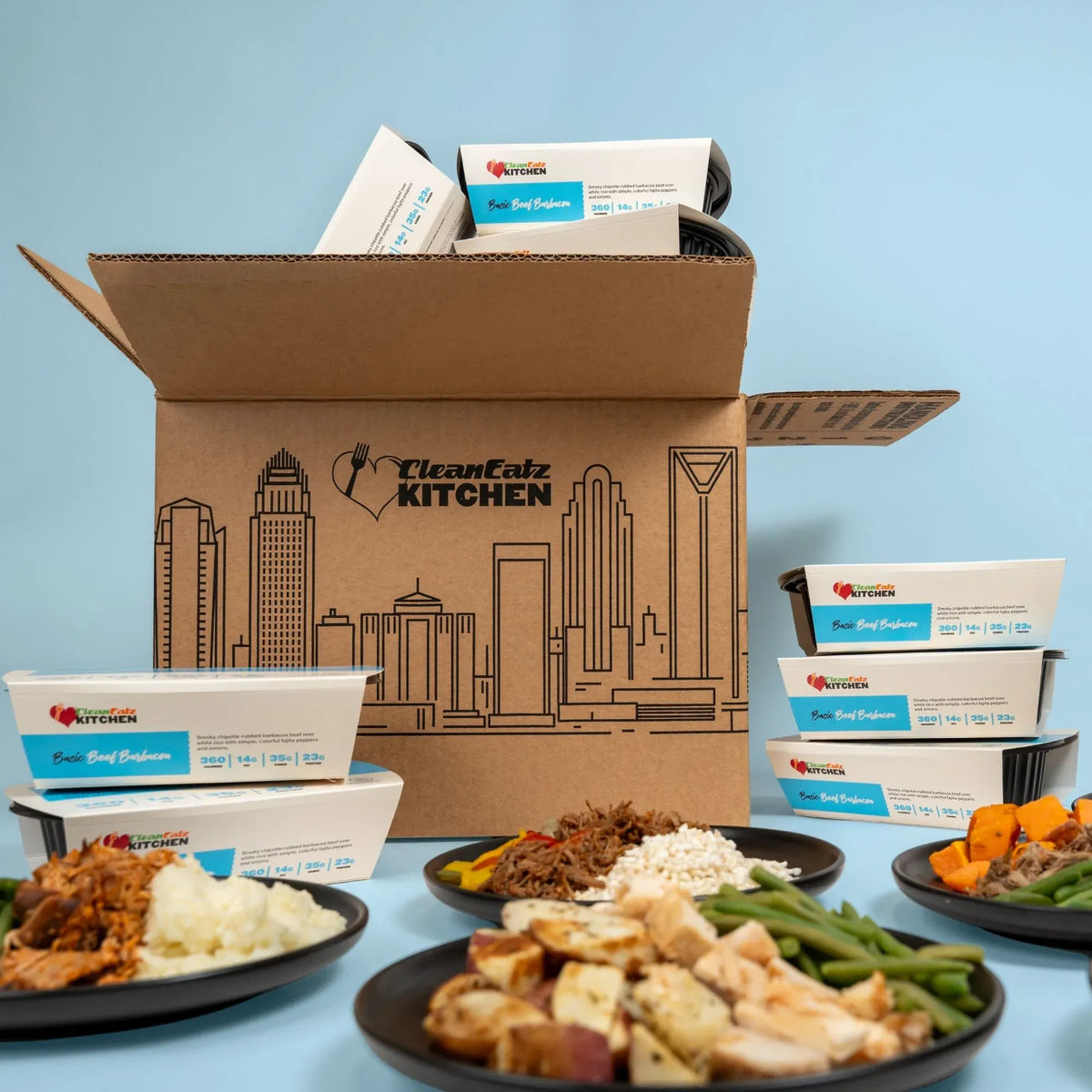
If you'd rather skip the prep, Clean Eatz Kitchen's meal plans are chef-cooked, portion-controlled and flash-frozen, so a meal heats in a few minutes when your window opens. That's a workload fix, not a knowledge fix: you still choose the window, we just make the first meal easy to get right.
Sample intermittent fasting meal plans
Two days you can copy
Here are sample days for the two most popular methods. For a full week of meals with exact calories and macros, see our 16/8 Intermittent Fasting 7-Day Meal Plan.
16/8 method (eating window noon to 8 p.m.)
- Lunch (noon): a large salad with grilled chicken or fish, avocado and a mix of colorful vegetables.
- Snack (3 p.m.): a handful of almonds, or a small piece of fruit with nut butter.
- Dinner (6 p.m.): salmon with roasted broccoli, Brussels sprouts and sweet potatoes.
5:2 diet (one of the two low-calorie days)
After five days of normal eating come the two low days. Here's one that lands inside the 400 to 500 calorie range, with the numbers from USDA FoodData Central so you can check them:
| Meal | What to eat | Calories |
|---|---|---|
| Morning | Water, black coffee or unsweetened tea | 0 |
| Lunch, 1 p.m. | 1/2 cup cooked lentils over 2 cups spinach with lemon | About 130 |
| Snack | 1 large hard-boiled egg | About 80 |
| Dinner, 6 p.m. | 3 oz roasted chicken breast, 1 cup broccoli, 1/2 cup sweet potato, 1 tsp olive oil | About 270 |
| Through the day | Water or other calorie-free drinks | 0 |
A 5:2 low day, about 480 calories (USDA FoodData Central)
That day carries about 47 grams of protein, mostly from the chicken breast (about 26 grams in 3 ounces) and the lentils (about 9 grams in half a cup). Protein is what makes a low day bearable.
Intermittent fasting tips & troubleshooting
When the window gets hard
Like any change in routine, IF comes with an adjustment period. These tips cover the most common snags.
Hydrate consistently throughout your day
Water is allowed, so use it
Staying hydrated matters most during the fasting hours. Water helps take the edge off hunger and keeps headaches and fatigue at bay. Carry a water bottle and sip through the day. Black coffee and unsweetened tea also fit in a fasting window.
Tune in to your body's signals
Flexibility is part of the plan
Pay attention to how you feel. If you're unusually tired or lightheaded, you may need a shorter fast or more food in your window. Breaking a fast early or adding a small, healthy snack isn't failure. A schedule you can bend is one you can keep.
Manage hunger pangs
Hunger comes in waves
Hunger is normal, especially in the first week or two. These help:
- Distract yourself with something that takes your mind off food, like reading, a walk or music.
- Stay busy. Hunger feels louder when you're bored.
- Hydrate with water or herbal tea.
- Choose a healthy snack if needed. If hunger becomes overwhelming, a small, protein-rich snack like a handful of nuts or a hard-boiled egg is fine.
Who should be careful with fasting
Not a fit for everyone
IF isn't right for everyone. Harvard's review notes it may not suit people whose conditions or medications require food at regular intervals, as with diabetes, and that long food gaps can encourage overeating and a fixation on food.
Intermittent fasting meal planning bottom line
The bottom line
Intermittent fasting combined with a real meal plan can help you manage weight and may improve some markers of metabolic health. The trials say the window works mainly by helping you eat less, so the food inside it decides the result. Fill it with protein, vegetables, whole grains and healthy fats.
IF isn't one size fits all. A doctor or registered dietitian can help you pick a schedule and a plan that fit your health, your life and your goals.
Consistency matters more than the perfect schedule. Prep ahead so the window opens on a good meal, using our Complete Meal Prep Guide as your system, and check our Nutrition Info page if you want portioned meals with the calories and protein listed. Listen to your body, adjust as you go and be patient. This is a long game, not a race.

The dietitian's take
Choose a window you can keep on your busiest day, then plan the first meal of it before you plan anything else. Make it protein-forward, and if fasting leaves you dizzy, irritable or bingeing at night, shorten the fast. The schedule should serve you.
Dorothy M. Shirnyl, RND · Registered Nutritionist-Dietitian
 Make it easy withWeight Loss Meal PlanFrom $89.95View plan
Intermittent fasting & meal planning FAQ
Quick answers
What happens in your body during intermittent fasting?
For the first few hours you digest and store your last meal. As insulin falls, your liver releases stored glucose, and your body leans more on fat. Between about 12 and 36 hours, depending on your glycogen and activity, it makes the metabolic switch to burning fatty acids and making ketones.
What is the best intermittent fasting schedule for beginners?
The 16/8 method is the easiest place to start. You fast for 16 hours and eat within an 8-hour window, which often just means a later breakfast or skipping it. Much of the fast happens while you sleep. A 12-hour overnight fast is a gentler first step if 16 hours feels like too much.
What should I eat during my eating window when intermittent fasting?
Build each meal around lean protein like chicken, fish, eggs or tofu, then add vegetables, a whole grain or other complex carb like brown rice or quinoa, and some healthy fat like avocado, nuts or olive oil. Start the window with your most protein-rich meal to keep the first meal from turning into two.
Can I drink coffee while intermittent fasting?
Yes. Black coffee and unsweetened tea have almost no calories and fit in a fasting window. Cream, sugar, syrups and milk add calories, so save them for your eating window. If coffee on an empty stomach upsets your stomach, try it with your first meal instead.
How does meal planning help with intermittent fasting?
A plan stops the overeating and grab-anything choices that happen when the window opens hungry. With meals prepped or chosen ahead, you get enough protein, fiber and nutrients in fewer hours, keep your energy steady and skip the drive-through. It also makes the 5:2 low days much easier.
Will intermittent fasting cause muscle loss?
It can if protein and strength training are low. In the 12-week TREAT trial, the 16:8 group lost more lean mass than the regular-meals group. Eat enough protein in your window, spread across at least two meals, and keep up resistance training to protect your muscle.
More fasting & meal plan guides
Keep reading
 Weight loss
16/8 Intermittent Fasting Meal Plan: 7-Day Guide
 Ellie Lopez, LDN, MS · Dec 26, 2025
 Weight loss
Is Fasting Good for You? Benefits, Risks & How to Try It Safely
Ellie Lopez, LDN, MS · Jul 21, 2022 Weight loss
The Complete Meal Prep Guide 2026: Save Time, Money & Eat Better
Ellie Lopez, LDN, MS · Oct 16, 2025
Sources
- Vasim I et al. Intermittent fasting and metabolic health. Nutrients 2022 (PubMed)
- Shalabi H et al. Intermittent fasting: benefits, side effects, quality of life, and knowledge of the Saudi population. Cureus 2023 (PubMed)
- Anton SD et al. Flipping the metabolic switch: understanding and applying the health benefits of fasting. Obesity 2018 (PubMed)
- de Cabo R, Mattson MP. Effects of intermittent fasting on health, aging, and disease. N Engl J Med 2019 (PubMed)
- Lowe DA et al. Effects of time-restricted eating on weight loss: the TREAT randomized clinical trial. JAMA Intern Med 2020 (PubMed)
- Liu D et al. Calorie restriction with or without time-restricted eating in weight loss. N Engl J Med 2022 (PubMed)
- Harvard T.H. Chan School of Public Health, The Nutrition Source: Diet review, intermittent fasting for weight loss
- Dietary Guidelines for Americans, 2020 to 2025 (estimated calorie needs)
- USDA FoodData Central: Chicken breast, meat only, roasted
- USDA FoodData Central: Lentils, cooked, boiled
On this page