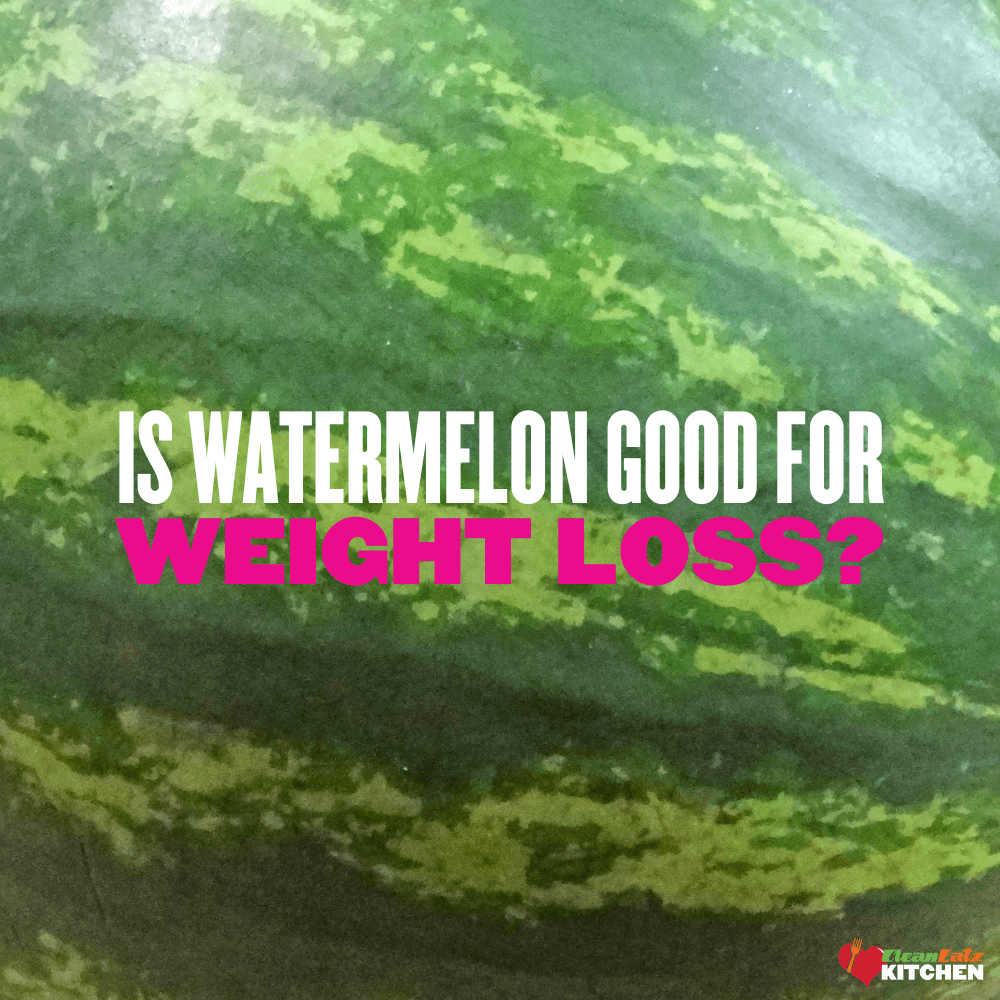

Quick Answer: Yes, watermelon fits well into a weight-loss diet. At about 46 calories per cup, 92% water, and a glycemic load of 4–5, it delivers a lot of food for very few calories. In a 2019 crossover trial, adults who ate 2 cups of watermelon daily for four weeks saw reductions in body weight, BMI, and waist-to-hip ratio compared with an equal-calorie cookie snack — and reported less hunger and greater fullness afterward. Aim for 1–2 cups as a snack or dessert, and pair it with protein.
Table of Contents
Every summer someone asks whether watermelon is basically just sugar water. The sweetness is almost suspicious, and if you have seen a glycemic index chart listing watermelon alongside white bread, you may have quietly dropped it from the shopping list.
That would be a mistake, and the reason why is more interesting than “fruit is healthy.” Watermelon is one of the clearest examples of why calorie density matters more than sugar content, and there is a controlled trial demonstrating it.
Watermelon nutrition: what's really in a cup
Here is the breakdown for 1 cup of diced watermelon, about 152 grams.
| Nutrient | Amount per cup | % Daily Value |
|---|---|---|
| Calories | 46 kcal | ~2% |
| Water | 139 g (about 92%) | — |
| Carbohydrates | 11.5 g | 4% |
| Sugars (natural) | 9–10 g | — |
| Fiber | 0.6 g | 2% |
| Protein | 0.9 g | 2% |
| Vitamin C | 12.3 mg | 14% |
| Vitamin A | 865 IU | 17% |
| Potassium | 170 mg | 4% |
| Lycopene | ~6,890 mcg | — |
| L-citrulline | 250+ mg | — |
Three things stand out. The calorie density is extremely low — a full cup for 46 calories, against 104 for a cup of grapes or 105 for a banana. The sugar is lower than the taste suggests, at 9–10 grams per cup, less than an apple. And the lycopene content is higher per serving than tomatoes, which surprises most people.
The fiber, though, is negligible. Six-tenths of a gram per cup is not doing any real work, and that matters for how you use watermelon — it is a volume food, not a fiber food. If fiber is what you are after, our ranked list of high-fiber foods shows where it actually lives. For the wider picture on foods that support weight management, see our 100 Best Foods for Weight Loss guide.
Why watermelon supports weight loss
The volume advantage. Barbara Rolls at Penn State has spent decades on energy density — the number of calories in a given volume of food. Her research consistently finds that fullness tracks the volume of food eaten, not just its calories. Watermelon is close to the ideal case: 92% water means a large, satisfying portion costs almost nothing.
The 2026 follow-up study below puts a number on this that is worth holding onto. To match 100 calories of low-fat cookies, researchers gave participants 330 grams of watermelon against 22.7 grams of cookie. Same calories. Fourteen times the food.
Hydration and misread hunger. Mild dehydration can produce signals people interpret as hunger. Water-rich foods address both at once, which is part of why hydrating foods tend to show up on volume-eating plans. Adequate hydration has also been linked to modest short-term metabolic effects, though this is a smaller factor than the volume story.
Blood sugar holds steadier than the GI charts imply. The 2019 trial found no significant difference in post-meal glucose and insulin between watermelon and cookies, despite watermelon carrying more total sugar. High water content dilutes the carbohydrate load, and realistic portions are simply too small to move blood sugar much.
Everyday Maintenance Meal Plan

$94.95
Meals made for you. This plan is designed for people who want healthy meal delivery without chasing a specific diet goal. Everyday Meal Plan – Meals made for Everyone Chef-prepared, balanced meals for real life. This curated plan is… read more
The glycemic index problem
Watermelon's glycemic index is often listed at 72–80, which lands it near white bread and scares people off. The number is real. It is also close to meaningless here, and understanding why is worth two minutes.
GI measures how fast 50 grams of available carbohydrate from a food raises blood sugar. To get 50 grams of carbohydrate from watermelon you would need roughly five cups — over 700 grams, most of a small melon, in one sitting. Nobody eats that.
Glycemic load fixes this by accounting for the carbohydrate in an actual serving. Anything under 10 is low.
| Food | Glycemic index | Typical serving | Glycemic load |
|---|---|---|---|
| Watermelon | 72–80 (high) | 1 cup (120–150 g) | 4–5 (low) |
| White bread | 75 | 1 slice (30 g) | 11 (medium) |
| White rice | 73 | 1 cup cooked | 29 (high) |
| Apple | 36 (low) | 1 medium | 6 (low) |
| Banana | 51 (low) | 1 medium | 13 (medium) |
Watermelon has a lower blood sugar impact per serving than a banana or a slice of white bread. The GI figure is an artifact of a test protocol nobody replicates at the kitchen counter.
What the clinical research shows
The central study is a randomized crossover trial published in Nutrients in 2019. Thirty-three overweight or obese adults ate either 2 cups of fresh watermelon or an isocaloric low-fat cookie snack daily for four weeks each, with a washout period between.
Watermelon consumption significantly decreased body weight, BMI, systolic blood pressure, and waist-to-hip ratio. Participants reported lower hunger, less desire to eat, and greater fullness. Oxidative stress was lower and total antioxidant capacity higher. The cookie arm, at identical calories, significantly increased blood pressure and body fat.
That last detail is the interesting one, because calories were controlled. Same energy in, opposite direction out.
Two caveats belong here, though. Thirty-three people is a small sample, and four weeks is a short window — long enough to show a direction, not long enough to promise a year of results. Treat this as good evidence that swapping a processed snack for watermelon is worth doing, not as proof that watermelon causes weight loss on its own.
A 2026 follow-up using the same design looked at the gut microbiome in 32 adults and found something more modest: overall microbial diversity did not differ between watermelon and cookies, though the Firmicutes-to-Bacteroidetes ratio rose in the cookie arm and held steady with watermelon. Worth knowing mainly because it shows the effect is about calorie displacement rather than anything exotic happening in your gut.
Separately, analysis of NHANES data from 2003–2018 found watermelon eaters had higher overall diet quality scores and lower added sugar intake than non-consumers. That is observational — it does not show watermelon caused anything — but it suggests the fruit travels with better habits generally.
The "watermelon diet" — does it work?
This deserves a direct answer because a lot of people arrive here looking for one.
The watermelon diet, in its usual form, means eating only watermelon for three to seven days. It is not a good idea, and the reasoning is not moralistic.
Watermelon contains under a gram of protein per cup and essentially no fat. A multi-day watermelon-only plan supplies almost none of either, and a diet with no protein during a steep calorie deficit is a diet that costs you muscle. You will see the scale drop quickly, because you are eating very few calories and losing water alongside glycogen. Both come back within days of eating normally.
There is also no version of this supported by research. The 2019 trial that gets cited in favor of watermelon studied 2 cups a day added to a normal diet — the opposite of a monodiet. Its findings are an argument for using watermelon as a swap, not as a sole food.
The version that works is unglamorous: keep the watermelon, keep the protein, and let it displace something worse.
How to eat watermelon for weight loss
One cup diced is roughly 46 calories, two cups about 92, three cups about 138. Even a genuinely large portion stays under 150 calories, which is the whole point.
Timing is flexible, but a few slots work particularly well: mid-morning when breakfast is fading, mid-afternoon against the 3pm slump, about half an hour before dinner to take the edge off, or as a dessert replacement in place of something costing 300 calories. Portions close to bedtime are worth keeping smaller unless you enjoy nighttime bathroom trips.
The protein pairing matters more than the timing. Watermelon has under a gram of protein per cup, and protein is what extends fullness and protects muscle during weight loss. Some combinations worth keeping in rotation:
1 cup watermelon with ½ cup Greek yogurt — about 115 calories, 12 g protein
1 cup watermelon with ½ cup cottage cheese — about 130 calories, 14 g protein
2 cups watermelon with a string cheese — about 170 calories, 7 g protein
2 cups watermelon with a hard-boiled egg — about 170 calories, 6 g protein
1 cup watermelon with 1 oz almonds — about 210 calories, 6 g protein
For more on building snacks that actually hold you, see our guide to 29 healthy snacks for weight loss.
Five watermelon pairings worth making
Two that lean sweet. A watermelon and Greek yogurt parfait (~200 calories, 18 g protein) layers 1 cup diced watermelon with ¾ cup plain Greek yogurt, fresh mint, and a tablespoon of sliced almonds. A watermelon cottage cheese bowl (~190 calories, 24 g protein) tops 1 cup cottage cheese with 1 cup diced watermelon, a drizzle of honey, and a pinch of flaky salt — the casein digests slowly, which makes it a good late-afternoon option.
Two that lean savory. Watermelon feta salad (~180 calories, 8 g protein) is two cups watermelon cubes, 1 oz crumbled feta, mint, and a squeeze of lime, with cucumber optional. The salty-sweet contrast is the reason this one survives past July. Grilled watermelon with balsamic (~70 calories, 1 g protein) means thick triangular slices, 2–3 minutes per side until caramelized, finished with balsamic glaze and basil. Grilling concentrates the sweetness and turns it into a side dish rather than a snack.
And one for the blender: a watermelon smoothie (~250 calories, 25 g protein) made from 1 cup frozen watermelon, 1 cup unsweetened almond milk, a scoop of vanilla protein powder, a handful of spinach, and ice. Freezing the watermelon first is what keeps it from tasting watered down.
For portioned meals to build these snacks around, our Weight Loss Meal Plan handles the calorie-controlled entrées so the fruit stays a bonus rather than a plan.
Whole watermelon vs. juice
| Factor | Whole watermelon | Watermelon juice |
|---|---|---|
| Satiety | High — takes time to chew, fills the stomach | Low — consumed quickly |
| Fiber | Retained (though minimal to begin with) | Removed |
| Overconsumption risk | Self-limiting | Easy to drink excess calories |
| Blood sugar impact | Gradual | Faster absorption |
| Weight-loss friendly? | Yes | Less so |
Juice removes the volume that was doing the work and concentrates the sugar that the volume was offsetting. Enjoy it if you like it, but it is a drink, not a strategy.
Buying and storing watermelon
Look for the field spot — the patch where the melon sat on the ground should be creamy yellow rather than white. Deeper yellow means riper. A ripe melon feels heavy for its size, sounds deep and hollow when knocked, and has a dull rather than shiny rind.
Whole melons keep two weeks at room temperature or about three weeks refrigerated. Cut watermelon lasts 3–5 days in an airtight container. To freeze, cube and spread on a baking sheet before transferring to bags; frozen watermelon is better in smoothies than it has any right to be.
On cost: peak season runs May through September in most of the US, and pre-cut watermelon typically runs three to four times the per-pound price of a whole melon. Fifteen minutes with a knife is the best hourly rate in the produce aisle.
Four ways people get watermelon wrong
Drinking it instead of eating it. Covered above, and the most common error by a distance.
Skipping the protein. Watermelon alone rarely holds anyone for long. That is not a flaw in the fruit; it is a missing pairing.
Letting it become the only fruit. Variety gets you a wider range of nutrients, and watermelon’s fiber content is genuinely poor. Rotate it with berries and apples rather than replacing them.
Assuming “healthy” means unlimited. Watermelon is low in calories, not free of them. Three cups is 138 calories, which is fine; six cups eaten absent-mindedly in front of the television is a different conversation.
Frequently asked questions
Is watermelon good for losing belly fat?
Watermelon can support overall weight loss because of its low calorie density and high water content, which helps you feel full on fewer calories. But no food targets belly fat specifically. That requires an overall calorie deficit combined with exercise.
How much watermelon should I eat per day for weight loss?
One to two cups, roughly 150 to 300 grams, works well as a snack or dessert. That is about 46 to 92 calories. Pair it with a protein source such as Greek yogurt or cottage cheese for longer-lasting fullness.
Does watermelon have too much sugar for weight loss?
No. A cup contains about 9 to 10 grams of natural sugar, but the high water content gives it a glycemic load of only 4–5 per serving, which is well inside the low range. The 2019 trial found no meaningful difference in glucose or insulin response between watermelon and an equal-calorie cookie snack.
Is watermelon juice as good for weight loss as whole watermelon?
Whole watermelon is better. Juicing removes the fiber and concentrates the sugars, so it is easier to drink a lot of calories quickly without the fullness that makes whole fruit useful in the first place. Whole watermelon takes longer to eat and fills more stomach space.
What's the best time to eat watermelon for weight loss?
Mid-morning or mid-afternoon, when you want something sweet, or as a dessert replacement after dinner. Eating it about half an hour before a meal can also take the edge off your appetite. Some people prefer smaller portions near bedtime, since the water content can mean more nighttime bathroom trips.
Can I eat watermelon every day while trying to lose weight?
Yes. The 2019 trial used 2 cups daily for four weeks. The things that matter are pairing it with protein and not letting it crowd out other fruit, since variety gets you a wider range of nutrients.
Is the watermelon diet safe?
No. Eating only watermelon for several days provides almost no protein or fat and falls short on essential nutrients. Early weight loss is mostly water and returns quickly. Adding watermelon to a balanced, calorie-controlled diet gets you the benefit without the downside.
The bottom line
Watermelon earns its place. It lets you eat a large, sweet, satisfying portion for around 46 calories a cup, it keeps you hydrated, and there is a controlled trial showing that swapping it for an equal-calorie processed snack produced measurably better outcomes over four weeks.
Ignore the glycemic index number. At a glycemic load of 4–5 per serving it sits below a banana, and the GI figure reflects a laboratory portion nobody eats.
The practical version: buy one with a creamy yellow field spot, cut it up so it is grab-and-go, keep portions to 1–2 cups, pair it with something containing protein, and let it replace the thing you would otherwise have eaten. That last part is where the benefit actually comes from.
If the harder problem is the meals around the snacks, our Weight Loss Meal Plan covers portioned, macro-balanced entrées, and Build Your Meal Plan lets you pick each one yourself. For more fruit worth keeping in the house, see our guide to the best fruits for weight loss.
This article is for informational purposes only and does not constitute medical advice. Consult a healthcare professional before making significant dietary changes, particularly if you have diabetes or another metabolic condition.