

The verdict: Anchor each plate with 4 to 6 oz of lean protein, fill half with non-starchy vegetables, add 1/2 to 1 cup of carbs sized to your activity, and measure 1 to 2 teaspoons of oil. Aim for a 300 to 500 calorie daily deficit, about 0.6 to 1 pound a week, and 25 to 40 grams of protein per meal.
Most weight loss advice focuses on what you can't eat instead of what you should eat. That's backwards. The people who lose weight and keep it off aren't the ones white-knuckling through restrictive diets. They're the ones who figured out how to eat satisfying meals that happen to support their goals.
Think about the last time you tried. If you're like most people, you cut calories hard, felt hungry all the time, and gave up when life got busy or stressful. That's not a willpower failure. It's a strategy failure.
This guide gives you the strategy: two numbers to start with, a plate you can build the same way every time, three sample days, a grocery list, and what to do at restaurants, on trips and around workouts. For the specific foods that support it, our 100 Best Foods for Weight Loss guide breaks down what to stock in your kitchen.
Fundamentals beat restriction
The approach that works is simpler than you'd expect. Eat enough protein to stay full and keep your muscle. Fill your plate with vegetables for volume without many calories. Include carbs to match your activity. And pay attention to fats, because they're delicious and calorie-dense.
When you get those four parts right, the calorie deficit mostly takes care of itself, without the constant hunger that derails most diets. Fat loss happens when your weekly calories stay in a small deficit. High-protein meals, plenty of fiber-rich plants and habits you can live with make that deficit easier to hold.
Protein carries the most weight here. A 2015 review in the American Journal of Clinical Nutrition by Heather Leidy and colleagues pooled the evidence: in tightly controlled studies, higher-protein, calorie-restricted diets led to more weight loss, more fat loss and better preservation of lean mass than lower-protein ones. The fullness effect was real but modest, and longer-term studies were more mixed. Treat protein as the anchor, not a trick.
A plate you can repeat beats a diet you can't.
Two numbers, then four parts
Before you change anything about how you eat, you need two numbers: a calorie target and a protein target. Everything else flows from those. Then every meal gets built the same way.
| Component | Portion | Options |
|---|---|---|
| Protein anchor | 4 to 6 oz | Chicken, turkey, fish, shrimp, lean beef, eggs, Greek yogurt (1 cup), tofu or tempeh (3/4 to 1 block) |
| Vegetable volume | Half plate | Leafy greens, broccoli, cauliflower, zucchini, peppers, mushrooms, tomatoes: 2 to 3 cups raw or 1 to 2 cups cooked |
| Smart carbs | 1/2 to 1 cup | Rice, potatoes, oats, quinoa, beans, lentils (cooked), or 1 medium fruit |
| Measured fats | 1 to 2 tsp | Olive oil, or 1/4 avocado, 1 oz nuts or seeds, 1 to 2 oz cheese |
A balanced fat-loss plate, part by part
Find your calorie target
Maintenance minus 300 to 500
Use the Calorie Calculator to find your maintenance calories, then subtract 300 to 500 a day. That's your deficit. It takes about three minutes.
Do the arithmetic once so you know what to expect. A pound of body fat is roughly 3,500 calories, so a 300 to 500 calorie daily deficit works out to about 0.6 to 1 pound a week. That's slow enough to keep your energy up and fast enough to see.
The National Institute of Diabetes and Digestive and Kidney Diseases frames it as a goal rather than a pace: losing 5% of your body weight over 6 months is a reasonable first target. At 200 pounds, that's 10 pounds, or about 35,000 calories. A 300-calorie daily deficit covers that in about 17 weeks, well inside the 6 months.
Set your protein target
Spread it across every meal
Aim for roughly 0.8 to 1.0 grams of protein per pound of body weight. The Protein Calculator can give you a personal number. If you have a lot of weight to lose, base it on your goal weight, or the target gets unrealistically high.
That might sound like a lot if breakfast is usually a bagel and lunch is a salad, but it's the single most useful change you can make. Protein keeps you full, protects your muscle while you lose fat, and takes more energy to digest than carbs or fat. Our protein guide explains why.
Most people do well with three meals plus one snack, with 25 to 40 grams of protein at each meal. That structure isn't special. It just makes it easier to spread protein through the day instead of cramming it into dinner.
Anchor every meal with protein
Start the plate here
Pick the protein first, then build around it. Chicken, fish, eggs, Greek yogurt, cottage cheese, tofu: pick your favorite and make it the center of the plate, 4 to 6 ounces cooked for meat and fish.
Muscle is metabolically active tissue, so keeping it while you lose fat matters. That's the main reason the Leidy review above found higher-protein diets kept more lean mass during calorie restriction.
Fill half the plate with non-starchy vegetables
Big volume, small calories
Broccoli, spinach, peppers, zucchini, mushrooms and tomatoes give you a lot of food for very few calories. Two cups of chopped raw broccoli is about 60 calories, per USDA FoodData Central. Try getting that much food from 60 calories of chips.
Roasting is still a good idea. Just count the oil you roast it in, which is where the next rule comes in. The fiber in vegetables also slows digestion and keeps blood sugar steadier, which means fewer energy crashes and cravings.
Size your carbs to your activity
Fuel for the day you're having
Carbs aren't the enemy. They're fuel. But if you sit at a desk all day, you don't need as much as someone training for a marathon.
A good starting point is 1/2 to 1 cup of cooked grains, potatoes or beans per meal. On days you train hard, go toward the higher end. On rest days, scale back. Fruit counts here too, with fiber and nutrients built in.
Measure your fats
Where the calories hide
This is where most people blow their budget without knowing it. Olive oil is healthy, and a tablespoon of it is about 120 calories, per USDA FoodData Central. Free-pour three tablespoons onto a salad or into a pan and you've added about 360 calories to one meal.
Nuts, cheese and avocado work the same way: nutritious and calorie-dense. Use a measuring spoon for oils, 1 to 2 teaspoons per plate (about 40 to 80 calories), and be deliberate about the rest.
Drink water first
Hydration before anything else
Stay hydrated. Water first, always. On hot days or when you're training hard, consider adding light electrolytes. Our electrolyte guide covers the options.
The flexibility is the point. Swap chicken for salmon. Trade rice for sweet potato. Change the vegetables and spices. As long as the structure stays the same, protein anchor, vegetable volume, smart carbs, measured fats, the plate keeps working.
Three days at three calorie levels
Theory is nice, but you need to see it in practice. Here are three sample days. Every meal and snack starts with protein. Portions decide where your day lands, so log one of these with your own amounts before you rely on the totals.
Around 1,500 calories
Breakfast: Greek yogurt with berries and half a scoop of protein powder mixed in. A scoop of our Shakez Protein Powder has 20 grams of protein, so half a scoop plus a cup of Greek yogurt gets you to roughly 30 grams to start the day, plus fiber from the fruit.
Lunch: a meal from our High Protein Meal Plan with a side salad. Each one carries 2 extra ounces of meat over our regular recipes and runs about 500 calories or more, with the macros on the label, so there's nothing to weigh.
Afternoon snack: cottage cheese with pineapple. Simple, filling and another 20-plus grams of protein.
Dinner: 4 to 5 ounces of salmon with roasted vegetables and a small potato. Cook the salmon with a measured teaspoon of olive oil and season it generously with herbs and lemon.
Around 1,800 calories
Breakfast: two whole eggs plus 3 to 4 egg whites, scrambled or as an omelet with vegetables. A piece of fruit on the side.
Lunch: a chicken burrito bowl with rice, black beans, fajita vegetables, salsa and a spoonful of Greek yogurt instead of sour cream. Skip the tortilla to save calories, or include it if you have room.
Snack: a protein shake with an apple.
Dinner: one of our frozen meals with extra frozen vegetables stirred in. It's the low-effort weeknight move that still keeps you on plan.
Around 2,200 calories
Breakfast: protein oatmeal. Cook your oats, stir in a scoop of whey protein and top with berries. Hearty and filling, and it sets you up for an active day.
Lunch: tuna and white bean salad over greens with a whole-grain pita. Our tuna guide has more ideas.
Snack: skyr or Greek yogurt with measured granola. Watch the portion here, since granola adds up fast.
Dinner: lean steak or a tofu stir-fry with rice and plenty of vegetables, using the measured-fat rule for the cooking oil. Need help planning your own days? The Meal Plan Generator can build a custom plan from your targets.
Staples for every part of the plate
Stock these staples and you'll always have the building blocks for a solid meal.
- Proteins: eggs, canned tuna and salmon, chicken thighs and breasts, ground turkey, lean beef, tofu, tempeh, Greek yogurt, skyr, cottage cheese.
- Vegetables & fruit: frozen vegetable blends (lifesavers on busy nights), leafy greens, broccoli, cauliflower, peppers, onions, apples and berries.
- Pantry carbs: rice, potatoes, oats, dried or canned beans and lentils, whole-grain wraps.
- Fats & flavor: extra-virgin olive oil, avocados, nuts, seeds, spices, mustard and hot sauce. Our hot sauce guide covers why it's close to zero calories and makes plain food a lot more interesting.
Protein, vegetables & one carb
Restaurant meals don't have to wreck your week. The key is ordering with the plate in mind.
The formula is simple: protein plus vegetables plus one carb. Order grilled chicken or fish, ask for double vegetables instead of the usual starchy sides, and get a small portion of rice or potato if you want it. Ask for sauces and dressings on the side, and you'll use less than the kitchen would.
At bowl-style restaurants, ask for half rice, extra vegetables and lean protein. Load up on salsa and skip the creamy dressings, or ask for a light drizzle.
Burgers? Go bunless or single-bun and swap the fries for a side salad. That swap alone can save several hundred calories without feeling like a punishment.
Traveling smart
Airport food is a minefield, so pack your own protein: jerky, a ready-to-drink shake, or yogurt if you can keep it cold. Add fruit and a small portion of nuts (1 ounce, measured at home). Stay hydrated, especially on long flights, and use a light electrolyte if you need one.
If your hotel room has a microwave and a mini-fridge, you're set. Our meals from Build A Meal Plan arrive frozen and heat in a few minutes. Once thawed in the fridge, eat them within 3 to 4 days, and you have reliable meals with known macros without hunting for a decent restaurant in an unfamiliar city.
Protein & carbs around training
What you eat around exercise matters, but it doesn't need to be complicated.
One to three hours before training, have a meal or snack with protein and carbs. Greek yogurt with fruit works well. So does toast with eggs. The goal is steady energy without feeling stuffed.
After your workout, prioritize protein: 25 to 40 grams within a few hours. If the session was especially hard, a long run or heavy lifting, add carbs to replenish glycogen. Chicken with rice and vegetables covers all of it.
Looking for workout ideas? Our treadmill workouts and elliptical guide can help you build an effective cardio routine.
Batch prep, plus a backup
You don't need to cook every meal from scratch. That's a fast track to burnout.
The smartest approach is batch prep. Spend a couple of hours once a week roasting proteins and vegetables, cooking a big pot of rice or potatoes and chopping salad ingredients. Our Complete Meal Prep Guide walks you through a system that preps your whole week in about two hours.
For weeknight dinners, use a template: protein plus sheet-pan vegetables plus a starch. Rotate the spices and sauces. Monday is chicken with Italian herbs, Wednesday is the same chicken with taco seasoning, Friday goes Asian-inspired with soy and ginger. Same effort, different flavors.
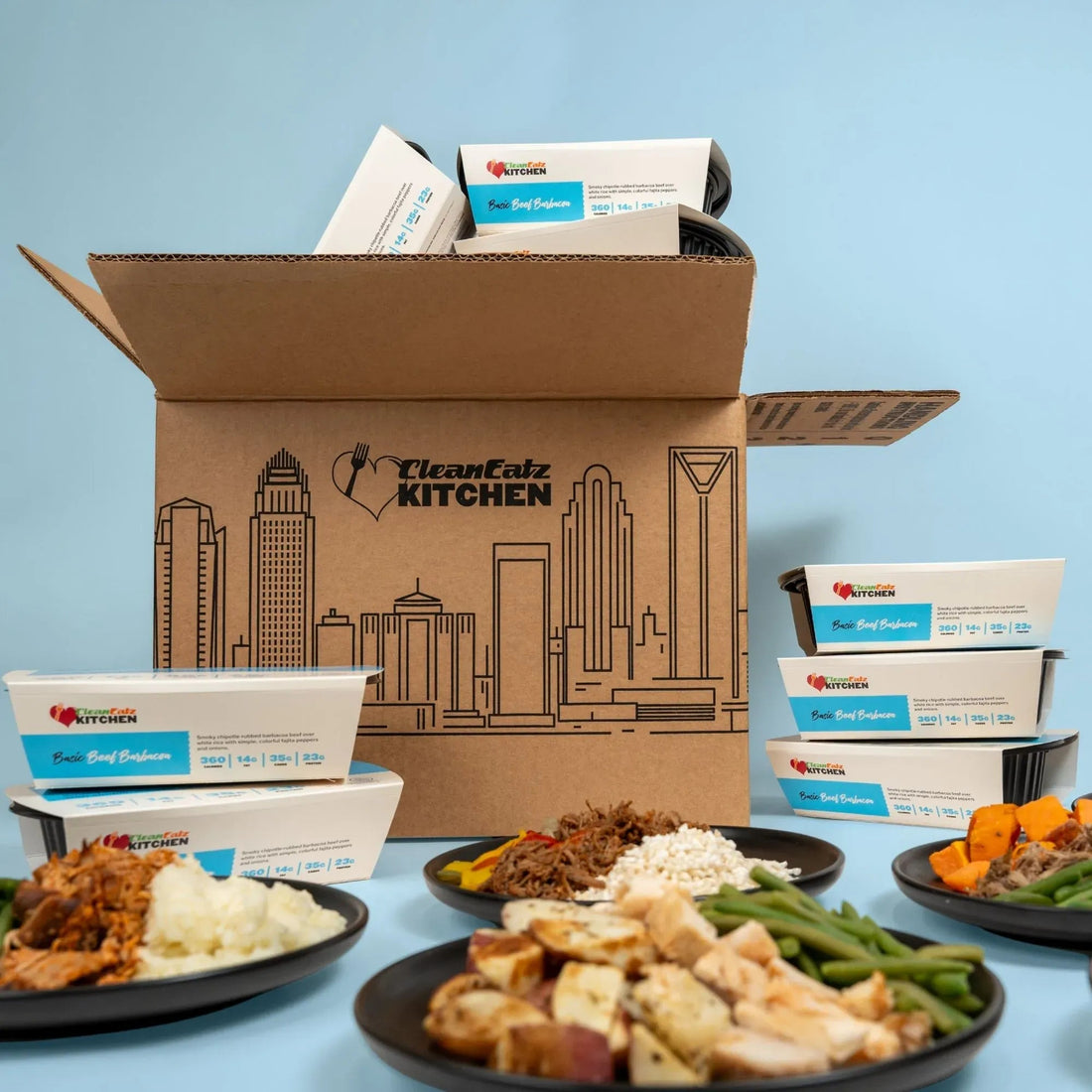
Then keep a backup in the freezer for the nights when cooking feels impossible, because a backup plan prevents desperate takeout orders. A few meals from our High Protein Meal Plan or Weight Loss Meal Plan cover those nights. They're chef-cooked, portion-controlled and flash-frozen, keep up to 12 months in the freezer, and heat in a few minutes. Every meal's calories, protein, carbs and fat are on our Nutrition Info page, so they slot into your numbers.
There's no subscription, and meal plan orders ship free to the contiguous 48 states. Cooking from staples is cheaper per serving than any prepared meal, including ours. The freezer backup earns its place on the nights you wouldn't have cooked anyway.
Five ways a good plan stalls
- Not eating enough protein. This is the biggest one. Low protein leads to constant hunger, muscle loss and frustration. Track your intake for a few days, since most people are surprised how little they eat. Fix it by anchoring every meal with a protein source.
- Underestimating healthy fats. Olive oil, nuts and avocado are nutritious and very calorie-dense. Three or four unmeasured tablespoons of oil across a day add 360 to 480 calories. Measure fats until you can eyeball portions accurately.
- Drinking your calories. Sodas, fancy coffee drinks, smoothies and alcohol don't fill you up the way solid food does, so it's easy to overshoot. Stick to water, black coffee, tea and seltzer most of the time. Our kombucha guide covers lower-calorie drinks if you want variety.
- All cardio, no strength training. Cardio burns calories, but strength training builds and keeps the muscle that matters while you diet. The CDC recommends muscle-strengthening work at least 2 days a week, and 2 to 4 lifting sessions is a good target. Even bodyweight moves like planks count (see our plank guide).
- Weekend blowouts. A 500-calorie deficit for five weekdays adds up to 2,500 calories. Eat 1,250 over maintenance on Saturday and again on Sunday and the whole week is gone. If you know a big dinner is coming, use calorie cycling to eat lighter earlier in the day or week.
Calculators, guides & meal plans
- Calculators: Calorie Calculator, Protein Calculator, Weight Loss Percentage Calculator.
- Guides: 100 Best Foods for Weight Loss, Complete Meal Prep Guide, 29 Healthy Snacks, smart food swaps, when you'll notice results.
- Meal plans: High Protein Meal Plan, Build A Meal Plan, Weight Loss Meal Plan.
Quick answers
How big should my calorie deficit be?
A 300 to 500 calorie daily deficit works for most people. That's about 0.6 to 1 pound a week, enough to see progress without the crash that usually follows an aggressive cut. Use the Calorie Calculator to find your maintenance calories, then subtract from there.
How much protein do I need per day?
Aim for 0.8 to 1.0 grams per pound of body weight, spread across your meals. For a 160-pound person, that's 128 to 160 grams a day. If you have a lot of weight to lose, use your goal weight instead. The Protein Calculator can personalize the number for you.
Do I need to cut carbs?
No. Carbs aren't fattening on their own. Excess calories are. Include fiber-rich carbs like oats, potatoes, rice, beans and fruit, and size the portions to your calorie target and your activity that day. Our carb guide goes deeper on making carbs work for weight loss.
What about intermittent fasting?
It works for some people because it makes eating fewer calories easier. The fasting window itself does nothing special. Results still come from your total calories and protein. If you like eating in a compressed window, go for it. If you prefer spreading meals through the day, that works too.
How fast will I see results?
Most people notice steadier energy and better appetite control within the first week or two. Visible changes usually take several weeks of consistent effort, often 4 to 8. At 0.6 to 1 pound a week, the scale moves slowly, so judge the trend, not the day. Our guide on how long it takes to notice weight loss covers the timeline.
Same structure, every meal
Build every plate around a protein anchor, fill half of it with vegetables, add a carb sized to your day and measure your fats. Hold a 300 to 500 calorie daily deficit and you'll lose about 0.6 to 1 pound a week without the constant hunger that ends most diets.
The structure matters more than the specific foods. Swap freely, repeat what works, and keep a backup for the busy nights.
This article provides general nutrition guidance and isn't medical advice. If you have a medical condition or take medications, talk with your doctor or a registered dietitian before making significant changes to your diet.
Keep reading
- 7 Printable Portion Control Guides for Balanced Meals
- Beginner's Guide to Macros: Balance Protein, Carbs & Fats
- 15 High-Protein Meals Under 500 Calories (2026 Guide)