

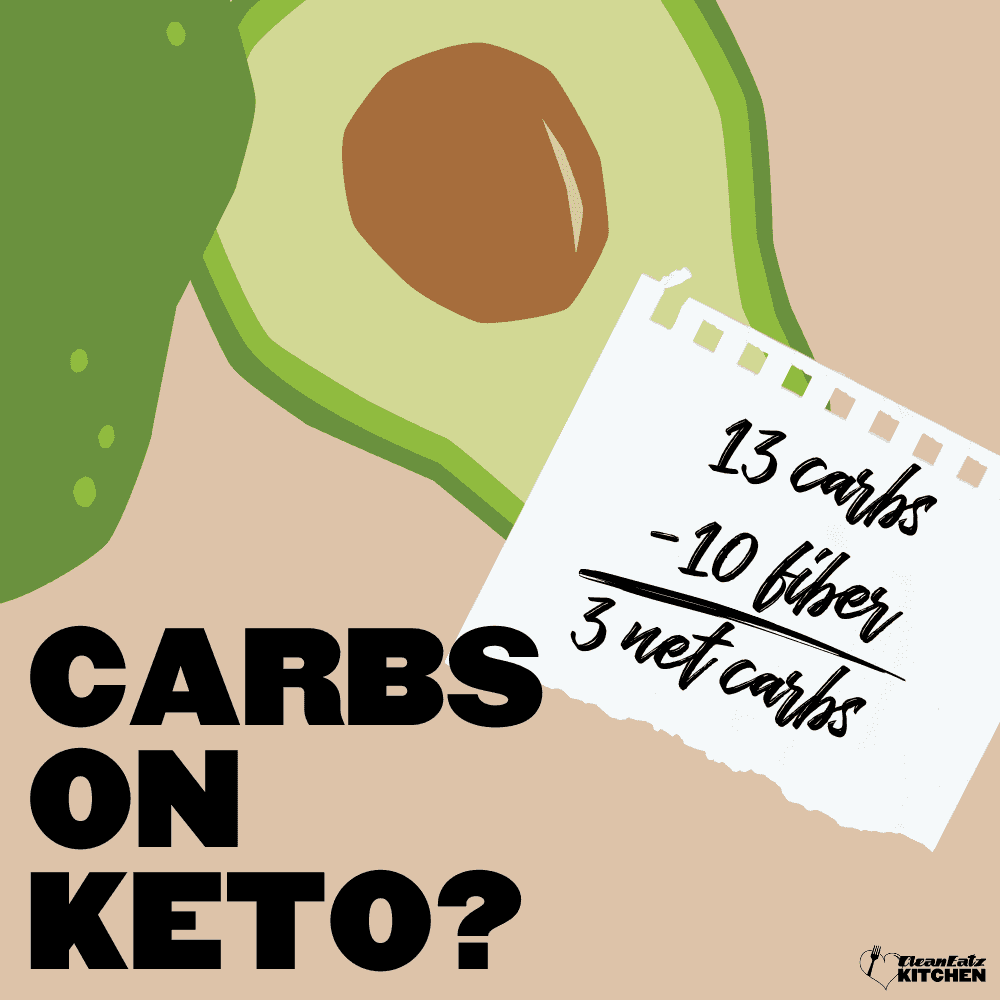
A keto diet usually means under 20 to 50g of carbs a day, or under about 10% of calories. Net carbs (total minus fiber) work well for vegetables, avocado and berries. Total carbs are the safer count for packaged keto foods, because the FDA has never defined net carbs and sugar alcohols such as maltitol still raise blood sugar.
Ask how many carbs you can eat on keto and you'll hear 20, 25, 30 or 50 grams, sometimes in the same conversation. Part of the confusion is real: the research gives a range, not a single number. The rest comes from counting two different things, net carbs and total carbs, and calling both of them "carbs".
Below we compare the two methods row by row, lay out the daily ranges from clinical reviews, list the carbs in common foods from USDA data, and build a sample keto day so you can see the math work.
Net vs total carbs verdict
Count the way you'll keep counting
We judged net and total carbs on what decides whether keto works for you: accuracy on real foods, honesty on packaged foods, how easy each one is to track, and how much food variety each method allows.
Net carbs win on whole foods and food variety. Total carbs win on labels, packaged keto products and simplicity.
So how many carbs on keto? Start with the range the research uses, under 20 to 50g a day, and pick one counting method you can apply every day without guessing. If most of your carbs come from vegetables, nuts, seeds and berries, net carbs are a fair way to count, because fiber is not digested into glucose the way starch and sugar are.
If your day includes keto bars, low-sugar sweets or anything with "net carbs" printed on the front, read the total carbohydrate line instead. That number is defined by federal labeling rules. The net number on the wrapper is not.
Net carbs & total carbs at a glance
Two ways to count the same food
This table answers the question people mean when they ask how many carbs are allowed on keto: which number goes in the log.
Each row ties to a source below, and each method wins the rows where it is the more accurate or the more practical count.
| Net carbs | Total carbs | |
|---|---|---|
| What it counts | Total carbs minus fiber, and often minus sugar alcohols | All carbohydrate: starch, sugars, fiber and sugar alcohols |
| On the Nutrition Facts label | Not listed, you do the math | Listed on every label ✓ |
| Official definition | None. The FDA has not defined it | Defined in FDA labeling rules ✓ |
| Keto range used in reviews | No research standard of its own | Under 20 to 50g a day |
| Vegetables, avocado & berries | Counts only the carbs you digest ✓ | Counts fiber you don't digest |
| Packaged keto foods | Easy to undercount sugar alcohols | Catches every gram the maker used ✓ |
| Food variety on 20 to 50g | More room for vegetables & nuts ✓ | Tighter, fewer vegetables fit |
- Accuracy on whole foods with plenty of fiber
- Honesty on packaged foods with sugar alcohols
- Daily ranges from clinical reviews
- How easy each method is to track every day
Keto carb ranges by diet type
How low is low carb?
Clinical reviews define keto by carbs and by share of calories. A 2021 review of diet strategies in the Journal of Obesity & Metabolic Syndrome describes a low-carbohydrate diet as 50 to 130g of carbs a day, or 10 to 45% of calories, and a ketogenic diet as under 20 to 50g a day, or under 10% of calories. Both sit below the standard Acceptable Macronutrient Distribution Range for carbohydrate, which is 45 to 65% of calories.
| Diet style | Carbs a day | Share of calories |
|---|---|---|
| Ketogenic | Under 20 to 50g | Under 10% |
| Low carbohydrate | 50 to 130g | 10 to 45% |
| Healthy low-carb arm of DIETFITS at 12 months | Not a gram target | About 30% |
| Standard range (AMDR) on 2,000 calories | 225 to 325g | 45 to 65% |
Daily carb ranges by diet style
The gram and percent rules don't line up perfectly, because they depend on how much you eat. At 1,600 calories a day, 5% of calories is 80 calories, or 20g of carbs, and 10% is 40g. At 2,400 calories, the same 5 to 10% works out to 30 to 60g. That's why most reviews give a hard ceiling in grams, under 50g a day, rather than only a percentage.
The International Society of Sports Nutrition's 2024 position stand on ketogenic diets uses the same broad guideline, under 50g of carbs a day, and defines ketosis by blood ketones above 0.5 mmol/L. The Levels guide to ketosis gives a typical pattern of 20 to 50g of carbs, with 70 to 85% of calories from fat, 10 to 20% from protein and 5 to 10% from carbs.
For comparison, the healthy low-carb group in the DIETFITS trial was eating about 30% of calories from carbs at 12 months. That's a real low-carb diet, but on 2,000 calories it's about 150g of carbs, three times a keto ceiling. If a friend lost weight on "low carb", ask which version they mean.
Strict keto under 20g
The tightest version
Some plans start at under 20g a day for the first weeks. At that level there's little room for anything but meat, fish, eggs, cheese, oils and non-starchy vegetables, and the count method matters a lot. Two cups of raw spinach, a cup of broccoli, a cup of cauliflower and half an avocado already come to 22g of total carbs, a little past the line before any berries or nuts.
Moderate keto from 20 to 50g
Where most people live
Between 20 and 50g, berries, nuts, plain Greek yogurt and a wider range of vegetables fit. Many people find this range easier to keep for months. Whether you still reach ketosis at 40 or 50g depends on your body, your activity and your protein intake, which is why some people check blood ketones rather than relying on a single number.
Net vs total carbs side by side
Which count wins where
The table gives the short answer. This breakdown walks through the four rows that decide the choice and names a winner for each.
Net carbs take fiber and food variety. Total carbs take sugar alcohols and label reading.
Fiber
Winner: Net carbsTotal carbohydrate includes fiber. The American Diabetes Association's label guide says it plainly: the total carbohydrate amount on a Nutrition Facts label includes sugar, starch and fiber. Fiber is the part your small intestine doesn't break down into glucose, so subtracting it from whole foods gives a fair picture of the carbs that count toward blood sugar.
The difference is biggest in exactly the foods keto encourages. Per USDA FoodData Central, half an avocado (100g) has 8.5g of total carbs and 6.7g of fiber, so 1.8g net. Two cups of raw spinach have 2.2g total and 0.9g net. Counting total carbs on those foods makes a vegetable-heavy keto day look worse than it is.
Sugar alcohols
Winner: Total carbsSugar alcohols are where net carbs get slippery. Packaged keto foods often subtract them along with fiber, but they don't all behave the same. A review of polyols by Livesey lists glycemic index values of 0 for erythritol, 9 for sorbitol and isomalt, 13 for xylitol and 35 for maltitol, against 65 for table sugar and 100 for glucose. Erythritol barely registers. Maltitol raises blood sugar about half as much as sugar does.
Federal labeling rules don't require the sugar alcohol line on most foods. Under 21 CFR 101.9, declaring sugar alcohols is voluntary unless the label makes a claim about sugar alcohols or sugars. So the wrapper's net carb math can rest on a number you can't see. Total carbs avoid the guesswork.
Quick label example
Picture a bar with 24g of total carbs, 12g of fiber and 9g of sugar alcohols. Counted as total carbs, it's 24g, nearly half of a 50g day. Counted as net carbs minus fiber only, it's 12g. Counted the way the front of the wrapper does it, it's 3g. Same bar, three answers, and if those 9g are maltitol, the 3g figure is the least honest of the three.
Label reading
Winner: Total carbsThe ADA's guidance is direct: terms like "net carbs" haven't been defined by the FDA, the ADA doesn't recommend their use, and you should always check the total carbohydrates on the Nutrition Facts label first. Total carbohydrate is calculated the same way on every label, by subtracting protein, fat, moisture and ash from the food's weight, per the federal labeling rule.
That makes total carbs the one number you can compare across brands without trusting anyone's arithmetic. If you count net carbs, do the subtraction yourself from the label's total and fiber lines, and treat sugar alcohols separately.
Food variety
Winner: Net carbsHere's what the two methods do to a plate of vegetables. Half an avocado, two cups of raw spinach, a cup of chopped broccoli and a cup of cauliflower add up to 22.0g of total carbs and 12.5g of fiber, per USDA data. That's already over a strict 20g total-carb day. Counted as net carbs, it's 9.5g, with plenty of room left for berries and nuts.
Vegetables like these are also the most filling foods per calorie on any diet, which is why they lead our guide to foods that help with weight loss. Cabbage is a good example: a cup of raw cabbage has 5.2g of total carbs and about 3g net. Our post on whether cabbage helps with weight loss covers how to use more of it.
Low-carb & high-carb food lists
What 20 to 50g looks like
Numbers below are from USDA FoodData Central (SR Legacy), worked out for a common serving. Net carbs are total carbs minus fiber.
Weigh the first few servings if you can. Portions drift, and a heaping cup of berries isn't the cup in the table.
| Food & serving | Total carbs | Fiber | Net carbs |
|---|---|---|---|
| Avocado, half (100g) | 8.5g | 6.7g | 1.8g |
| Spinach, raw, 2 cups (60g) | 2.2g | 1.3g | 0.9g |
| Broccoli, raw, 1 cup chopped (91g) | 6.0g | 2.4g | 3.6g |
| Cauliflower, raw, 1 cup (107g) | 5.3g | 2.1g | 3.2g |
| Zucchini, raw, 1 cup (124g) | 3.9g | 1.2g | 2.7g |
| Cabbage, raw, 1 cup (89g) | 5.2g | 2.2g | 3.0g |
| Asparagus, raw (100g) | 3.9g | 2.1g | 1.8g |
| White mushrooms, raw (100g) | 3.3g | 1.0g | 2.3g |
| Green bell pepper, raw (100g) | 4.6g | 1.7g | 2.9g |
| Raspberries, 1 cup (123g) | 14.7g | 8.0g | 6.7g |
| Blackberries, 1 cup (144g) | 13.8g | 7.6g | 6.2g |
| Strawberries, 1 cup (152g) | 11.7g | 3.0g | 8.7g |
| Almonds, 1 ounce (28g) | 6.0g | 3.5g | 2.5g |
| Chia seeds, 1 ounce (28g) | 11.8g | 9.6g | 2.2g |
| Plain lowfat Greek yogurt (170g) | 6.7g | 0g | 6.7g |
| Egg, 1 large (50g) | 0.4g | 0g | 0.4g |
| Sharp cheddar, 1 ounce (28g) | 0.6g | 0g | 0.6g |
| Chicken breast, salmon or olive oil | 0g | 0g | 0g |
Lower-carb foods per serving (USDA)
| Food & serving | Total carbs | Fiber | Net carbs |
|---|---|---|---|
| Apple, medium (182g) | 25.1g | 4.4g | 20.7g |
| Banana, medium (118g) | 27.0g | 3.1g | 23.9g |
| White rice, cooked, 1 cup (158g) | 44.5g | 0.6g | 43.9g |
| Pasta, cooked, 1 cup (140g) | 43.2g | 2.5g | 40.7g |
| Baked potato with skin (173g) | 36.6g | 3.8g | 32.8g |
| Sweet potato, baked (114g) | 23.6g | 3.8g | 19.8g |
| Black beans, cooked, half cup (86g) | 20.4g | 7.5g | 12.9g |
| Whole-wheat bread, 1 slice (32g) | 13.7g | 1.9g | 11.8g |
| 2% milk, 1 cup (244g) | 11.7g | 0g | 11.7g |
| Honey, 1 tablespoon (21g) | 17.3g | 0g | 17.3g |
| Regular cola, 12 ounces (368g) | 38.1g | 0g | 38.1g |
Higher-carb foods per serving (USDA)
Two patterns stand out. First, fiber does a lot of work in the lower-carb list: raspberries and blackberries have more total carbs than strawberries but fewer net carbs, because about half of their carbs are fiber. Second, a single serving of rice, pasta or potato uses up most or all of a keto day. Those foods aren't unhealthy, and our [complete guide to the best foods for weight loss](/a/blog/best-foods-for-weight-loss-complete-guide) includes several of them. They simply don't fit under 50g.
How to build a keto day
Protein first, then vegetables, then fat
Carbs set the limit on keto, but protein and fat fill the plate. Get those two right and the carb count mostly takes care of itself.
Protein on keto
Enough to protect muscle
Protein on a ketogenic diet is usually kept moderate. The 2021 review in the Journal of Obesity & Metabolic Syndrome describes typical keto protein as 0.8 to 1.5g per kilogram of ideal body weight a day. For people who lift or train hard, the ISSN position stand on protein and exercise recommends 1.4 to 2.0g per kilogram a day for most exercising people.
The same stand suggests about 0.25g of high-quality protein per kilogram of body weight per meal, or an absolute dose of 20 to 40g, spread every 3 to 4 hours across the day. For a 75kg (165-pound) adult, that's about 19g per meal at minimum, so three meals of 25 to 35g each covers it.
Fat on keto
Fuel, not a free pass
Fat supplies most of the calories on keto, but calories still count. Choose mostly unsaturated fats such as olive oil, avocado, nuts, seeds and fatty fish, and measure the oil rather than pouring it. A tablespoon of olive oil has no carbs and about 120 calories, and three heavy pours a day can erase a calorie deficit.
A kitchen scale makes this much easier. Our roundup of the best smart food scales for portion control compares models that log grams straight to an app.
Sample keto day at 40g total carbs
About 23g net
- Breakfast: 2 eggs scrambled with 2 cups of spinach and 1 ounce of cheddar. 3.6g total carbs.
- Lunch: Grilled chicken breast with 1 cup of broccoli and half an avocado. 14.5g total carbs.
- Dinner: Salmon with 1 cup of cauliflower and 1 cup of zucchini sauteed in olive oil. 9.2g total carbs.
- Snack: 1 ounce of almonds and 170g of plain lowfat Greek yogurt. 12.7g total carbs.
That day adds up to 40.0g of total carbs and 17.2g of fiber, or 22.8g net, all from the USDA numbers in the table above. It's inside the keto range either way you count, and it still includes five vegetables, nuts and yogurt.
Cooking this every day takes planning. Our complete meal prep guide covers batch-cooking chicken, salmon and vegetables for the week so the plate above takes minutes, not an hour.
Training on a keto diet
Carbs & hard workouts
Keto changes how your body fuels exercise. The ISSN 2024 position stand reports fat burning of about 1.5g a minute during exercise on a ketogenic diet, but concludes that the diet's effect on performance is largely neutral or detrimental compared with a higher-carb diet. Strength gains look similar on both. Every study of elite athletes it reviewed, all six weeks or shorter, found their performance dropped on keto.
The reason is fuel. Sprints, heavy sets and intervals lean on glucose and stored glycogen, as our explainer on what anaerobic exercise is describes. If those workouts matter to you, a moderate low-carb plan with carbs timed around training may serve you better than strict keto. Our guide to low-carb eating for exercise covers how to do that.
Whatever you eat, the activity targets stay the same. The American Heart Association recommends at least 150 minutes of moderate aerobic activity or 75 minutes of vigorous activity a week, plus muscle-strengthening work on at least 2 days. The American College of Sports Medicine states the same goal as 30 minutes of moderate activity on five days or 20 minutes of vigorous activity on three days, with strength work at least two days a week.
Common keto carb mistakes
Where hidden carbs hide
Most stalled keto diets aren't about the wrong counting method. They're about carbs that never made it into the log.
- Drinks. A 12-ounce regular cola has 38.1g of carbs, and a cup of 2% milk has 11.7g. A splash in coffee is fine. A latte is not.
- Sweeteners. A tablespoon of honey has 17.3g of carbs, a third of a 50g day.
- Front-of-package numbers. Count from the total carbohydrate and fiber lines, not the net carb claim.
- Protein snacks. High protein doesn't mean low carb. Check the label on bars, wraps and frozen snacks.
- Portion drift. A cup of berries becomes two. Weigh servings for the first couple of weeks.
- Sauces & dressings. Barbecue, teriyaki and sweet chili sauces add sugar fast. Oil and vinegar or plain mayonnaise don't.
About those protein snacks: ours are a good example. Our high-protein snacks are built for protein, not for keto. Our breakfast burritos, for instance, carry 19 to 21g of carbs each, close to a strict keto day in one wrap. They fit well on a moderate low-carb plan.
Sweets are the other trap. If you're on a moderate low-carb plan rather than strict keto, our list of healthy desserts for weight loss has options built around fruit, yogurt and protein. Check each one against your daily carb number first.
Who should count net or total carbs
Pick by what you eat
Key takeaways
- Keto in clinical reviews means under 20 to 50g of carbs a day, or under 10% of calories
- Low carb is a wider range, 50 to 130g a day
- Net carbs subtract fiber and fit a whole-food keto diet well
- The FDA hasn't defined net carbs, so check total carbs first on packaged foods
- Maltitol raises blood sugar about half as much as table sugar, erythritol barely at all
Keto isn't the only way to lose weight, either. In DIETFITS, 609 adults followed a healthy low-fat or a healthy low-carb diet for a year and lost similar amounts, 5.3 kg vs 6.0 kg, a difference that wasn't significant (full text). The Kim review reached the same place: keto was not superior for weight loss over the long term. Pick the plan you'll keep.
Both methods can work. The best one is the one you'll apply the same way every day, at home and at the store.
Count net carbs if you
- Eat mostly vegetables, avocado, nuts, seeds and berries
- Want more food variety inside 20 to 50g
- Calculate from the label's fiber line yourself
- Rarely eat packaged keto bars or sweets
Count total carbs if you
- Want the simplest rule with one number to read
- Eat packaged keto foods with sugar alcohols
- Are starting strict keto under 20g a day
- Have been asked by your doctor to track total carbohydrate
Our meals on a low-carb plan
Where Clean Eatz Kitchen fits
We'll be straight with you: none of our meals is keto. Our lowest-carb meal is the Basic Chicken Breast & Sweet Potatoes, with 300 calories, 40g of protein, 24g of carbs, 7g of fiber and 5g of fat, per our Nutrition Info page. That's 17g of net carbs, which uses up most of a strict keto day in one meal.
Where our meals do fit is a moderate low-carb plan in the 50 to 130g range. Two or three meals in the mid-20s for carbs leave room for vegetables, eggs and a piece of fruit. Every meal on the Nutrition Info page lists calories, protein, carbs, fiber and fat, so you can sort by carbs and do the net carb math yourself.
To pick meals one by one, use Build A Meal Plan and choose the lowest-carb options. If protein is your priority, our High Protein Meal Plan adds 2 extra ounces of meat to each meal, about 10g more protein, and starts at $63 for 6 meals with free shipping.
For more ideas that work on any plan, our complete guide to the best foods for weight loss ranks foods by fullness and nutrition, not just carbs.
Keto carbs bottom line
One range, one method, every day
A keto diet means under 20 to 50g of carbs a day. Net carbs are a fair way to count when your carbs come from vegetables, nuts, seeds and berries. Total carbs are the safer count for packaged foods, because the net number on a wrapper has no official definition and may subtract sugar alcohols that still raise blood sugar.
Pick one method, apply it the same way every day, and weigh your portions until you know them by eye. And if keto doesn't fit your life, a moderate low-carb plan built on protein, vegetables and fiber can get you to the same place over a year.
Keto carbs FAQ
Your questions
Short answers to the keto carb questions we hear most, from sugar alcohols to fruit.
How many net carbs can you have on keto?
Most people use the same range the research uses for total carbs, 20 to 50g a day, and apply it to net carbs. That allows more vegetables, nuts and berries. Clinical reviews define keto in total grams, so if you stall, try counting total carbs for a few weeks.
Is 50 grams of carbs a day keto?
It's the upper edge. Reviews define a ketogenic diet as under 20 to 50g of carbs a day, and the ISSN uses under 50g as a broad guideline. Some people stay in ketosis at 50g and some don't. Above 50g, you're on a low-carb diet, which runs 50 to 130g a day.
Do you subtract sugar alcohols on keto?
It depends on the sugar alcohol. Erythritol has a glycemic index of 0, so subtracting it is reasonable. Maltitol's is 35, about half of table sugar, so subtracting all of it undercounts. Since labels often don't name the sugar alcohol, counting total carbs is safer.
Do vegetables count toward keto carbs?
Yes, but non-starchy vegetables are low. Two cups of raw spinach have 2.2g of total carbs, and a cup of broccoli has 6.0g, per USDA data. Counted as net carbs, they're 0.9g and 3.6g. Starchy vegetables such as potatoes and corn are much higher.
Can you eat fruit on keto?
Small portions of berries fit. A cup of raspberries has 6.7g of net carbs and a cup of blackberries 6.2g. A medium apple has 20.7g net and a medium banana 23.9g, about half of a 50g day, so most other fruit is hard to fit.
How do you know if you're in ketosis?
The ISSN defines nutritional ketosis as blood ketones above 0.5 mmol/L, which you can check with a home blood ketone meter. Many factors affect how many carbs keep you there, so the level varies from person to person.
Is keto better than other diets for weight loss?
Not over the long run, on average. In the DIETFITS trial, 609 adults lost 5.3 kg on a healthy low-fat diet and 6.0 kg on a healthy low-carb diet over a year, a difference that wasn't significant. The diet you can stick with matters more than its carb level.
More keto & low-carb guides
Keep reading
 Nutrition
Top 10 Keto-Approved Foods to Include in Your Diet (Net Carbs, Portions & Easy Swaps)
 Sherrill Johnson, RD, LDN · May 20, 2026
 Nutrition
What Fruits Are Keto-Friendly? Net Carbs for 10 Fruits
 Staci Gulbin, MS, MEd, RD · Aug 4, 2026
 Nutrition
Foods to Avoid on Keto Diet
Sherrill Johnson, RD, LDN · Jan 12, 2023
Sources
- Kim JY. Optimal diet strategies for weight loss and weight loss maintenance. J Obes Metab Syndr 2021 (PMC)
- Gardner CD et al. Effect of low-fat vs low-carbohydrate diet on 12-month weight loss: the DIETFITS randomized clinical trial. JAMA 2018
- Gardner CD et al. The DIETFITS randomized clinical trial (PMC full text)
- Leaf A et al. International Society of Sports Nutrition position stand: ketogenic diets. J Int Soc Sports Nutr 2024
- Jäger R et al. International Society of Sports Nutrition position stand: protein and exercise. J Int Soc Sports Nutr 2017
- American Diabetes Association: Making sense of food labels
- Livesey G. Health potential of polyols as sugar replacers. Nutr Res Rev 2003 (PubMed)
- 21 CFR 101.9: Nutrition labeling of food (eCFR)
- USDA FoodData Central, SR Legacy
- Levels: Guide to ketosis and the keto diet
- American Heart Association: Recommendations for physical activity in adults and kids
- American College of Sports Medicine: Physical activity guidelines